Best Science Lab Kits for Kids: Top Picks for Hands-on Learning
Finding the right science kit for kids is about balance: engaging activities, clear instructions, and real learning outcomes. The following selections are among the best science lab kits for curious young scientists, offering a mix of Earth science, chemistry, and STEM magic. Each kit is designed to foster experimentation, critical thinking, and a love of discovery through hands-on projects. Below you’ll find five strong options, followed by a practical buying guide to help families pick the best fit.
| Product | Focus | Key Benefit |
|---|---|---|
| National Geographic Mega Science Lab | Earth science, chemistry, magic experiments | Multiple activities in one kit with rock, mineral, and fossil components |
| National Geographic Junior Chemistry Set | Early chemistry exploration | 50 experiments with illustrated, kid-friendly instructions |
| UNGLINGA 150 Experiments | Broad STEM topics | Large variety of experiments and kid-friendly tools |
| Discovery Super Reactions Kit | Chemistry, reactions, and volcano experiments | 66 experiments plus 40 DIY ideas using household items |
| National Geographic Amazing Chemistry Set | Chemical reactions and crystal growing | 100+ experiments with bonus 85 experiments for extended play |
National Geographic Mega Science Lab
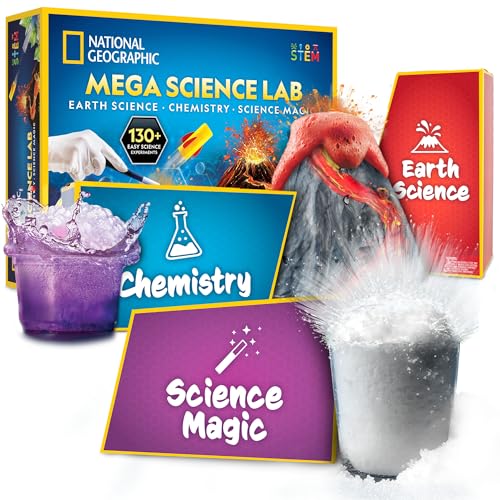
The National Geographic Mega Science Lab is a comprehensive, three-in-one adventure that blends Earth science, chemistry, and magic-themed experiments. It includes 45 popular experiments plus a bonus guide with 30 additional activities that use common household items. Students can build and erupt a volcano, grow glow-in-the-dark crystals, and even dig up a fossil, providing a strong Earth science foundation alongside engaging chemistry tasks. The included rocks, minerals, and crystals support a tangible understanding of geology and mineralogy, making it a well-rounded choice for curious minds.
In chemistry, kids explore gooey worms, gas-powered rockets, and colorful reactions. The kit’s breadth helps reluctant learners find entry points into science through hands-on discovery and observation. The variety also supports group learning and family science sessions, where kids can compare outcomes and discuss why reactions happen. For caregivers seeking a robust, multi-discipline experience, this National Geographic kit offers reliable, classroom-grade activities in a home setting.
National Geographic Junior Chemistry Set

Designed for younger scientists, the National Geographic Junior Chemistry Set introduces 50 hands-on experiments using everyday items like baking soda and vinegar. The emphasis is on accessible experimentation that builds curiosity and introduces core chemistry concepts in a friendly, age-appropriate way. Clear, illustrated instructions guide each experiment, helping kids perform activities independently and achieve confident results. This kit supports early STEM development, making it a practical choice for families looking to spark a wide range of scientific interests in 4-to-6-year-olds and beyond.
UNGLINGA 150 Experiments

The UNGLINGA 150 Experiments kit covers a broad spectrum of topics, including earth science, chemistry, physics, and more. With 150 projects, kids can explore a wide range of scientific ideas and repeat favorite experiments for deeper understanding. A well-illustrated, step-by-step manual makes the activities approachable, while high-quality lab tools and kid-friendly materials enable hands-on learning. Goggles and safe handling practices are emphasized, which helps cultivate a responsible, real-science mindset in young researchers.
UNGLINGA 70 Lab Experiments

With 70 experiments, this UNGLINGA kit blends fun projects—like volcanoes and fruit circuits—with solid science foundations. The manual provides clear illustrations and step-by-step guidance, helping kids understand the science behind each activity while maintaining an engaging pace. The kit supports collaborative learning and encourages kids to practice critical thinking as they predict outcomes, test hypotheses, and compare results with peers or family members.
National Geographic Earth Science Kit

The National Geographic Earth Science Kit centers on 100+ science activities, including water tornadoes, erupting volcanoes, crystal growing, and multiple rock and mineral exploration tasks. Great for family science nights, this kit emphasizes hands-on learning and collaborative discovery. A detailed learning guide helps explain the science behind each activity, helping kids connect practical experiments to real-world Earth science concepts. The kit’s breadth makes it a strong option for households seeking long-term science engagement.
National Geographic Science Magic Kit

The Science Magic Kit blends 100+ science experiments with magic tricks to create captivating demonstrations that reveal scientific principles in a playful format. Children perform tricks such as bending metal with water or making a test tube vanish, followed by an exploration of the science behind the illusion. The included wand and gloves add a performative element, motivating kids to share discoveries with friends and family while reinforcing core ideas in physics and chemistry.
Discovery Super Reactions Kit

The Discovery Super Reactions Kit focuses on chemistry and inventive reactions, offering 66 experiments plus 40 DIY ideas. Kids can explore acid-base reactions, gas expansion, color changes, and more. Realistic, kid-friendly tools and a guided manual support safe experimentation while encouraging curiosity about chemical processes. This kit is well-suited for learners who enjoy structured activities with clear outcomes and a bit of scientific drama in the form of reactions and explosions.
Buying Guide: Key Purchase Considerations
When choosing a science kit for kids, consider the child’s age, interests, and learning style. Early-stage kits should prioritize clear, illustrated instructions and safety features, while more advanced options can introduce complex concepts and longer project timelines. Packaging and contents matter: sturdy tools, quality materials, and enough experiments to sustain engagement without overwhelming a beginner are ideal.
Learning goals vary by family. Some parents prioritize geology and Earth science to complement geography lessons, while others seek chemistry and physics to reinforce classroom topics. Group play can be a factor, too—kits that support multiple participants or can be used over weeks offer better value and social learning opportunities.
Safety is essential. Look for age recommendations, included protective gear like goggles, and instructions that emphasize safe handling and disposal of materials. A well-structured guide helps kids develop independent problem-solving skills, while parent or caregiver involvement can be balanced to promote autonomy without sacrificing safety.
Longevity matters. Choose kits with a range of experiments or those that encourage experimentation beyond the included activities. Bonus guides, extra challenges, and habitats for ongoing exploration help maintain enthusiasm and extend learning beyond a single set of projects.
Value versus breadth is a trade-off. A single kit with dozens of experiments may deliver quick variety, while a curated mix of two or three topic-specific kits can offer deeper mastery. Consider whether you want a broad foundation or deeper dives into chemistry, earth science, or physics-based activities.
Final tip: align the kit with your child’s curiosity. If they love volcanoes and crystals, prioritize Earth science and crystal-growing activities. If they’re fascinated by lab tools and measurements, focus on chemistry sets with measurement practice and clear observation records. The right kit balances fun with learning to cultivate lasting scientific curiosity.