Best Robots for 12 Year Olds: Top STEM Kits for Learning Through Play
Finding engaging, educational robotics kits for tweens can be a challenge. This guide highlights five standout options that blend hands-on building with solar or programmable power, helping 12-year-olds explore engineering, problem-solving, and creative thinking. Each kit supports independent learning or family collaboration, with clear instructions and safe materials. Read on to compare features, learning outcomes, and how these kits align with common science, technology, engineering, and math goals for preteens.
| Product | Brand | Key Focus | Power Source | Learning Angles |
|---|---|---|---|---|
| Bottleboom 13-in-1 Solar Power Robots | Bottleboom | 13 robot types, solar-powered | Solar | Engineering, STEM concepts, hands-on construction |
| Henoda STEM Building Robots | Henoda | Remote and app-controlled programmable robot | Remote/Bluetooth App | Programming, robotics, problem solving |
| COBFDHA STEM Projects for Kids | COBFDHA | Solar and battery-powered multi-robot kits | Solar/Battery | Systems thinking, experimentation, creativity |
| MEWOCHEE 24-in-1 STEM Circuit Kit | MEWOCHEE | Circuits and modular robot builds | Battery/Manual power | Circuit theory, electronics, hands-on building |
| Bottleboom 13-in-1 Solar Robot (Second Kit) | Bottleboom | Another solar-powered, multi-robot set | Solar | Engineering fundamentals, solar energy |
Bottleboom 13-in-1 Solar Power Robots Toys

The 13-in-1 Bottleboom solar robot kit offers a versatile entry point into robotics for ages 8-12. Step-by-step instructions guide builders to assemble 13 distinct robots that can move on land or water. The set includes gears, plates, tires, and shafts, with parts designed for easy disassembly after each build. The kit emphasizes hands-on learning through play, and every piece is made from non-toxic ABS material for safety. A solar-powered engine fosters understanding of renewable energy, encouraging kids to observe how sunlight can drive motion without batteries.
Educational value centers on engineering fundamentals: choosing configurations, adjusting gear ratios, and evaluating mechanical systems. This kit also supports collaborative learning as siblings or parents work together to complete a build, reflect on why certain designs perform better, and explore solar power’s role in motion. The included materials encourage safe handling, proper alignment, and thoughtful problem-solving, making it a concrete way to connect science with everyday technology. Expect multiple hours of exploratory play and repeatable experimentation as ideas evolve.
Henoda Robot Building Toys: Remote & App Controlled
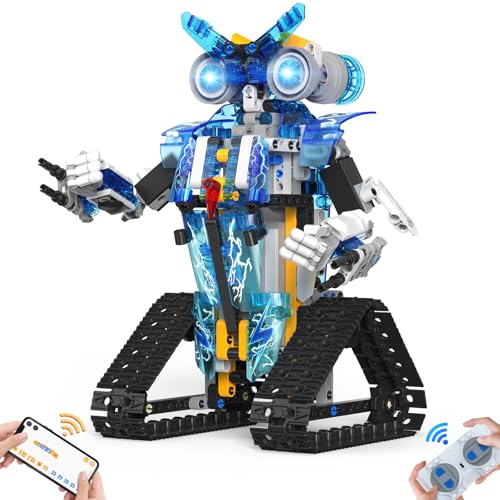
Henoda’s Stem Robot Building Toys combine a robust set of 443+ pieces with a futuristic design. The transparent components and decorative stickers create an appealing, tech-forward look that can engage curious builders. The robot can be steered with a 2.4GHz remote or via a Bluetooth-connected mobile app, offering five modes including remote control, voice control, gravity sensor, STEM programming, and path mode. With a 40-minute runtime and a remote range up to 20 meters, this kit supports extended play sessions and experimentation in both indoor and outdoor environments. It’s well-suited for encouraging patience, fine motor skills, and logical thinking as kids assemble parts and test different configurations.
Key educational angles include programming concepts, cause-and-effect reasoning, and spatial awareness. The dual-control approach helps with tailored learning: younger users can begin with direct remote commands, while more advanced learners can explore app-based programming and autonomous modes. The model’s design fosters creativity, as children tailor poses, expressions, and movement patterns to reflect stories or challenges. Parents seeking a collaborative, tech-rich activity will find this kit a solid option that blends engineering with digital interaction.
Bottleboom STEM 13-in-1 Education Solar Robots

This Bottleboom kit mirrors the 13-in-1 solar robot concept, reinforcing concepts of mechanical engineering and renewable energy. The same multi-robot approach encourages kids to explore variations, understand gear systems, and appreciate solar power as a practical energy source. The instructional material emphasizes safe handling of components while guiding users through problem-solving steps to achieve functional robots. Building multiple configurations helps learners notice patterns in how design choices affect speed, balance, and maneuverability, making it an effective choice for long-term engagement in STEM learning.
As a comprehensive educational tool, this kit supports science literacy by illustrating energy transformation—from solar input to motion output. It also promotes collaboration when families or classrooms share projects, fostering communication about design decisions and iterative testing. For young builders who enjoy tinkering and reworking ideas, the 13-in-1 format offers ongoing opportunities to experiment with new robots and refinements, reinforcing a growth mindset in STEM pursuits.
MEWOCHEE 24-In-1 STEM Circuit Kit

The MEWOCHEE 24-in-1 circuit kit delivers a circuit-building experience alongside robot construction. With three robot head types, seven functional modules, and a selection of wires, builders can create walking robots, bubble-blowing devices, and other inventive mechanisms. The kit is designed to introduce circuit principles and practical electronics through hands-on assembly, encouraging learners to connect module functions with observed behaviors. It’s especially valuable for cultivating understanding of sensors, actuation, and the relationship between electrical circuits and mechanical motion.
Instruction clarity is a notable feature, as clear manuals help kids tackle assemblage step-by-step. This is ideal for collaborative family projects or classroom settings where an adult might guide initial builds before encouraging independent exploration. The diverse configurations support differentiated learning, allowing quick progress for some and deeper experimentation for others. As a broad STEM kit, it’s suitable for reinforcing foundational skills in physics, engineering, and problem-solving through repeated, varied practice.
Bottleboom Solar Robot 13-in-1: Solar-Powered Robotics

This Bottleboom Solar Robot kit reinforces the 13-robot concept with solar power as the primary energy source. Kids build various robot configurations, observing how solar cells convert light to usable energy that drives gears and motion. The solar approach reinforces environmental science concepts while reducing dependence on disposable batteries. The kit emphasizes teamwork and collaboration as learners compare designs, optimize solar orientation, and analyze how shading or panel angle affects performance. As a repeat-build activity, it supports sustained engagement in STEM exploration.
COBFDHA STEM Projects for Kids: Solar & Battery Robots
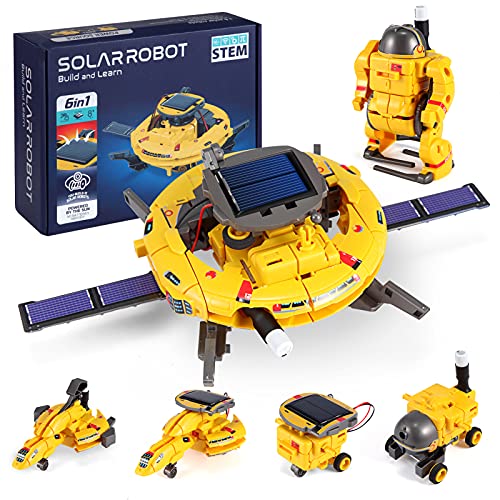
COBFDHA presents a versatile set of solar-powered and battery-powered “building robots” that promote experimentation and hands-on learning. The kit includes multiple robots to assemble, enabling children to compare how different configurations respond to power sources. This approach supports diversity in problem-solving, as learners experiment with solar energy, storage, and motor drive. The product emphasizes imagination in design, practical dexterity, and cognitive development through iterative testing. It’s a practical option for classrooms or families seeking a broader robotics curriculum with renewable energy elements.
Buying Guide: Key Purchase Considerations
- Power source and weather suitability: Solar-powered kits teach renewable energy but may require outdoor space or sunny indoor light. Battery-powered options offer more predictable indoor use.
- Number of build options: Kits with multiple configurations (e.g., 13-in-1 or 24-in-1) provide extended engagement and different learning challenges, supporting progressive skill development.
- Programming vs. manual assembly: Remote or app-controlled models introduce coding concepts; purely mechanical kits emphasize gear ratios, balance, and kinematics.
- Safety and materials: Look for non-toxic plastics, smooth edges, and clearly age-appropriate instructions. Parental involvement can enhance safety and learning outcomes.
- Skill alignment: Choose kits aligned with target goals—engineering fundamentals, circuit concepts, or robotic control—based on the child’s interests and prior exposure to STEM.
- Durability and upgradability: Rebuildable sets with sturdy components allow longer-term use and deeper exploration as skills grow.
- Learning environment: Some kits suit solo exploration, while others are designed for collaboration in families or classrooms. Consider the preferred pace and setting.
Across these selections, the common thread is reinforcing hands-on inquiry. Each kit invites tweens to hypothesize about why a robot moves a certain way, test ideas by altering designs, and observe outcomes. The blend of solar and programmable options ensures that learners encounter both energy principles and computational thinking, reflecting real-world engineering practices. For educators and parents, these kits offer structured activities and open-ended tasks that accommodate varying levels of prior knowledge while maintaining clear safety and learning benefits.