Best Robots for 9-Year-Olds: Top Educational Picks
Finding a robot that blends learning with engaging play is ideal for 9-year-olds. The following selections combine hands-on STEM activities, programmable features, and interactive fun to support growing curiosity in science, technology, engineering, and math. Each option below offers a different pathway—coding, building, or gesture-based play—so you can choose the best fit for your child’s interests.
The table below highlights five strong contenders from the list of well-reviewed options, focusing on age suitability, core capabilities, and learning angles:
| Product | Key Benefit | Age Range |
|---|---|---|
| Ruko 1088 Smart Robots for Kids | Large size, 10 expressions, 9 joints; voice and app control for creative storytelling and basic programming | 4-9 |
| Henoda Robot Toys | 468+ building pieces; multi-mode remote/app control; 4 remote modes and 20m range | 8-12 |
| KingsDragon RC Robot | Gesture control and remote, up to 50 programmable moves; singing and dancing | 6-9 |
| ELEGOO UNO R3 Smart Robot Car Kit | Arduino-based STEM kit; 24 modules; Android/iOS control; easy assembly | 8-12 |
| SONOMO Programmable Robot | 2.4GHz remote, gesture sensing; programmable actions | 6-9 |
Ruko 1088 Smart Robots for Kids

The Ruko 1088 stands out with its impressive height of up to 15.8 inches, delivering a bold presence that can capture kids’ imagination. Its design supports multiple play styles, including storytelling, dance, music, and recording, expanding beyond traditional action toys. With 10 expressions, 9 flexible joints, and 10 songs, the robot provides a lively, expressive experience. The accompanying app and voice control help introduce kids to basic programming concepts while fostering problem-solving and coordination skills.
Henoda Robot Toys for 8-16 Year Old
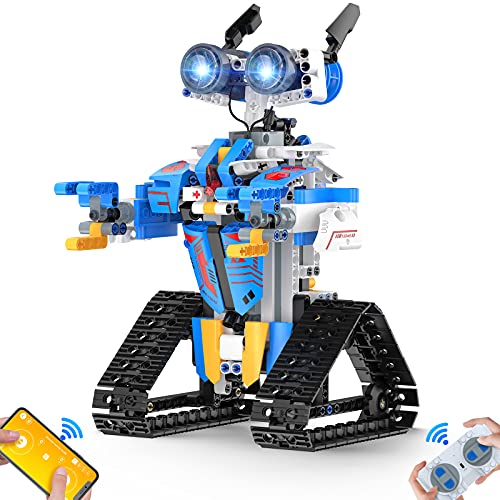
Henoda combines a large block-building system with programmable control, offering 468+ pieces to assemble a variety of robot configurations. The toy supports 4 control modes: phone app Bluetooth, remote control, path mode, and voice control, plus a 20-meter remote range. This structure encourages hands-on construction skills, spatial reasoning, and iterative problem-solving as kids experiment with different configurations and pathways for motion and action.
KingsDragon RC Gesture Sensing Robot

This robot offers flexible control via hand gestures or the included remote, making it accessible for younger kids and rewarding for those who enjoy active play. Its gesture-sensing capability, LED eyes, and 50-move programmable feature provide a balance of physical interaction and learn-and-create opportunities. It also includes singing and dancing functions, which helps reinforce sequencing and timing in a fun, musical format.
ELEGOO UNO R3 Smart Robot Car Kit V4

The ELEGOO UNO R3 kit is an Arduino-based educational package designed for beginners to learn programming, electronics, and robotics. It includes 24 module parts such as obstacle avoidance and line tracing, plus compatibility with Android and iOS control. Easy assembly and clear documentation help kids translate concepts into tangible projects, reinforcing engineering thinking and practical problem-solving through hands-on building and experimentation.
SONOMO Programmable Robot
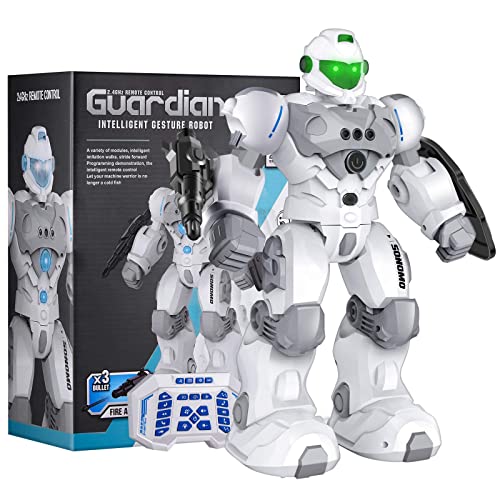
SONOMO’s robot blends 2.4GHz remote control with gesture sensing and programmable actions. This combination supports active, intuitive play while enabling kids to design sequences of movements, turning playtime into a foundational coding exercise. It encourages experimentation with action planning and demonstrates how commands translate into motion, movement, and response, suitable for curious minds in the 6–9 range.
Buying Guide
- Age and skill alignment: For beginners, consider robots with simple remote control and basic programming; for more advanced learners, seek kits with block-based coding or Arduino-based platforms.
- Control method: Remote, app, gesture, or voice—each offers different accessibility and engagement levels. A mix of controls can support varied learning styles.
- Programming and progression: Look for options that introduce logical sequencing, loops, and problem-solving steps. Modules that allow upgrading complexity help sustain long-term interest.
- Build and durability: For younger users, durable plastics and large, easy-to-handle components reduce frustration. For older kids, modular kits support creative expansions.
- Expansion potential: Some kits offer additional sensors, modules, or compatible software, enabling a longer learning arc as the child grows.
- Safety and non-toxics: Ensure parts are certified kid-safe and that small pieces won’t pose choking hazards for younger siblings or visitors.
- Storage and maintenance: Consider kits with organized components and clear manuals to minimize setup time and maximize playtime.
- Budget considerations: Beginner robots are affordable and great for trial; more capable kits provide lasting value but come at a higher upfront cost.
These options collectively provide a spectrum of learning experiences—from storytelling and creative expression to hands-on building and coding—so you can match a robot to a child’s curiosity and developmental stage. Each product presents a pathway to develop critical thinking, spatial reasoning, and early engineering skills in an engaging, age-appropriate format.