Best Robot Toys for 7 Year Olds: Top Picks for Fun, Learning, and Creativity
Finding a robot that suits a 7-year-old means balancing simplicity with engaging challenges. The following selections combine kid-friendly control, programmable features, and budget-friendly play value. Each option supports imagination, basic coding concepts, and active play, helping children explore how machines move, think, and interact. The list below highlights five standout choices that align with beginner robotics needs for kids around age seven, while offering features that can grow with them.
| Product | Type | Key Benefit |
|---|---|---|
| Programmable RC Robot | Gesture sensing and kid-friendly programming | |
| Gesture & Sensing Programmable Robot | Hands-free control and action presets | |
| STEM Building Block Robot | Building blocks and multiple control modes | |
| Building Kit | Creative construction with multiple models | |
| Programmable Robotic Pet | Interactive stunt and command playback |
SONOMO Toys for 6-9 Year Old Boys — RC Robot
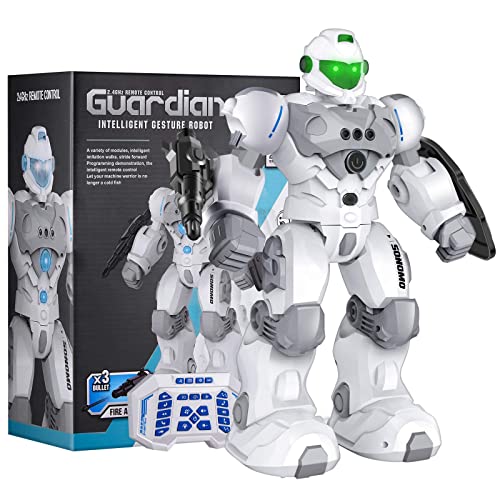
This upgraded SONOMO robot pairs a 2.4GHz remote with gesture sensing, giving kids two ways to interact. It features protective shields and weapon-like accessories that invite role-play scenarios, while its programming mode lets children script sequences such as turning, sliding, or stepping forward. The remote and gesture controls support a blend of turn-by-turn navigation and on-the-fly action, providing a hands-on entry to basic robotics concepts without overwhelming complexity.
KingsDragon RC Robot Toys — Gesture & Sensing

KingsDragon offers a gesture-sensing robot that responds to hand movements and supports infrared remote control. It includes actions such as auto display and obstacle avoidance, with LED eyes that light up as it moves. The toy can run through a library of up to 50 programmable actions, and its durable ABS construction plus multi-joint design helps it perform dynamic movements like turns, walks, dances, and patrols. This combination of programming and gesture control makes it accessible for seven-year-olds while encouraging experimentation with sequencing and timing.
Henoda Robot Toys for 8-16 Year Olds
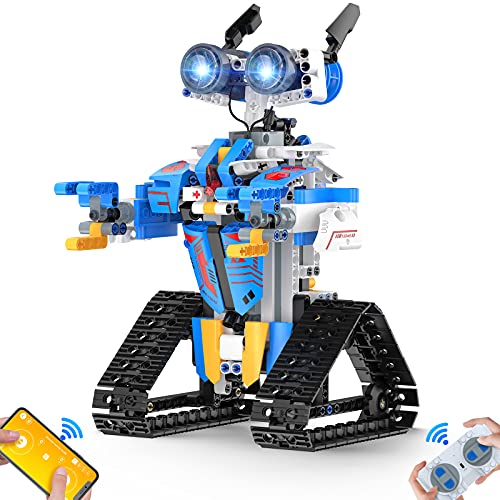
Henoda emphasizes STEM-building with 468+ blocks, enabling kids to construct and reconfigure robots while integrating remote control and Bluetooth-based app control. It supports four control modes — remote, path, voice, and stem programming — plus a 2.4GHz remote option, increasing the device’s utility as a child’s engineering skills advance. The kit blends hands-on assembly with coding-like play, promoting fine motor development, problem-solving, and creativity as children design and test different robotic behaviors.
LEGO Creator 3 in 1 Space Robot Toy

LEGO Creator 3 in 1 Space Robot combines classic brick-building fun with three distinct models: a space robot, a space dog, and a space rocket. The robot features movable arms and a rotating head, introducing simple engineering concepts like joints and balance. Although intended for 8-year-olds and up, a motivated seven-year-old with supervision can enjoy guided building and imaginative play, making it a strong choice for families who want long-term play value and creative storytelling opportunities.
SONOMO Remote Control Robot Dog

The SONOMO robot dog blends interactivity with programmable routines, featuring motion commands, recording up to 100 actions, and a responsive “woof” interaction. The device supports both remote control and programming modes, enabling kids to design sequences such as walking forward, sitting, dancing, or performing stunts. Its approachable design and pet-like behavior can engage children in a playful exploration of cause-and-effect, sequencing, and creative performance.
Buying Guide: How to Choose the Right Robot for a 7-Year-Old
Control Method
Consider how the child prefers to interact. Simple remote-controlled robots are immediate and intuitive, while gesture-based or app-controlled models introduce a basic level of programming without needing experience. For some kids, a mix of remote and gesture control provides a natural progression as they grow comfortable with commands and sequencing.
Learning Scope
Look for products that teach or reinforce basic STEM concepts such as sequencing, cause-and-effect, and problem-solving. Robots with multiple programming modes, pre-set actions, or the ability to record and repeat actions can help kids understand how changing one command affects outcomes.
Durability and Safety
Young children explore with vigor, so durable materials and reinforced joints matter. Non-toxic plastics, rounded edges, and stable bases reduce breakage and safety concerns during active play. Lightweight builds are easier for small hands to manage.
Build vs. Ready-to-Play
Building kits offer longer play value by requiring assembly, which supports fine motor skills and persistence. Ready-to-play robots deliver immediate fun and can be better for shorter attention spans or when a child wants instant action.
Expansion Potential
Consider whether the toy scales with your child’s growing curiosity. Models that can be reprogrammed, reassembled, or upgraded with additional components help extend the toy’s relevance beyond the initial purchase.
Age Appropriateness
Match the toy to a child’s cognitive and motor development. While many kits list broader age ranges, a seven-year-old may benefit most from products with clear, guided instructions, bright visuals, and simple-to-learn controls, with room to advance in complexity.
Safety and Privacy Considerations
For app-enabled options, review data permissions and ensure the companion app is kid-friendly and free from unnecessary data collection. Supervise use of online features and ensure devices meet safety standards appropriate for children.
In selecting a robot for a seven-year-old, prioritize models that balance immediate, engaging play with opportunities to grow into more complex tasks. The five featured options deliver variations in control, constructibility, and interactive features, offering reliable pathways to exploration, creativity, and foundational robotics concepts.