Best Reading Toys for Toddlers to Boost Early Literacy
Explore engaging, age-appropriate reading toys that support phonics, word recognition, and language skills for toddlers. This guide highlights five carefully selected options, drawing from wooden blocks, flash cards, phonics books, and interactive story devices designed for preschoolers. Each picks emphasizes hands-on learning, sensory engagement, and developmentally appropriate challenges to nurture a love of reading from an early age.
| Product | Brand | Key Feature |
|---|---|---|
| ShyLizard Montessori Reading Blocks | ShyLizard | Wooden blocks, vowel rotation, flash cards |
| Spin-and-Read Montessori Phonetic Blocks | LITTLE BUD KIDS | 60+ 3-letter words, rotating rods |
| Talking Flash Cards With Cat Reader | Aullsaty | 248 sight words, speech-enabled |
| Phonics Songs Book | LEARNING BUGS | Letter sounds through melodies |
| Little Tikes Story Dream Machine Starter Set | Little Tikes | Story time with lights and sounds |
ShyLizard Montessori Reading Blocks

The ShyLizard set centers on a wooden elephant-shaped tray with ten vowel-rotating blocks and forty sight-word flash cards. Each block measures about 1.2 by 1.2 inches, sized for small hands, with smooth edges to ensure child safety. The design supports early reading by prompting children to turn blocks to spell words that match the flash card’s image and word, reinforcing decoding and vocabulary skills in a tactile, visual way.
Designed for preschool and kindergarten activities, these blocks encourage letter recognition, vowel awareness, and word formation. The durable pine wood construction provides longevity for classroom or home use, while the included cards offer picture-word associations to strengthen memory and comprehension. The activity encourages independent exploration and guided learning, making it a practical option for parents and educators seeking an interactive reading toy.
Spin-and-Read Montessori Phonetic Blocks
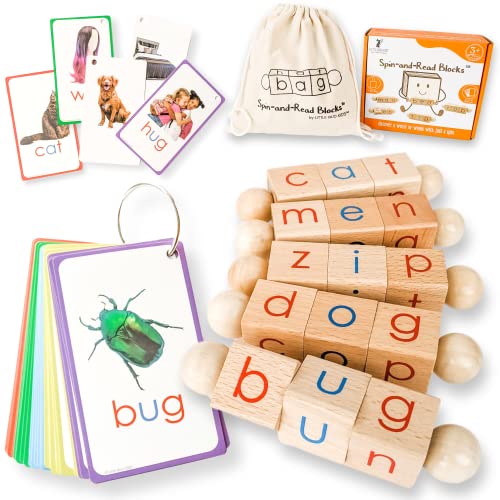
These rotating wooden rods feature vowels paired with consonants to create 60+ three-letter words. The blocks are designed to be self-contained learning tools that promote phonetic awareness and decoding skills. With color-coded vowels and a set of phonics flash cards, children can explore spelling patterns, blend sounds, and validate their progress through hands-on manipulation and matching activities. It’s a tactile pathway to early reading that supports independent practice and guided instruction alike.
The kit emphasizes self-correction and empowerment: double-sided CVC flashcards show the image on one side and the word on the other, enabling kids to verify their attempts. The design encourages exploration, pattern recognition, and gradual mastery of common decodable words—an important stepping stone before advancing to more complex reading tasks.
Talking Flash Cards With Cat Reader

The Aullsaty cat-reader flash cards offer a Montessori-inspired approach with 248 sight words across multiple subjects, including animals, vehicles, letters, numbers, and more. The talking feature uses a standard American accent to pronounce words aloud, aiding pronunciation practice and listening comprehension. The setup supports speech therapy needs and autism-friendly play by combining audio cues with visual cards for multisensory learning.
Children can insert cards into the reader to trigger sounds and phrases, with adjustable volume and a repeat option for practice. The breadth of vocabulary supports early literacy development, and the engaging animal-themed design helps sustain attention during learning sessions. This toy is suitable for individual quiet time or family learning activities and adapts to various stages of language development.
Phonics Songs Book

The Phonics Songs Book blends music with literacy, guiding children through A-Z sounds via catchy tunes. This screen-free resource helps toddlers focus on oral language development, letter recognition, and phonemic awareness without screens. The musical approach can improve memory retention of letter sounds and reinforce daily reading routines through sing-along activities that caregivers can join in on.
Designed for toddlers and preschoolers, the book emphasizes foundational phonics readiness and listening skills, bridging the gap between spoken language and written forms. It serves as a gentle, low-pressure introduction to letters and their sounds, supporting early reading confidence in young learners.
Little Tikes Story Dream Machine Starter Set
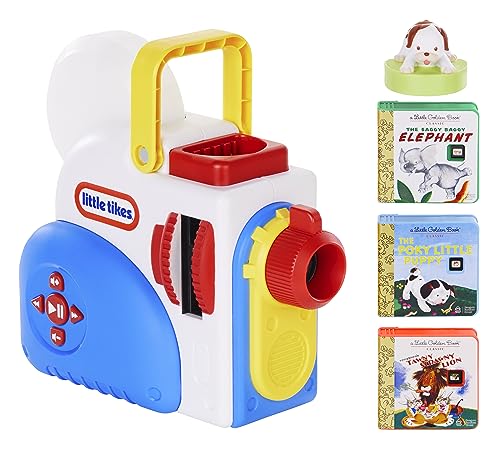
The Little Tikes Dream Machine Starter Set brings stories to life with wall projections, lights, and sound effects that accompany classic Little Golden Book tales. It includes three stories and a Poky Little Puppy character, enhancing listening, comprehension, and imaginative engagement during read-aloud sessions. The device can double as a nightlight with five ambient sounds, supporting a calm, bedtime-reading routine and reinforcing language exposure through narrative context.
As a multimodal reading tool, this starter set combines visuals, audio, and tactile interaction to help children connect words with meanings. It is suitable for group storytime or individual exploration, encouraging sustained interest in stories and early literacy concepts.
Buying Guide: Key Purchase Considerations
- Learning objectives: Choose tools that target phonemic awareness, decoding, and vocabulary, matching your child’s current reading level.
- Materials and safety: Opt for durable, non-toxic materials with smooth edges for toddlers and preschoolers.
- Interactivity: Balance hands-on manipulation with auditory cues to support multisensory learning.
- Durability and upkeep: Consider how easy the toy is to clean and how well it will withstand frequent use.
- Watering scope of content: Ensure the set covers a broad range of sounds, letters, words, and images to build a robust vocabulary.
- Guided use vs. independent play: Some items work well alone, while others benefit from adult involvement or classroom support.
- Progression and adaptability: Look for materials that scale with a child’s growth, adding complexity as skills develop.
- All-in-one vs. modular: Decide whether you prefer a complete kit or modular pieces that you can mix with existing learning aids.
- Verification of learning outcomes: Prioritize products with clear, assessable cues for progress, such as word lists or self-check mechanisms.
- Accessibility: Consider audio-enabled tools for children who benefit from spoken language reinforcement or have diverse learning needs.