Best RC Helicopter Kits for Beginners: Easy Flight Picks for Kids and Adults
For new pilots, choosing an RC helicopter that combines simple controls, stable hovering, and durable construction can make all the difference. The following top picks emphasize beginner-friendly features such as altitude hold, one-key takeoff/landing, and beginner-friendly speeds. This guide highlights five kits that balance safety, value, and learning potential, helping new flyers gain confidence quickly while enjoying engaging indoor or outdoor practice sessions.
Summary of chosen products
| Product | Brand | Key Feature | Flight Focus |
|---|---|---|---|
| SYMA S107H-E RC Helicopter | SYMA | Alloy construction, altitude hold, dual speeds | Durability, stability, learning growth |
| SIMREX RC Helicopter | SIMREX | One-key takeoff/landing, 2.4GHz, long hover | Easy control, reliable signal |
| XIKOTEC RC Helicopter | XIKOTEC | Altitude hold, 2 batteries, USB-C charging | Smooth indoor flight, beginner-friendly |
| SYMA S53H Rescue RC Helicopter | SYMA | Lifelike design, safety protection | Educational appeal, easy lift-off |
| SYMA S107H-E (Alternate) | SYMA | Alloy, one-key takeoff/landing, dual speeds | Durable beginner option |
SYMA S107H-E RC Helicopter For Beginners

The SYMA S107H-E is designed for beginners and younger flyers seeking a robust, easy-to-control option. Its full alloy body offers durability against inevitable bumps during practice, making it a reliable starter helicopter for indoor use. One-button takeoff and landing simplify flight initiation, while altitude hold provides a stable hover, helping new pilots focus on precision and trim. Two adjustable speeds let learners ease into flight at their own pace, then increase complexity as confidence grows.
SIMREX RC Helicopter With Easy Controls

The SIMREX model emphasizes user-friendly control with One Key Take-Off/Landing and gyro-assisted stability. The altitude hold function helps maintain a consistent height for precise hovering, which is essential for beginners working on basic maneuvering. A 2.4GHz remote ensures a stable, interference-resistant signal, and the included extra battery extends flying time up to about 30 minutes, supporting longer practice sessions without frequent recharging.
XIKOTEC RC Helicopter: Beginners’ Indoor Flight Kit
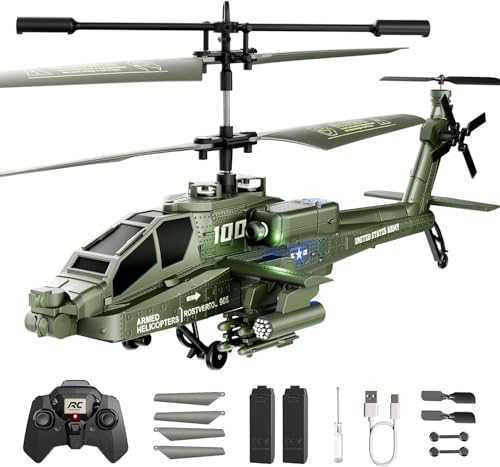
XIKOTEC focuses on stability and ease of use, featuring altitude maintenance and a one-key takeoff/landing system. The dual-battery setup and USB-C charging provide extended playtime and quick recharges, making it practical for regular practice. Its 2.4GHz control supports reliable, interference-free operation, which is especially helpful in busy households with multiple RC devices. The design prioritizes safe indoor flights for beginners and younger pilots.
SYMA S53H Rescue RC Helicopter: Beginner-Friendly

This model introduces a rescue-style design with a focus on safe operation and beginner-friendly handling. The intelligent safety system adds power-off protection if blades are blocked, supporting worry-free flight sessions. A bright indicator helps track battery levels, promoting proactive recharging. The simplified lift-off and steady flight make it accessible for kids and new pilots exploring aerial aviation concepts.
SYMA S107H-E: Durable Alloy Beginner

An alternate listing of the durable S107H-E emphasizes its alloy construction and user-friendly controls, including easy takeoff and landing, plus dual-speed options. This variant remains a solid pick for beginners who want a resilient indoor flyer that can withstand a few rough landings while they practice hovering and directional control, gradually building confidence and skills.
Buying Guide: Key Purchase Considerations For Beginners
- Flight stability and control: Look for altitude hold, one-key takeoff/landing, and a gyro stabilization system. These features reduce learning fatigue and help new pilots maintain steady flight.
- Durability and build materials: Alloy or reinforced foam bodies resist crashes and bumps during indoor practice, extending the life of the aircraft for beginners still developing coordination.
- Control range and interference: A 2.4GHz remote offers stable connections with reduced interference, especially in homes with multiple RC toys or devices.
- Power and flight time: Extra batteries and USB-C or quick-charge options let beginners practice longer without frequent recharging breaks.
- Indoor vs outdoor use: Indoors-friendly models with stable hover are ideal for beginners; outdoor use may require models with wind resistance and stronger stability.
- Safety features: Auto-stop protections, blade guards (where applicable), and clear indicators help ensure safer operation for kids and first-time pilots.
- Upgrade path: As skills improve, choose models with adjustable speeds, improved stability, or more sophisticated flight modes to grow with the pilot.
- Learning curve: Some helicopters emphasize beginner-friendly, forgiving handling, while others introduce quicker speeds to challenge already confident learners.
Across these options, expect variability in flight time per charge, ease of setup, and the learning curve. Beginners should start with models explicitly designed for learning, then progress to sturdier, feature-rich kits as confidence and skill grow. Always supervise younger pilots and ensure a safe, open area free of fragile objects during initial flights.