Best Push Walkers for Toddlers: Safe, Fun Tools to Help First Steps
Choosing a push walker for a toddler blends safety with developmental benefits. The right walker supports balance, encourages walking confidence, and doubles as an engaging activity center. Below is a curated guide to five top options, each offering unique features—from musical interaction to Montessori-inspired play—to suit varied learning styles and spaces.
Summary of Selected Products
| Product | Brand | Key Features | Where To Buy |
|---|---|---|---|
| Fisher-Price Baby Push Toy 2-Sided Panda Walker | Fisher-Price | Two-sided play, 3 Smart Stages, 100+ songs/phrases, Steady Speed wheels | Amazon |
| Fisher-Price Baby Push Toy 4-in-1 Snack Cart Walker | Fisher-Price | 4 play modes, multilingual options, 135+ songs/phrases, lights | Amazon |
| Tiny Land Wooden Baby Walker | Tiny Land | Adjustable speed, mirror, gears, rack for toys, wooden + non-toxic | Amazon |
| Radio Flyer Classic Walker Wagon | Radio Flyer | Resistance clickers, furniture bumper, toy storage | Amazon |
| Baby Einstein Musical Mix ‘N Roll Walker | Baby Einstein | 4 modes, 100+ melodies, multilingual options, walker-to-table modes | Amazon |
Across the options, common benefits include promoting upright posture, providing safe space to practice steps, and offering age-appropriate activities that stimulate curiosity. The following sections dive into each pick, outlining why it may fit your child’s pace and your home environment.
Fisher-Price Panda Walker: Dual-Sided Play And Learning

The Panda Walker from Fisher-Price pairs a friendly panda-themed design with practical features that grow with a child. It starts in a seated or resting position and transitions to standing and walking as confidence builds. The dual-sided play surface encourages exploration from either direction, helping infants move beyond a single locomotion pattern. Steady Speed wheels ensure a measured pace for beginners, reducing the risk of tipping or rushing ahead. With 3 Smart Stages of learning and 100+ songs, sounds, and phrases, this walker introduces the alphabet, counting, and opposites through music and interactive prompts, supporting early language development and cognitive recognition.
Fisher-Price Snack Cart Walker: 4-In-1 Growth Play
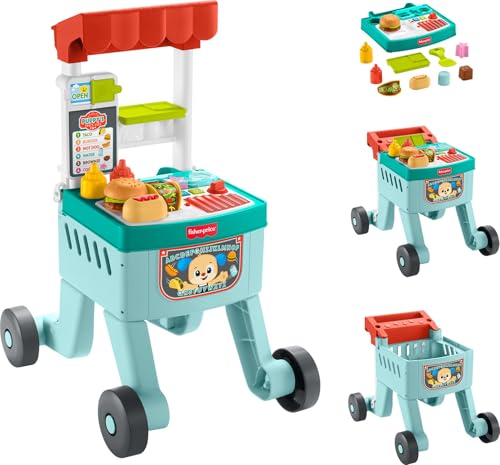
Designed to accompany a child from early sitting through to walking with pretend play content, this walker offers four modes that evolve as skills develop. The multilingual option enables language exposure early on, with English, Spanish, French, and Brazilian Portuguese available via a globe button. Content includes 135+ songs, sounds, and phrases, complemented by lights. Beyond walking, children can push the cart, press playful buttons, turn a grill dial, or open a cooler door to activate sensory feedback. This versatility makes it a strong option for families who value a broad, language-rich play experience in one compact unit.
Tiny Land Wooden Walker: Montessori-Inspired Walk & Learn

This wooden walker emphasizes a Montessori approach with a focus on independent exploration and balance development. It features a built-in speed control to help caregivers tailor the pace to a child’s stage, promoting safe, confident first steps. The rear rack allows toddlers to transport favorite toys, turning each walk into a mini-adventure. Made from sturdy natural wood with non-toxic finishes, it provides durable play that withstands the rough-and-tumble nature of early walking. Silent rubber wheels protect floors and minimize noise, a practical feature for indoor use.
Radio Flyer Classic Walker Wagon: Built-In Confidence and Storage

The Classic Walker Wagon from Radio Flyer focuses on gentle progression with resistance clickers that help regulate speed, aiding beginners in building balance and coordination. Its furniture bumper reduces the risk of wall or furniture damage during early attempts at walking. The wagon also doubles as a toy storage unit, enabling toddlers to move belongings as they practice standing and stepping forward. This combination of safety, stability, and utility makes it a practical choice for homes with limited space and a preference for a simple, durable design.
Baby Einstein Musical Mix ‘N Roll Walker

Baby Einstein offers a four-mode walker that blends musical learning with physical development. From a seated floor toy station to a behind-the-walker mode and a music-focused table, this unit remains engaging as the child transitions from sitting to standing and walking. With 100+ melodies and phrases and four language options (English, Spanish, French, and German), it fosters early language exposure and rhythm recognition while supporting steady walking progression. The parent volume control helps keep audio at comfortable levels for both baby and caregiver.
Buying Guide: Key Purchase Considerations For Toddler Push Walkers
When selecting a push walker for a toddler, consider a balance of safety, developmental value, and practical use in your living space. Here are several perspectives to help you decide:
- Safety and stability: Look for low centers of gravity, wide bases, and wheels with good traction. Adjustable speed or resistance can help pacing, especially for first steps. Bridges between play modes should lock securely and be free of sharp edges or small detachable parts.
- Age and developmental alignment: Some walkers emphasize early language and music, while others focus on fine motor skills or Montessori-inspired exploration. Match the walker to your child’s interests and developmental stage.
- Durability and materials: Wooden walkers tend to be heavier but more durable and eco-friendly, while plastic models may offer more features and light feedback. Ensure non-toxic finishes and smooth-surfaced edges.
- Space and portability: Consider the footprint and whether the walker folds or disassembles for storage and travel. Noise levels and wheel types (silent rubber vs. hard plastic) influence indoor use and floor protection.
- Learning features: Songs, phrases, and language options can support early literacy and cognitive development, but ensure the audio levels are parent-controlled for a comfortable environment. Interactive buttons, dials, and mirrors can extend playtime safely.
- Versatility and longevity: A walker that adapts from sitting to standing to walking, and includes additional activities (toys, mirrors, gears, shapes) can provide ongoing engagement as the child grows.
Selecting multiple perspectives helps: parents prioritizing portability might favor a lightweight plastic model with compact storage, while those seeking long-term engagement may opt for a wooden Montessori-inspired walker with a broad activity set. Families with smaller living spaces may appreciate a model with toy storage and floor-friendly bumpers to protect walls and furniture.