Best Minimalist Toys for 2 Year Old
Introduce your toddler to simple, engaging toys that encourage exploration, fine motor skills, and sensory learning without clutter. The following minimalist picks prioritize quality, safe materials, and open-ended play for active toddlers ages 1 to 3. Each item supports early development while keeping play focused and joyful.
style=”font-weight:bold;”>Product Summary
| Product | Brand | Age Range | Key Benefit |
|---|---|---|---|
| Toddlers Montessori Wooden Educational Toys | KMTJT | 1-3 years | Shape sorting, color and fruit recognition, fine motor development |
| Montessori Cars Ramp Toys | aotipol | 18+ months | Cooperative play, hand-eye coordination, multi-car ramps |
| Wooden Tool Set For Toddlers | JOYSINTOY | 2-4 years | Imaginative construction, problem solving, fine motor skills |
| Shape Sorter Wooden Toys | kecristv | 1-3 years | Stacking, geometry recognition, color matching |
| Toddlers Magnetic Fishing Game | kidus | 1-3 years | Fine motor control, color recognition, eye-hand coordination |
Note: All selections emphasize non-toxic materials, rounded edges, and simple, engaging play patterns that reduce sensory overload while promoting developmental milestones.
Toddlers Montessori Wooden Sorting Toys

The KMTJT Montessori set focuses on multiple learning avenues within a single wooden frame. It includes 12 fruit blocks, 8 carrots, 10 worms, and a five-sided cart with interchangeable shapes. The pieces are large, polished, and finished with non-toxic water-based paint to support safe handling. The toy supports color recognition, shape sorting, fruit identification, and early math concepts through hands-on play, all while building fine motor precision.
Educational Value: By sorting shapes and matching fruits to corresponding slots, toddlers practice hand-eye coordination and problem-solving. The diverse components encourage careful exploration and sustained attention, which are key milestones for ages 1–3.
Montessori Car Ramp Toy Set With Two Parking Lots

This multi-level car ramp system turns simple racing into cooperative play. Featuring two parking lots, six ramps, and three garages, it creates varied pathways and encourages turn-taking. The design invites toddlers to release cars from the top, watch them race down, and park them after finishing laps. The toy supports hand-eye coordination, attention span, and early spatial awareness, while its bright colors hold a toddler’s interest.
Educational Value: With two children able to play side-by-side, the set promotes social skills and shared play. The flowing ramps also help explain basic physics concepts like gravity and motion in an age-appropriate way.
Wooden Tool Set And Bench For Toddler Imaginative Play

The JOYSINTOY tool bench introduces practical pretend play with 42 pieces, including a child-sized apron, hammer, wrench, screwdriver, and more. Wooden construction and smooth edges ensure safety for early builders while encouraging constructive play. This set supports fine motor skills, problem-solving, and sequencing as children assemble pretend projects and engage in role play.
Educational Value: The open-ended nature of a tool workshop fosters creativity and engineering-curiosity, with opportunities for narrative play around building projects and real-world tasks.
Shape Sorter Wooden Puzzles For Toddlers

The kecristv shape sorter combines geometric blocks with diverse colors to teach shapes, colors, and spatial relationships. The set includes 20 pieces across five colors and five shapes, designed with chunky, easy-to-grasp parts and food-safe paint. It supports stacking, sorting, and matching, reinforcing early geometry and color recognition while promoting steady hand-eye coordination and problem-solving.
Educational Value: As children stack and fit shapes, they practice precision and spatial planning. The toy also offers built-in language practice as caregivers describe colors and shapes during play.
Magnetic Fishing Game For Toddlers
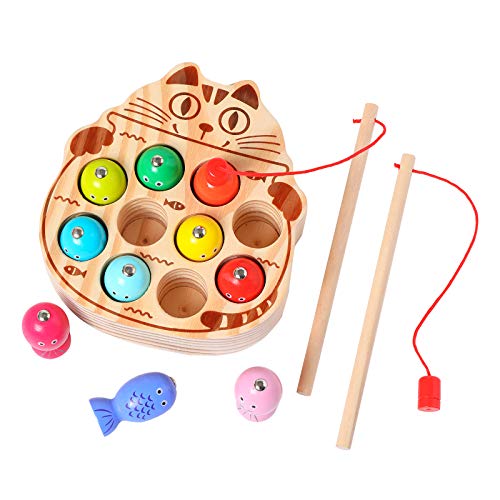
The kidus magnetic fishing game features two real wooden poles and ten vibrant fish figures. The magnetic fishing activity builds fine motor control, hand-eye coordination, and color recognition. Each fish is sized for toddler hands, with a safety-focused design that minimizes choking risks. The set provides a calm, engaging activity that can be done solo or with a caregiver, promoting focus and steady attention during play time.
Educational Value: Fishing games reinforce timing, precision, and patience, while introducing early counting and color differentiation as kids sort fish by color or size.
Buying Guide
- Materials and safety: Prioritize natural wood with non-toxic finishes and rounded edges. Look for pieces that are chunky enough for toddlers to handle without risk of choking or sharp corners.
- Open-ended design: Minimalist toys that support pretend play and multi-use exploration tend to sustain engagement longer than single-purpose items.
- Fine motor development: Choose toys that encourage pinching, grasping, stacking, and sorting to build hand strength and coordination essential for later writing tasks.
- Color and shape variety: Toys that expose children to a range of colors and shapes support early cognitive development without overwhelming sensory input.
- Social play potential: Some sets support cooperative play, which helps toddlers practice sharing, turn-taking, and communication with peers or caregivers.
- Age-appropriate complexity: Ensure the toy matches the child’s developmental stage. Too-simple toys may bore, while overly complex sets can frustrate and disengage.
- Storage and portability: Minimalist toys that are easy to store reduce clutter while making cleanup simple for caregivers.
- Maintenance: Look for durable finishes and easy cleaning, especially for wooden toys used by toddlers who explore textures and sometimes mouth objects.
Across these options, the strongest minimalist attributes include sturdy wood, safe finishes, and multiple play modalities—sorting, stacking, and imaginative role play—without overwhelming sensory input. When selecting, consider your child’s current milestones and preferred play style (build-and-create versus pretend play) to choose a toy that promotes consistent development while remaining engaging over time.