Best Mechanical Toys for 10-Year-Olds: Engaging STEM Kits and Robots
Parents and educators seek hands-on toys that foster curiosity, problem-solving, and practical understanding of science and engineering. The following picks emphasize mechanical construction, problem-based play, and screen-free learning, tailored for 10-year-olds who enjoy building, tinkering, and discovering how things work.
| Product | Brand | Key Focus | Age Range |
|---|---|---|---|
| Smartivity DIY Robotic Mechanical Hand | Smartivity | Mechanical hand, building skills, STEM basics | 8-14 |
| Smartivity DIY Pinball Machine | Smartivity | Arcade mechanics, creativity, 100% screen-free | 8-14 |
| Henoda Robot Toys | Henoda | Remote/app control, 468+ pieces, transforming robot | 8-16 |
| ELEGOO UNO R3 Smart Robot Car Kit V4 | ELEGOO | Arduino robotics, electronics, programming basics | 8-14 |
| Engino STEM Toys: Mechanics | Engino | Levers, linkages, structures, 16 models | 9+ |
Smartivity: Robotic Mechanical Hand Kit

Action-packed construction guides kids through building a functional mechanical hand, fostering fine motor skills and understanding of gear systems. The kit emphasizes 100% screen-free engagement, reinforcing practical science concepts as children assemble and manipulate movable parts. Included replacement parts support prolonged play, and the step-by-step manual keeps the build approachable for ages 8–14. This kit aligns with classroom-style STEM learning and at-home exploration.
Smartivity: Pinball Machine For Kids

Designed to bring arcade-style fun into the home, this mechanical pinball kit emphasizes iterative building and experimentation. The step-by-step guide helps kids assemble a functional pinball machine, cultivate problem-solving abilities, and appreciate physical principles such as momentum and force transmission—all without screens. Suitable for kids within the 8–14 age range, with a lifetime supply of replacement parts for ongoing play.
Henoda:Robots With APP And Remote Control
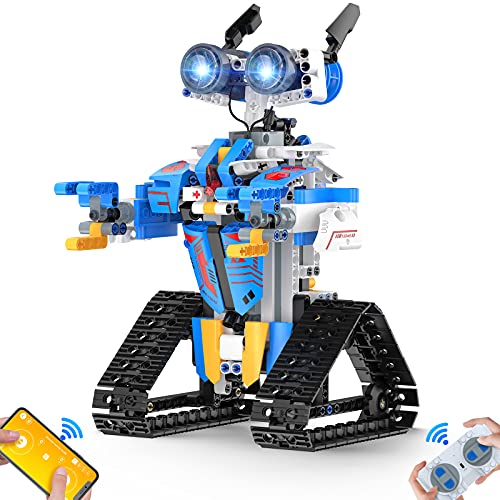
A comprehensive STEM-building experience featuring 468+ pieces for hands-on construction and creative play. The robot can move in multiple directions and rotate, with remote or app-based control enabling varied play scenarios. The set’s complexity supports older children while also engaging younger builders, helping develop motor skills, spatial reasoning, and basic robotics concepts. It includes multiple play modes, including remote control and programmable or voice-driven options.
ELEGOO UNO R3 Smart Robot Car Kit V4

For beginners to intermediate builders, this Arduino-based robot car kit offers hands-on programming and electronics experience. The package includes 24 module parts, such as obstacle avoidance and line tracing, with compatibility for Android and iOS control. The modular design simplifies assembly via standardized interfaces, supporting students as they explore sensors, control logic, and basic robotics engineering.
Engino: Mechanics Of Levers And Linkages

Engino’s mechanics-focused kit introduces levers, linkages, and supporting structures through 16 working models. Clear instructions are complemented by theory pages and quizzes, enabling learners to connect practical builds with underlying physics concepts. The set targets ages 9+ and integrates with a digital 3D app for augmented construction experiences, broadening how kids visualize and test designs.
Buying Guide
When selecting mechanical toys for 10-year-olds, consider these factors:
- Skill level and interest: Choose sets that balance complexity with accessibility to sustain engagement.
- Educational value: Look for kits that clearly connect building activities to science principles, such as gears, levers, and basic programming.
- Hands-on engagement: Prioritize screen-free options to promote active learning and fine motor development.
- Expandability: Some sets offer additional modules or replacement parts, enabling longer-term use even as skills grow.
- Safety and age appropriateness: Check piece counts, small parts, and supervision requirements to ensure safe play.
Compare features across options by focusing on build complexity, control methods (manual, remote, or app-based), and potential learning outcomes. For mixed interests, consider a kit that combines mechanical construction with basic electronics or programming to broaden STEM exposure. Evaluating replacement parts availability can also help sustain the toy’s long-term value for curious learners.