Best Lacing Cards for Preschoolers to Build Fine Motor Skills
Lacing cards offer a simple, engaging way for preschoolers to practice hand-eye coordination, improve fine motor skills, and learn colors, letters, and animals. This guide highlights five top options that balance durability, educational value, and kid-friendly designs. Each pick includes double-sided cards, colorful laces, and practical activities suitable for early learners. Read on to compare features, materials, and learning benefits to choose the best set for your child.
| Product | Brand | Highlights |
|---|---|---|
| Melissa & Doug Alphabet Wooden Lacing Cards | Melissa & Doug | 26 wooden cards, double-sided with pictures and letters; sturdy wooden construction |
| SpriteGru 26PCS Kids Lacing Cards | SpriteGru | 26 double-sided uppercase cards; real photo back; colorful laces |
| Quilinz Lacing Cards | Quilinz | 9 cards with 9 laces; fine motor and hand-eye coordination |
| The Very Hungry Caterpillar Lacing Cards | Chronicle Books | Classic character; pre-punched holes; promotes coordination |
| Winter Animal Lacing Cards | Dapaqami | 12 winter designs; large holes; durable cardboard |
Melissa & Doug Alphabet Wooden Lacing Cards
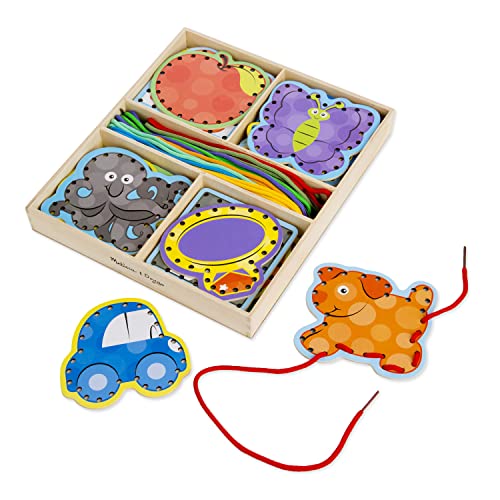
This lacing set includes 26 wooden cards, each featuring a full-color picture on one side and labeled upper- and lowercase letters on the other. A matching lace accompanies each card, designed for easy threading by small hands. The wooden construction provides durability for daily use and long-term play. With alphabet-focused visuals, kids can practice letter recognition while developing fine motor skills through repetitive lacing tasks. The double-sided design encourages letter-sound associations and early literacy in a tactile format.
SpriteGru 26PCS Kids Lacing Cards

This value-packed set includes 26 double-sided cards with uppercase letters and matching colorful laces. The back side features real animal photographs along with informative text, helping children learn through visuals and language prompts. The premium cardstock is durable, and the polyester laces resist easy fraying. The mix of letters and illustrated themes supports early literacy, fine motor practice, and cognitive development as kids trace paths, match letters, and experiment with sequences.
Quilinz Lacing Cards

Quilinz offers a 9-card set with 9 colorful laces designed to boost dexterity and hand-eye coordination. The cards are crafted to be toddler-friendly, with engaging visuals that foster creativity and attention. This set is ideal for beginners who are just starting to explore sewing and lacing, providing a manageable introduction to fine motor activities. The included laces are durable, allowing repeated use during classroom or home practice sessions.
The Very Hungry Caterpillar Lacing Cards

From Chronicle Books, this set features the beloved Very Hungry Caterpillar and friends. Lacing in and out of pre-punched holes improves hand-eye coordination and fine motor skills, with familiar characters that appeal to preschoolers. The design emphasizes sequence and color recognition as children thread laces through the holes, creating a sense of accomplishment with each completed card. This option is well-suited for guided or independent play in early learning environments.
Winter Animal Lacing Cards

Crafted around winter-themed imagery, this kit includes 12 different cardboard cards and matching laces. The large holes are designed for easy threading by small hands, and the four-foot laces offer flexibility for hanging or display after use. This set supports imaginative play and thematic learning, making it suitable for classroom activities or holiday-themed crafts. The sturdy cardboard construction ensures it can withstand regular preschool use.
Buying Guide: Key Purchase Considerations
- Material and durability: Look for sturdy wood or thick cardstock with reinforced holes to endure frequent play and rough handling common in preschool settings.
- Age appropriateness: Choose sets labeled for ages 3 and up or tailored to early learners to ensure appropriate difficulty and safety.
- Learning objectives: Consider whether you want alphabet focus, animal recognition, color and shape reinforcement, or a general fine motor development kit.
- Number of cards and laces: Value sets with 20–30 cards provide more varied activities and longer engagement without frequent repetition.
- Double-sided design: Cards with both pictures and letters or informative back sides support multi-skill development, including literacy and vocabulary.
- Non-toxic materials: Ensure printed inks and laces use non-toxic materials suitable for toddlers and preschoolers.
- Storage and presentation: A box or bag helps keep pieces organized and reduces misplacement in classroom or home settings.
- Safety considerations: Check for small parts that could be choking hazards; opt for larger laces and hole sizes appropriate for young children.
- Educational value vs. play: Balance goals between skill-building (fine motor, sequencing) and imaginative play (themes, storytelling) for well-rounded development.
- Maintenance: Look for washable or easy-clean surfaces, particularly for sets with printed art and photography.
When selecting a set, tailor your choice to the child’s interests and the learning environment. For homes with multiple kids, consider larger packs with multiple cards and durable laces to maximize shared use. In classroom settings, durability, clear instructional value, and ease of organization are especially important to sustain daily activities.