Best Keyboard for 7-Year-Olds: Top Kids Pianos for Learning and Fun
Finding age-appropriate keyboards for kids can support early music education, coordination, and confidence. The following selections are designed for 7-year-olds, offering varying features like demo songs, recording playback, and kid-friendly designs. Each option focuses on safety, ease of use, and engaging play to help young learners explore melody, rhythm, and creative expression.
The table below summarizes five strong picks for seven-year-olds, highlighting key capabilities to help families compare at a glance.
| Product | Brand | Key Features | Notes |
|---|---|---|---|
| Keyboard Piano for Kids, 37 Keys (Blue) | BIGFUN | 37 keys, dual speakers, ensemble mode, record playback, 8 tones, 8 rhythms, USB power | Colorful, beginner-friendly |
| Keyboard Piano for Kids, 37 Keys (Purple) | BIGFUN | Same multifunction setup as blue version, engaging purple design | Great visual variety for kids |
| EKKBHKI 32 Keys Kids Piano | EKKBHKI | 32 keys, detachable microphone, recording playback, 8 tones, 8 rhythms, 22 demos | Encourages singing along |
| Drmukie 37 Keys Keyboard Toy | Drmukie | 37 keys, 19 demos, 8 tones, 4 percussion, microphone, record playback | Durable and interactive |
| M SANMERSEN 37 Key Upgrade | M SANMERSEN | 37 keys, record playback, 8 tones, 19 demos, dual speakers | Beginner-friendly with modern design |
BIGFUN 37 Keys Keyboard – Blue

The BIGFUN 37-key keyboard for kids presents a compact, kid-friendly option with a familiar piano layout suitable for beginners. Its 37 keys are paired with dual speakers to deliver fuller sound, creating an inviting environment for practice and exploration. The instrument offers a variety of modes beyond basic play, including ensemble settings, a keyboard drum, and a range of tones and rhythms, which can support early music theory concepts and creative performance. A USB power option simplifies setup, especially in classrooms or learning centers. The included record playback function enables children to listen back to their performances, reinforcing practice and improvement.
BIGFUN 37 Keys Keyboard – Purple

This purple variant mirrors the blue model’s feature set, making it a visually engaging option for young learners who enjoy bright colors. With 37 keys, the included dual speakers, ensemble mode, and a range of rhythmic options help children experiment with melodies and accompaniments. The USB-powered design keeps it simple to plug in wherever learning happens. Recording and playback support allows kids to create and review their own “mini concerts,” which can build confidence in performance and help teachers track progression over time.
EKKBHKI 32 Keys Keyboard with Microphone
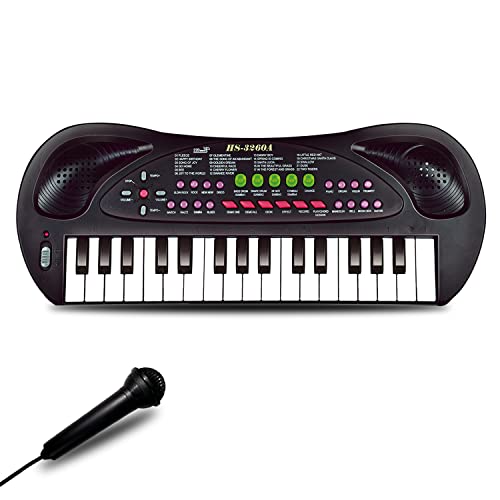
The EKKBHKI 32-key model stands out with a detachable microphone, inviting children to sing while they play. This can enhance verbal expression and musical timing. It also provides essential learning tools: a single speaker, ensemble mode, recording and playback, plus a diverse set of tones, rhythms, and demos. The focus on early music education supports hand-eye coordination, rhythm recognition, and basic music theory. The compact keyboard is well-suited for beginners who are developing finger dexterity and confidence in making music with others and at home.
Drmukie 37 Keys Keyboard Toy

Drmukie’s 37-key toy keyboard emphasizes interactive play with a microphone, multiple demos, tones, and rhythms. Its dual speakers and “record & playback” capability provide immediate feedback and a sense of accomplishment after playing a melody or a simple arrangement. The design is geared toward younger players who benefit from a tactile, engaging instrument that blends exploration with musical structure. The included demos and animal sounds spark curiosity, while the ergonomic size makes it approachable for little hands and growing fingers.
M SANMERSEN 37 Key Upgrade

The M SANMERSEN 37-key model offers a modern beginner-friendly design with a wood-grain aesthetic and dual speakers for a richer sound. It includes a record & playback feature, 19 demos, 8 tones, 8 rhythms, and several percussion options, providing a robust foundation for basic music theory and practice. The keyboard is tailored to early learners who are transitioning from toy keyboards to more structured practice. Its safety certifications and compact size support home use, classrooms, and practice corners where kids can focus on melodies and rhythm without distraction.
Buying Guide: Key Purchase Considerations And Comparisons
- Age suitability and safety: Choose models that specify age ranges around 3–7 years and have non-toxic materials and certified safety standards to align with a 7-year-old’s developing motor skills.
- Keys and keyboard feel: For beginners, 32–37 keys are common; a larger keyboard helps with scale familiarity, while a compact option is easier for smaller hands to manage.
- Sound options and rhythms: Look for a mix of tones, rhythms, and demos. More modes encourage exploration of melody, harmony, and beat patterns, reinforcing musical theory basics.
- Recording and playback: A recording function enables kids to listen to their performances, which supports self-assessment and iterative practice. This feature is especially helpful for classroom or family-sharing moments.
- Microphone inclusion: A built-in or detachable microphone supports singing along, which can improve pitch awareness, timing, and facial expressions during performance.
- Power source and setup: USB power options simplify setup in various spaces. Consider whether the device can run on batteries for portability or requires a power adapter for consistent use.
- Durability and age-appropriate design: Bright colors and rugged construction often appeal to kids, but ensure materials can withstand typical play and occasional drops.
- Expansion potential: Some models offer more advanced features or higher-key ranges for when a child progresses beyond basic lessons, providing a longer product lifespan.
- Teacher and caregiver alignment: If the instrument will be used in teaching contexts, look for clear demos and easy-to-follow playback loops to support structured lessons.
- Budget and long-term value: While toy keyboards are affordable, consider models with more features that remain engaging as skills grow, rather than purchasing multiple replacements.
In summary, the ideal keyboard for a seven-year-old balances engaging play with foundational learning tools. The options listed here provide a spectrum—from colorful, entry-level models to more feature-rich designs—so families can select based on interest, space, and learning goals. Prioritize devices that encourage regular practice, support budding musicians’ confidence, and offer clear pathways for progression.