Best Interactive Chess Board Solutions for Teaching and Learning
Teaching chess with interactive boards can accelerate learning for beginners and keep advanced players engaged. This article highlights five top-rated interactive chess boards designed for teaching, with features like built-in AI, voice coaching, LEDs, and online play. Each option supports learners through guided moves, puzzles, and real-time feedback. Use the buying guide below to compare strengths like AI strength, puzzle libraries, display quality, and multi-mode play.
Summary of selected products
| Product | Brand | Key Teaching Feature | Connectivity | Strength Level |
|---|---|---|---|---|
| Talking Chess Academy Electronic Chess Set | JWSCHESSUN | Voice tutor, puzzle library | Standalone | Beginners to Advanced |
| Vonset L6 Electronic Chess Board | Vonset | LED prompts, talking coach | Built-in display | Beginner to Intermediate |
| ChessUp 2 | ChessUp | Light-up moves, AI coaching | WiFi, online play | All levels |
| Advanced Electronic Chess Board | JWSCHESSUN | AI master engine, large board | Standalone | Intermediate to Advanced |
| Lexibook Chessman Elite | LEXiBOOK | 64 difficulty levels, LEDs | Standalone | Family learning |
Talking Chess Academy Electronic Chess Set

The Talking Chess Academy combines a 32-bit AI engine with an interactive teaching system. It offers multiple difficulty levels to accommodate a range of players from beginners to advanced. Its standout teaching features include voice warnings for mistakes and legal/illegal moves, plus a voice setup verification. The system also provides 128 pre-set endgame puzzles and 99 famous games for structured practice, complemented by five mini-chess games and several novice-friendly levels. A built-in hint feature helps suggest moves when needed.
Vonset L6 Electronic Chess Board
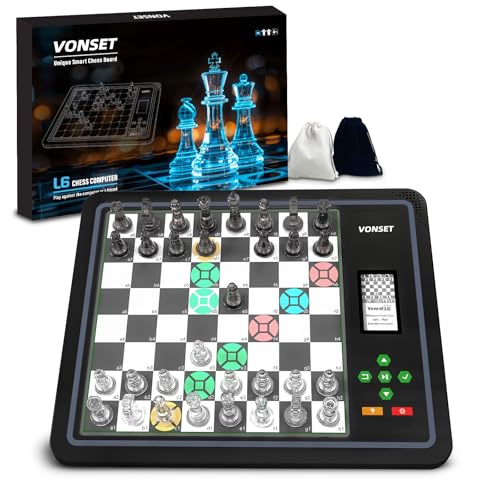
The Vonset L6 adds LED prompts and a talking coach to help learners. It features 1,000 built-in stalemate puzzles and multiple learning modes, including Training for beginners and a Match mode for practice against the device, as well as a Human mode for two-player games. Its strength scales with levels and supports players up to a high level of play, with an emphasis on simulating authentic game scenarios, time management, and game-state feedback. This is well-suited for families and individuals building foundational skills.
ChessUp 2 – Interactive Chess Set

ChessUp 2 integrates built-in WiFi for online play with Chess.com and Lichess. It also uses TouchSense and LED-lit guidance to reveal potential moves, mistakes, and blunders. AI coaching is customizable per player, allowing beginners to receive hints while experts can opt for a hint-free experience. With online play and a teaching mode, ChessUp 2 is versatile for in-family learning or competitive progress with a global audience.
Advanced Electronic Chess Board

This board targets serious learners with an adjustable master-level AI engine rated at ELO 2200+. It features a large board with oversized pieces for clear visibility, magnetic stability to keep pieces in place during intense matches, and a premium playing surface. The emphasis is on professional-grade challenges that promote skill development for mid-to-high level players while still offering approachable options for improving players who want realistic play experiences.
Lexibook Chessman Elite
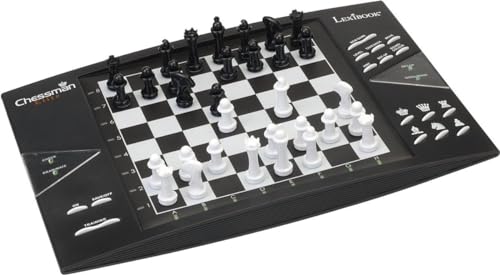
Lexibook Chessman Elite provides 64 difficulty levels across four play modes with 16 LEDs indicating moves. This option is designed for family use and progressive learning, offering an accessible introduction to electronic play while growing alongside the learner’s capabilities. Its straightforward design and adjustable difficulty make it suitable for households seeking a structured, step-by-step improvement path for kids and adults alike.
Buying Guide: What to Consider When Choosing an Interactive Teaching Chess Board
- Learning goals and skill level: Decide whether you mainly need beginner-friendly coaching, advanced practice, or online competition. Look for adjustable AI difficulty, a broad puzzle library, and clear move feedback.
- Feedback mechanisms: Voice coaching, LED move indicators, and on-screen prompts each support different learning styles. Boards with customizable hints can adapt as learners improve.
- Puzzle and content library: A robust library of endgames, classic games, and timed challenges accelerates skill development. Check for the number and variety of puzzles and lessons.
- Display and ergonomics: Larger boards, legible pieces, and well-spaced squares reduce eye strain and improve accuracy during practice. Magnetic pieces help maintain stability during play.
- Connectivity and modes: Online play (via WiFi) expands practice opportunities, but standalone boards are often more affordable. Consider whether you want two-player, training, or tournament modes.
- Durability and setup: Check build quality, power options, and ease of setup. A durable board with reliable touch or voice input improves long-term use, especially for kids.
- Future growth: Some boards offer firmware updates or expansion of content. If you expect to upgrade, verify that the product supports updates or additional features over time.
- Price-to-value balance: Compare features like AI strength, display quality, and teaching tools against price. A higher upfront cost may pay off with more effective learning tools and durability.
Interactive chess boards for teaching blend technology with pedagogy to create structured practice and guided discovery. When selecting a board, prioritize a learning pathway aligned with the student’s current level, preferred feedback style, and how you plan to structure lessons—whether solo practice, family teaching, or classroom use.