Best Hide and Seek Toys for Kids: Top Picks for Interactive Fun
Hide and seek is a timeless game that sparks imagination, active play, and social skills in children. This guide spotlights five engaging hide-and-seek toys that blend learning with silly, music-filled fun. Each option offers unique features—from light-up cues to interactive timers—designed to captivate kids ages 3 and up while encouraging movement, listening, and cooperation. Read on for quick product highlights, images, and practical buying considerations to help you choose the best fit for your family.
| Product | Brand | Key Benefit |
|---|---|---|
| Silly Poopy’s Hide & Seek | WHAT DO YOU MEME? | Engaging clues, singing cues, battery-powered play |
| Bluey Game Hide and Seek Electronic Figure | Bluey | Active movement with timer-driven rounds |
| Bluey Game Hide and Seek Figure | Bluey | Articulated figure for hands-on posing |
| Bluey Game Hide and Seek Electronic Bingo Figure | Bluey | Timer-guided hide-and-seek with bingo play |
| Blue Orange Where’s Squeaky Fun | Blue Orange | Interactive squeaky mouse with responsive sounds |
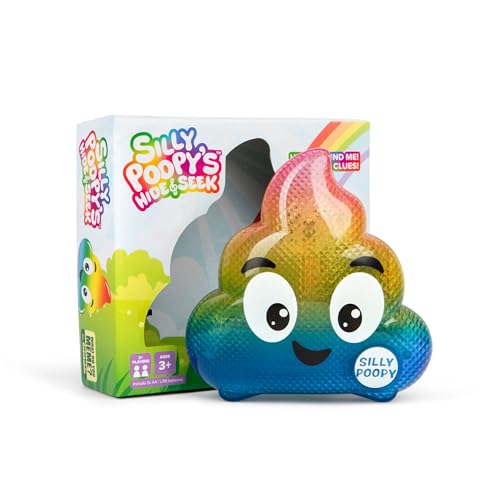
Silly Poopy’s Hide & Seek by Relatable
The Silly Poopy Hide & Seek toy invites children to hide and search with playful clues and a celebratory song when found. Watering the activity with music and light-up cues, this toy encourages active play, singing, and dancing. It is marketed as an educational toy for toddlers and preschoolers, with emphasis on social interaction and early learning skills. The included components are a single Silly Poopy toy and two AA batteries, making setup straightforward for caregivers and young players.
Bluey Game Hide and Seek Electronic Figure

This Bluey figure brings a dynamic hide-and-seek experience with an electronic, talking toy that activates a timer for interactive rounds. The figure stands at about 6 inches with movable arms and legs, enabling kids to pose and move it during play. The built-in sounds and timer help children develop listening skills and understand turn-taking during group play, making it a solid choice for busy households and classroom-like play sessions.
Bluey Game Hide and Seek Figure

This articulated Bluey figure is designed for hands-on play, featuring a variety of poses and action-oriented pretend play that mirrors the hide-and-seek experience. The toy’s compact size makes it ideal for small hands to manage while its interactive features encourage kids to listen for prompts and cues during a playful round of hide-and-seek.
Bluey Game Hide and Seek Electronic Bingo Figure

The Bingo figure variant introduces a bingo-style looping mechanic with an electronic timer. Children hide the figure and react to talking and giggling cues as the timer progresses. Standing at about 6 inches tall with movable limbs, it supports dynamic, interactive play and cooperative group activity, reinforcing listening and turn-taking through a rhythmic audio experience.
Blue Orange Where’s Squeaky Fun

This Blue Orange hide-and-seek game centers on a squeaky mouse that makes sounds when hidden and found. It emphasizes listening, motor coordination, and social interaction as players search for the squeaky friend. The game includes a simple setup that requires no reading, making it accessible for younger children while fostering recall, following directions, and cooperative play among peers and family members.
Additional Options Considered
Other strong contenders in this category include the Silly Poopy & Friends Ghost and Gingerbread hide-and-seek toys, which offer light-up features and sing-along moments that support early literacy and rhythm. While they share the same core activity of seeking and finding, their Halloween or seasonal themes can influence interest based on a child’s tastes and the event calendar.
Buying Guide: How To Choose The Right Hide And Seek Toy
- Age appropriateness: Look for toys labeled for toddlers or early elementary ages. Some models are better for younger kids with simple prompts, while others feature timers and more complex sounds for older children.
- Interaction style: Decide whether your child prefers electronic timers, singing prompts, or physical pose-and-play figures. Timed rounds can boost anticipation and turn-taking, while interactive figures encourage imaginative scenarios.
- Durability and safety: Choose sturdy materials with rounded edges and non-toxic finishes. Consider washable fabrics for easy cleaning, especially for toys used in travel or classroom settings.
- Portability and storage: If you travel or use toys in classrooms, favor compact designs with minimal setup and simple storage options. Some models include carrying cases or compact packaging to save space.
- Learning aspects: Evaluate whether you want music, counting, language prompts, or social skill development integrated into play. Most options provide a mix of movement, listening, and cooperation benefits.
- Maintenance: Check battery requirements and accessibility. Toy models that require frequent battery changes may increase ongoing costs and maintenance time for caregivers.
- Theme and accessibility: Consider whether a non-seasonal theme (e.g., animals or Bluey characters) will sustain interest longer than seasonal options such as ghosts or gingerbread figures.
When selecting a hide-and-seek toy, balance thematic appeal with learning goals and daily routines. For households prioritizing social interaction and physical activity, multi-feature electronic figures can deliver rich, playful experiences. If portability and quick setup are essential, simpler plush or fabric-based options may work best. Finally, consider how the toy will fit into your existing toy rotation to maximize engagement and development over time.