Best First Tricycle for Toddlers: Top Picks for 1-3 Year Olds
Choosing a first tricycle blends safety, growth potential, and playful exploration. The following selections are tailored for toddlers ages 1 to 3, offering multiple modes, adjustable components, and parent-assisted features to build confidence, balance, and riding enjoyment. Below you’ll find five well-rounded options with clear benefits for early riders.
| Product | Brand | Key Features |
|---|---|---|
| newyoo Toddler Tricycle with Push Handle (Khaki) | newyoo | 5 modes; adjustable handlebar/seat; parent push option |
| newyoo Tricycles for 1-3 Year Olds (Blue) | newyoo | 5 modes; adjustable components; parent-assisted |
| Radio Flyer Red Rider Trike | Radio Flyer | Three-wheel design; storage bin; push/pedal versatility |
| SEREED Colorful Lighting Toddler Tricycle (Green) | SEREED | Quick assembly; smooth ride; lightweight yet sturdy |
| Umatoll Tricycle for Toddlers (2-5 Years) | Umatoll | Durable build; wide wheelbase; 3-position adjustable seat |
Note: Product details reflect the listed features and capabilities for safe, engaging early riding experiences. The table above helps compare core aspects at a glance.
newyoo 5-Mode Toddler Tricycle (Khaki)
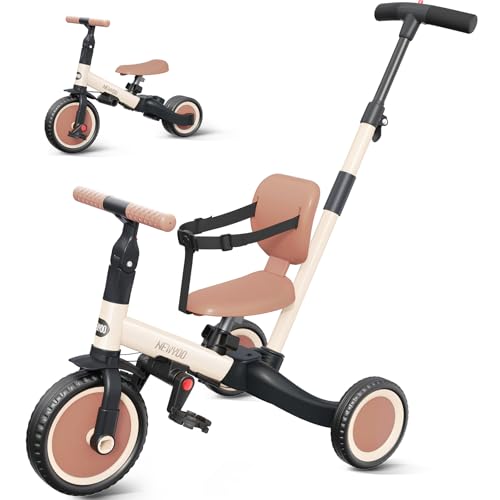
The 5-in-1 design supports several ride styles as a child grows: Push Tricycle, Push Balance Bike, Tricycle, Balance Bike, and Bike modes. This flexibility makes it suitable for ages 1 to 3. A 135-degree steering push handlebar enables caregivers to control speed and direction, reducing fall risk. The handlebar, seat, and pedals are adjustable, with a red button to switch positions. This enables parents to tailor the setup for height and balance training, encouraging progressive independence while maintaining supervision.
newyoo 5-Mode Tricycle (Blue)

This blue variant mirrors the same 5-mode versatility: Push Tricycle, Push Balance Bike, Tricycle, Balance Bike, and Bike modes. Designed for 1–3 year olds, it includes a parent push handle that rotates up to 135 degrees to guide steering and speed. The adjustable handlebar, seat, and pedals allow families to customize fit as children learn to pedal and balance. The multi-position pedal placement enables transitions between modes, supporting gradual skill development under caregiver supervision.
Radio Flyer Red Rider Trike

The Red Rider Trike offers a classic, sturdy three-wheel design that emphasizes stability for beginner riders. It includes a storage bin, making it easy for kids to carry small treasures on rides. The tricycle supports a smooth ride ideal for sidewalks and driveways, with a lightweight frame that assists caregivers when transporting the rider. A rear hand grip on the seat back can help adults steer while the child pedals, introducing independent riding with guided control during early practice.
SEREED Colorful Lighting Toddler Tricycle (Green)

This tricycle focuses on quick assembly and a smooth ride. It features precision bearings and a user-friendly pedal design to help little riders transition from walking to pedaling confidently. The frame is lightweight yet sturdy, balancing portability and durability for frequent use at home or in the park. A green colorway may appeal to children who enjoy vibrant, engaging toys that spark imaginative play alongside steady riding practice.
Umatoll Tricycle For Toddlers (2-5 Years)

The Umatoll tricycle emphasizes durability and stability with a carbon steel frame and reinforced components. A wide wheelbase reduces tipping during initial rides, and the 3-position adjustable seat accommodates growing toddlers from ages 2 to 5. This design supports longer usage as a child develops pedaling and steering skills, while the robust construction offers lasting safety and performance through early riding milestones.
Buying Guide: Key Purchase Considerations
- Age and growth range: Look for trikes labeled for ages 1–3 or 2–5 with adjustable seats, handlebars, and pedals so the toy adapts as your child grows.
- Safety features: Seek a stable three-wheel design, low seat height, wide wheelbase, and a harness or backrest if provided. A parent push handle is valuable for new riders and supervising adults.
- Adjustment options: Devices with multiple modes (push, balance, trike, bike) support motor skill development and confidence. Ensure pedals can be moved to accommodate balance training stages.
- Build quality and materials: Steel or sturdy aluminum frames offer durability. Lightweight but robust designs improve portability and reduce fatigue for caregivers during transport.
- Portability and storage: Consider foldability or compact dimensions for small spaces and travel. A removable or attachable push handle adds convenience for family outtings.
- Maintenance: Check for simple assembly and replaceable wheels or components. Easy-clean surfaces help with hygiene and upkeep in busy households.
- Ballooning features vs. essential basics: Prioritize foundational safety and steady ride quality; extra features like built-in lights can enhance engagement but are not essential for early riders.
- Budget and value: Compare long-term use potential across models with adjustable components. A slightly higher upfront cost may yield longer usability as a child grows.