Best Fidget Toys for Kindergarten: Calming Tools That Encourage Focus
Kindergarten classrooms benefit from simple, engaging tools that help young learners manage energy, anxiety, and sensory needs. The following selection of fidget toys covers a range of textures, sounds, and motions designed to support attention, self-regulation, and classroom participation. Each option below is kid-friendly, classroom-appropriate, and safety-focused for early learners.
Summary Table Of Chosen Products
| Product | Brand | What It Helps With | Amazon Link |
|---|---|---|---|
| Scientoy Fidget Toy Set, 35 Pcs | Scientoy | Sensory variety, stress relief, classroom rewards | View |
| hand2mind Ten Frame Sensory Bubble Poppers | hand2mind | Early math concepts, counting, number sense, calm down tool | View |
| Fidget Toys Sensory Stone (6 Pack) | KLT | Calming tactile focus, anxiety relief, portable stress tool | View |
| Sensory Fidget Magnet Toys (6 Sliders) | LESONG | Quiet tactile sliders, focus aid, classroom or desk use | View |
| Fidget Spinner 2 Pack (Glow) | Fasray | Light-up focus toy, sensory stimulation, calm from stress | View |
Scientoy Fidget Toy Set, 35 Pcs
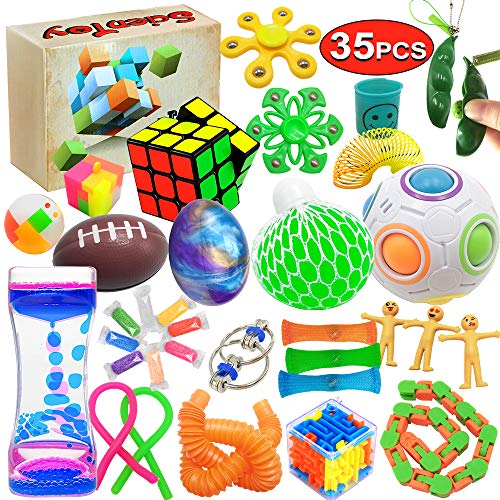
Scientoy’s 35-piece set provides a broad range of textures and activities ideal for kindergarten classrooms. The collection includes items like a rainbow magic ball, a liquid motion timer, squeeze balls, maze puzzle, mesh and marble toys, foam putties, and more. The assortment supports various play modes—squeezing, stretching, flipping—so students can choose what fits their focus needs at any moment. With a compact gift box packaging, it also serves well as a classroom reward or individual calm-down kit. The set emphasizes safety with high-quality ABS material and non-toxic construction, designed to meet common toy safety standards in both Europe and the U.S. This makes it suitable for children with ASD, ADHD, or high stress who benefit from a gentle, sensory-driven outlet.
hand2mind Ten Frame Sensory Bubble Poppers
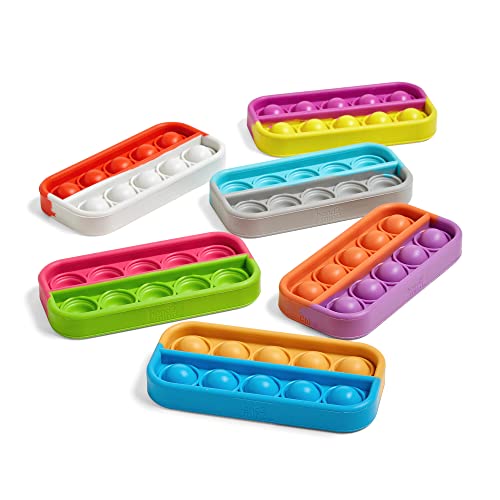
These Ten Frame Poppers apply a visual and tactile approach to early math concepts. By popping bubbles in patterns that align with the numbers 5 and 10, children develop counting, addition, and subtraction recognition in a hands-on way. The tactile feedback helps students stay engaged and can serve as a quiet energy outlet during math centers or transitions. The set is designed for young learners ages 3-5 and can be used in small groups or individual work. Beyond math, they act as anxiety relief tools by offering a concrete, tangible way to regulate attention and calm nerves without disrupting peers.
Fidget Toys Sensory Stone (6 Pack)

KLT’s textured sensory stones are compact and quiet, designed to be rolled or rubbed for calming tactile feedback. Each stone features a distinct texture and vivid color, offering a discreet fidget option for students who tend to fidget or engage in repetitive nervous habits. Their small size makes them easy to pocket or place in a desk, making them a practical choice for quick focus resets during lessons. The stones are described as silent stress tools, helping students manage anxiety during testing or transitions without drawing attention from classmates.
Sensory Fidget Magnet Toys (6 Sliders)

LESONG’s silicone magnet sliders present a soft-touch, skin-friendly alternative to harder sliders. With six distinct tactile experiences, they provide instant calm and can be used across classrooms, therapy kits, or homes. The silicone material is durable and comfortable, reducing noise and distraction while allowing students to repeat motions that help improve focus. The set is particularly suitable for students with autism, ADHD, or high anxiety, offering a discreet way to manage sensory needs during group work or independent study.
Fidget Spinner 2 Pack, Glow

The Fasray glow-in-the-dark spinners add a sensory-rich element to focus activities. With a pair of spinners and a LED glow feature, children can engage in a tactile spinning motion that promotes concentration and reduces restlessness. The durable ABS construction and quality bearings deliver smooth spins with minimal noise, making them suitable as classroom prizes or individual calm-down tools during transitions. They are simple to use and can help kids channel energy into a constructive, repeatable action.
Buying Guide
Choosing fidget toys for kindergarten requires balancing engagement, safety, and classroom practicality. Consider the following perspectives to guide purchases:
- Safety and age-appropriateness: Look for non-toxic materials, rounded edges, and products designed for young children. Certifications like ASTM or EN71 compliance indicate a basic safety standard.
- Sensory variety: A mix of tactile, visual, and proprioceptive tools helps meet diverse needs. A 5–7 item starter set with a few different textures can cover most students’ preferences.
- Calm-down vs. energizing: Some toys provide subtle, silent sensory feedback ideal for quiet corners, while others offer more dynamic interaction suitable for transitions or movement breaks.
- Durability and maintenance: Kindergarten environments demand sturdy toys that withstand frequent handling. Easy-to-clean surfaces and minimal small parts reduce risk.
- Portability and storage: Compact items or sets with simple storage solutions work well for backpack, desk, or cubby use. Clear bins help with quick classroom rotation.
- Educational alignment: Toys that support early math concepts, fine motor skills, or emotional regulation can align with classroom goals beyond sensory benefits.
- Cost and value: A larger set may seem pricier but can save money over time by serving multiple students and multiple activities throughout the year.
When integrating fidget toys into instruction, consider establishing brief, predictable routines. For example, designate a “focus corner” time with a chosen toy, then rotate items weekly. This supports consistency while allowing students to experiment with different sensory experiences. Teacher and aide guidance helps maximize the educational value, ensuring students use the tools to support attention, self-regulation, and classroom participation.