Best Engineering Kits for Teens: Hands-on Projects That Build Skills
Exploring engineering through hands-on kits helps teenagers grasp core concepts in mechanics, electronics, and design. This article highlights five top options that balance engaging projects with solid educational value, making them ideal for curious teens who want to explore STEM outside the classroom.
Summary of chosen products:
| Product | Brand | Focus | Key Benefit |
|---|---|---|---|
| Structural Engineering: Bridges & Skyscrapers | Thames & Kosmos | Structural models, forces, loads | 20 models with extensive pieces and manual |
| Architectural Engineering | Thames & Kosmos | Buildings, trusses, domes | Flexible pieces and real-world concepts |
| Conqueror Robot Tank Kit | ELEGOO | Arduino-based robotics | Hands-on coding and electronics |
| Mechanical Engineering: Machines & Vehicles | Thames & Kosmos | Gears, force & motion | 20 mechanical models with durable parts |
| Robotics Engineering Kit | Tinkering Labs | STEM projects, problem solving | 50+ parts and 10 projects for creativity |
Thames & Kosmos Structural Engineering: Bridges & Skyscrapers

The Structural Engineering kit from Thames & Kosmos offers a comprehensive introduction to force, load, compression, and tension through practical building challenges. With over 285 interchangeable pieces, teens can assemble 20 distinct models that demonstrate how different structural elements respond under stress. The included 36-page illustrated manual provides step-by-step experiments and assembly guides, helping learners connect theory with real-world construction. This kit emphasizes hands-on experimentation and iterative design, which supports understanding of structural integrity and failure modes in bridges and skyscrapers.
Thames & Kosmos Architectural Engineering

Architectural Engineering by Thames & Kosmos invites students to step into the roles of architect and engineer. The kit enables the construction of over 20 different models of structural elements and real-world buildings, including trusses, arches, and domes. Flexible building pieces simulate steel frames, expanding the range of projects beyond simple structures. Assembling these models helps teens understand how spatial design and material choices influence stability, aesthetics, and function, aligning with curriculum-style exploration of structural concepts and architectural thinking.
ELEGOO Conqueror Robot Tank Kit
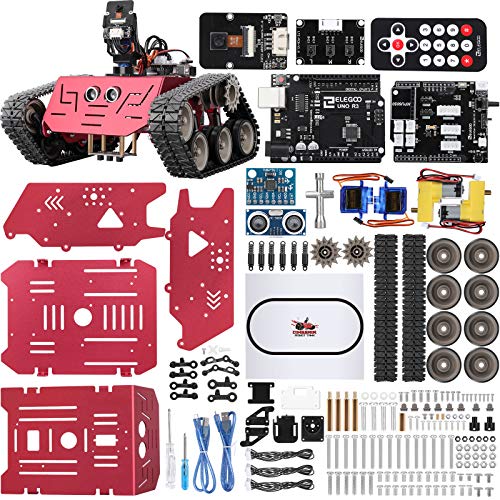
Based on Arduino development, the ELEGOO Conqueror Robot Tank Kit provides a practical entry into robotics and coding. The kit includes open resources and a graphical programming interface to create building-block style functions for a programmable vehicle. DIY assembly fosters concentration and hands-on ability, while the car’s features encourage experimentation with sensors, motion, and control logic. This option is well-suited for teens who prefer tangible robotics projects combined with accessible programming workflows.
Thames & Kosmos Mechanical Engineering: Machines & Vehicles

This Mechanical Engineering kit focuses on the science of machines and vehicles, delivering 20 hands-on building projects that illustrate force and motion. Teens will construct a range of models—from a windmill to an all-wheel-drive ATV—while learning about gears, momentum, energy transfer, and simple machines. The durable, reusable system encourages experimentation, reconfiguration, and repeated testing, supporting progressive mastery of mechanical concepts and real-world engineering thinking.
Tinkering Labs Robotics Engineering Kit
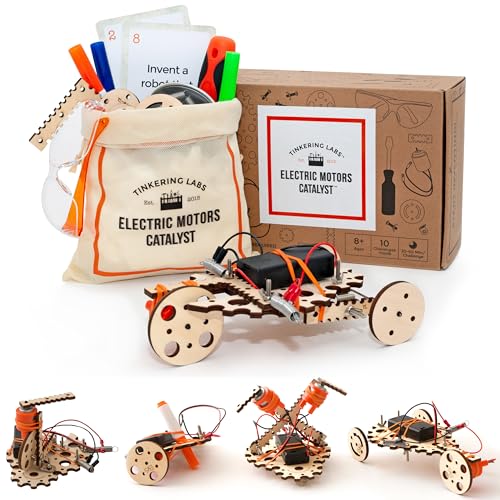
The Tinkering Labs Robotics Engineering Kit emphasizes creativity and problem solving through electronics and robotics. With 50+ parts and more than 10 STEM projects, teens can explore electrical circuits, motors, and sensing concepts while developing hands-on engineering skills. The kit’s open-ended design encourages experimentation and iterative invention, aligning with how engineers prototype and refine ideas in real-world projects. It’s a strong option for teens who want flexible exploration beyond preset models.
Buying Guide
Key purchase considerations for teen-focused engineering kits:
- Learning objectives: Determine whether the teen wants structural mechanics, robotics, electronics, or a combination. Choose kits that clearly map to those goals (e.g., forces and structures vs. coding and control).
- Durability and reusability: Look for kits with robust components. Reusability supports ongoing experimentation as skills grow, especially in mechanical and robotics sets.
- Hands-on complexity: Balance challenge with accessibility. Some kits start with basic concepts and gradually introduce advanced topics, ideal for self-paced learning.
- Programming and software: For electronics or robotics kits, assess the required software and programming language. Graphical interfaces can ease beginners, while text-based coding suits progressing learners.
- Expandability: Consider whether parts are compatible with other kits from the same brand. Cross-compatibility fosters extended projects without starting over.
- Safety and age range: Verify age recommendations and safety features, particularly for kits with small parts or power components.
- Project variety: A higher number of models or experiments provides broader exposure to concepts, increasing long-term engagement.
- Teacher or parental support: Some kits include comprehensive manuals, online resources, and troubleshooting guides, which can help with guided learning.
In summary, the five selected kits span structural engineering, architectural design, robotics, and general mechanical concepts. Each offers a distinct pathway into engineering thinking—whether through constructing bridges, programming a robot, or exploring gears and motion. Depending on a teen’s interests, one or more of these kits can serve as a meaningful, long-term educational hobby that complements classroom learning and fosters practical problem solving.