Best Emotion Cards for Preschoolers: Engaging Tools for Early Learning
Social-emotional learning is a cornerstone of early education. The right emotion cards help preschoolers recognize feelings, express themselves, and build empathy in play-based activities. The following selections offer durable designs, clear illustrations, and engaging gameplay to support classroom and homeschooling routines. Use these tools to boost emotional literacy, language skills, and self-regulation in young learners.
| Product | Brand | Key Benefit | Link |
|---|---|---|---|
| Feelings & Emotions Puzzle Cards | Learning Resources | Puzzle-based emotion matching to reinforce SEL concepts | Amazon |
| Feelings Emotions Match Game | Aizweb | 20 feelings with memory-style matching for expressive skills | Amazon |
| Emotions Flash Cards | Teacher Created Resources | 56 durable, double-sided cards with storage options | Amazon |
| Express Your Feelings Memory Match Game | hand2mind | Memory game featuring 20 unique feelings and social skills focus | Amazon |
| Feelings Emotions Cards for Kids Therapy | MEROCO | Realistic expressions with a mirror for self-observation | Amazon |
Learning Resources Feelings & Emotions Puzzle Cards

These puzzle cards help kids ages 3+ strengthen emotional awareness by matching feelings to real-life images. The set supports social-emotional learning concepts through engaging, Montessori-inspired play. The unique puzzle shapes require children to find the single correct match, promoting critical thinking alongside emotional literacy. Vivid illustrations keep preschoolers engaged while practicing emotional regulation through guided activities. Suitable for classrooms and homeschool environments, these cards pair well with calming corners or structured SEL time.
Aizweb Feelings Emotions Match Game

Designed to help toddlers recognize and express feelings, this memory-style match game features 20 distinct emotions. Players flip two cards at a time, aiming to match pairs while expanding emotional vocabulary. The set also supports early memory skills, attention, and critical thinking as kids learn through colorful, kid-friendly imagery. Cards are thick and rounded for safe handling, with durable construction to withstand repeated play in busy classrooms or at home. Easy to clean and store between sessions.
Teacher Created Resources Emotions Flash Cards
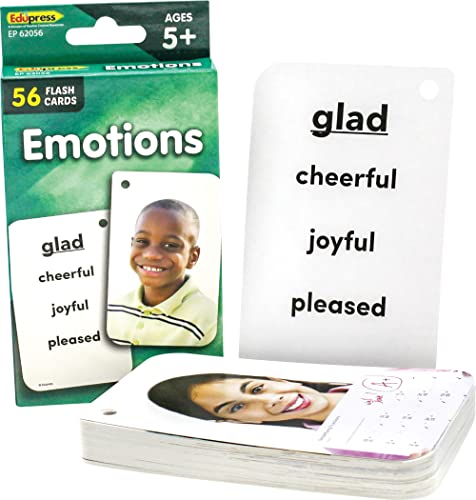
With 56 durable, double-sided cards, these emotion cards provide a broad spectrum of feelings for early learners. Included teaching tips offer practical guidance for integrating the cards into daily routines. The hole punched option helps educators organize and store the set efficiently. This resource supports vocabulary development, empathy, and social communication through structured activities and spontaneous conversations about moods and responses.
hand2mind Express Your Feelings Memory Match Game
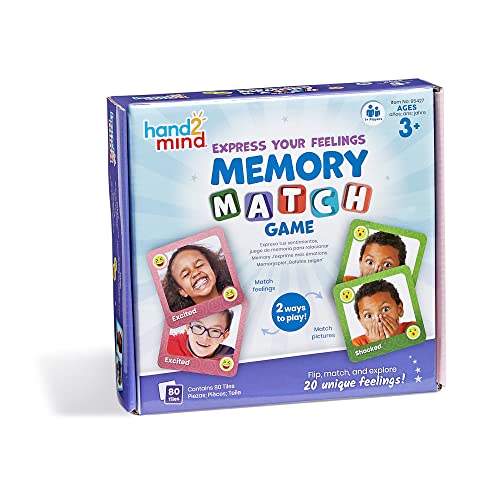
This memory match game centers on 20 unique feelings and expressive faces to help children recognize emotions in themselves and others. It emphasizes social skills by encouraging conversations about feelings during play. The color-coded borders on tiles align with accompanying Feelings Chart references, supporting coherent SEL guidance. The game is suited for small groups, centers, and individual practice, reinforcing memory, attention, and emotional regulation through interactive play.
MEROCO Feelings Emotions Cards for Kids Therapy

These emotion cards feature realistic expressions to aid understanding and imitation of various feelings. A mirror included with the set enables children to observe and mirror their own expressions, reinforcing facial awareness. The deck covers a broad range of emotions such as joy, anger, sadness, and surprise, making it suitable for speech therapy, autism support, and other special education needs. Durable materials and multiple cards per emotion ensure long-term use in therapy and classroom settings.
Buying Guide: Key Purchase Considerations
Choosing the right emotion cards for preschoolers depends on several factors. Consider the age range and developmental level of your learners, ensuring the design aligns with your SEL goals. Card durability and size are important for early hands-on activities; rounded corners and thick stock reduce wear and tear during frequent use. Look for features that support classroom management, such as storage solutions, labeling, and obvious visual cues. A mirror or coping-skill prompts can extend the tool’s usefulness beyond recognition to regulation and problem-solving. Finally, assess whether a set emphasizes storytelling, turn-taking, or structured matching games to fit your lesson plans and group dynamics.
- Durability and safety: thick cards, rounded edges, non-toxic materials.
- Visual clarity: simple, expressive illustrations suitable for preschoolers.
- Educational alignment: supports vocabulary, emotional labeling, and social skills.
- Engagement: game formats (memory, puzzle, matching) that sustain attention.
- Scalability: sets with multiple emotions per deck and easy storage options.
- For classrooms: prioritize sets with teacher guides, storage holes, and higher card counts for larger groups.
- For homeschool: select compact sets that are easy to navigate and store; consider sets with mirrors or coping-skill prompts for independent use.
- Special needs: look for realistic expressions, clear language, and sensory-friendly colors to aid recognition and comprehension.