Best Digital Pianos and Keyboards for Beginners Guide
Choosing a beginner-friendly digital piano or keyboard involves balancing weighted keys, touch response, polyphony, class-leading learning features, and portability. This guide reviews five well-suited options and explains what matters most for newcomers who want to build solid fundamentals while staying within a budget. Each section covers key features, playability, and learning-friendly tools to help you decide.
Summary of chosen products
| Product | Brand | Key Type | Polyphony | Notable Feature | Amazon Link |
|---|---|---|---|---|---|
| Donner DEP-20 Beginner Digital Piano | Donner | 88-Key Weighted | 128 | Dual-tone mode and 238 tones | View |
| 88 Key Keyboard Piano Electric Keyboard (RWESU) | RWESU | 88-Key (Half-Weighted) | 1000 tones, 150 demos | Bluetooth, MIDI, USB-MIDI | View |
| RockJam 61-Key Keyboard Kit | RockJam | 61-Key | Various built-ins | All-in-one learning kit | View |
| MOSEN Digital Piano 88-Key | MOSEN MUSIC | 88-Key Weighted | 128 | Dream sound source with dual speakers | View |
| Hamzer 61 Key Digital Keyboard Kit | Hamzer | 61-Key | 255 Timbres, 255 Rhythms | Stand, speakers, mic included | View |
Donner DEP-20 Beginner Digital Piano

The Donner DEP-20 offers an 88-key weighted keyboard with adjustable touch response, emulating an acoustic piano feel for serious beginners. It includes a 3-pedal unit and a furniture-style stand, making it a compact setup suitable for home practice. With 238 tones and 128-note polyphony, players can explore diverse sounds while maintaining clarity in complex passages. The dual-tone feature allows layering two voices for richer practice and creative exploration, which can aid in understanding timbre and accompaniment.
The DEP-20 emphasizes connectivity and versatility: sustain and triangle pedals are integrated, and there are audio inputs and outputs for external devices. This makes it easier for beginners to connect headphones for quiet practice or to collaborate with teachers and peers during lessons. While its weighted keys support dynamic expression, new players may benefit from focusing on basic scales, chords, and rhythm patterns before tackling extended repertoire.
88 Key Keyboard Piano Electric Keyboard (RWESU)

This RWESU model uses an 88-key layout with half-weighted action, offering a sensitive touch that suits beginners who want a stepping stone toward full-weighted keyboards. The piano provides a broad palette with up to 1000 timbres and 150 demo songs, plus dual keyboard capability and Bluetooth connectivity. The extensive timbre selection supports experimentation and helps learners identify preferred genres. Its MIDI compatibility enables practice with editing software or mobile apps, supporting structured practice and progress tracking.
The keyboard kit includes a stand, carrying case, microphone, headphones, and USB-MIDI functionality, which enhances classroom-like lessons at home. While the keys may not replicate the weight of an acoustic piano, the semi-weighted feel is often ideal for beginners who are transitioning from toy keyboards to more serious study. Users should allocate time for setup and calibration to ensure the best touch response during practice.
RockJam 61-Key Keyboard Kit
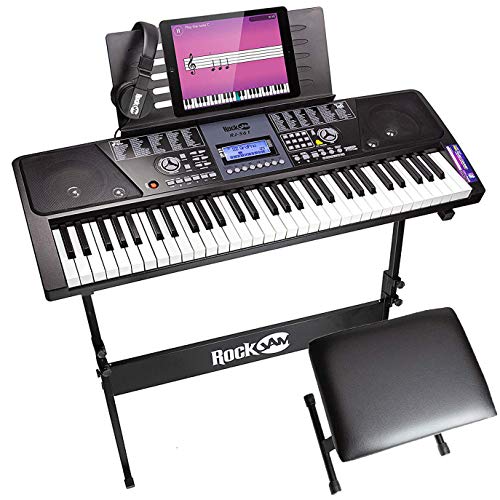
The RockJam 61-key kit is designed for beginners who want a compact, affordable option with built-in teaching aids. It features a dynamic LCD display that provides 100 rhythms, 50 tones, and 30 demo songs, which can guide practice sessions and facilitate learning in a structured way. The kit includes a stand, stool, headphones, and instructional accessories, creating a ready-to-play experience out of the box. Recording and playback functionality lets learners review performances and monitor progress over time.
Key considerations for this model include the smaller key count and lighter touch, which are suitable for early learners but may require an eventual upgrade to full-size, weighted keys as skills advance. It is particularly appealing for families or classrooms that need a cost-effective, all-in-one solution without sacrificing educational value.
MOSEN Digital Piano 88-Key Weighted Keyboard

MOSEN’s 88-key weighted keyboard delivers a realistic piano action with a high-quality tone library and robust polyphony. The kit includes a stand, sustain pedal, music rest, and a complementary set of 128 tones, 128 polyphony, and 88 demo songs. The rich sound and dual-piano mode support expressive playing and ensemble experiments, while the included recording features let learners capture ideas for improvement or practice sessions. The sound engine aims to balance affordability with a convincing acoustic-like experience for beginners.
For beginners, the multi-function operation panel helps with quick access to tone selection, recording, and split or dual modes. As with other weighted-key instruments, users should focus on posture, finger technique, and accurate rhythm counting to build a solid foundation before exploring more complex pieces.
Hamzer 61 Key Digital Keyboard Kit
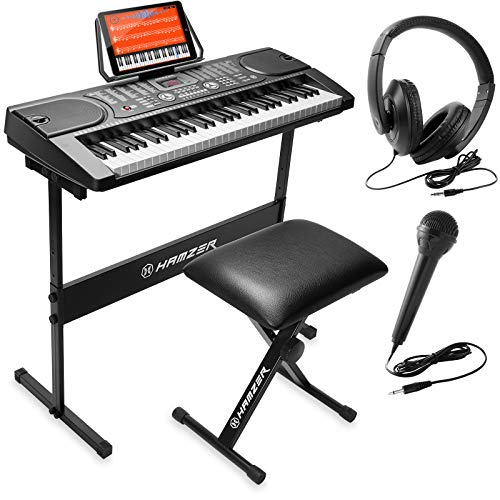
The Hamzer kit is a beginner-friendly package that includes 61 keys, built-in speakers, and a complete accessories bundle: stand, bench, headphones, microphone, and teaching stickers. It offers 255 timbres and rhythms, along with 24 demo songs, making it a strong option for children or new players who want a tactile, classroom-like learning environment. The enjoyment factor comes from the immediate ability to play along with rhythms and experiment with sounds, which can sustain motivation during early practice.
Considerations for Hamzer include the 61-key layout and non-weighted action, which is typical for budget starter keyboards. This can be perfectly adequate for early learners, but players who intend to perform more classical piano repertoire will eventually want to progress to 88-key weighted keyboards. The included learning aids and portability are clear advantages for home practice and travel.
Buying Guide: Key Purchase Considerations
- Key action and touch: Beginners typically benefit from weighted or semi-weighted keys that mimic an acoustic piano, aiding in developing correct finger strength and technique.
- Polyphony and tones: A higher polyphony (at least 128) prevents note dropout in complex passages, while a broad tone library supports exploration of timbre, genre, and accompaniment styles.
- Learning features: Built-in lessons, demo songs, rhythms, and youth-friendly interfaces can accelerate early progress and engagement.
- Connectivity: MIDI, USB-MIDI, Bluetooth, headphones, and external speaker options enable easy practice, recording, and collaboration with teachers or apps.
- Portability and setup: For students and families, a lighter, easy-to-assemble setup facilitates frequent practice in multiple spaces and during travels.
- Included accessories: Stands, pedals, benches, and carrying cases add value and help maintain proper posture and technique during practice.
- Future-proofing: Consider whether you want to scale up to full weighted 88-key action, or expand with advanced pedals, audio interfaces, and software in the coming years.
Overall, the best beginner instrument balances touch sensitivity, a helpful library of sounds and education tools, and practical features like quiet practice options and easy connectivity. Buyers should align their choice with current goals—whether they expect to study classical piano, explore modern music, or simply enjoy casual practice.