Best Colors Chart for Kindergarten: Top Visual Learning Posters for Classrooms
Choosing the right color-focused charts can boost early math, literacy, and cognitive skills. This guide highlights five high-quality colors-centric posters sets that help kindergarteners recognize colors, understand color mixes, and connect colors to everyday objects. Each pick is designed for durability, classroom use, and easy display.
| Product | Brand | Highlights |
|---|---|---|
| Hadley Designs 16 Educational Posters | Hadley Designs | 16 laminated 11×17 posters; colorful, boho-themed; includes colors, ABC, numbers |
| Traditional Snellen Color & Kindergarten Color Distance Chart | KASHSURG PROFESSIONAL MEDICAL PRODUCTS | Color eye chart for classroom visibility; 20 feet distance |
| 6 Learning Posters for Toddlers & Kids | WINDVALE | Alphabet, numbers, colors, shapes, days, months |
| Bright Creations Incentive Chart | Bright Creations | Reward and behavior tracking with multicolor stickers |
| Hadley Designs ABC Posters For Classroom | Hadley Designs | 4 large laminated posters for alphabet, colors, shapes, numbers 1-100 |
Hadley Designs 16 Educational Posters for Toddlers

These laminated 11×17 posters are designed in the USA and cover a broad set of early learning concepts, including colors, ABCs, numbers, shapes, days of the week, and more. The laminated finish supports daily classroom use and resists wear, making them suitable for bustling kindergarten spaces. The 16 posters help teachers create a cohesive learning wall that fosters quick color recognition and memory retention. The bold, engaging visuals are tailored to keep young learners focused and excited about new information.
Traditional Snellen Color & Kindergarten Color Distance Chart

This chart combines a classic Snellen-style color assessment with color-distance cues suitable for early learners. It is sized for visibility in typical classroom layouts (22 x 11 inches) and designed to support color recognition activities, matching exercises, and color naming tasks. While primarily a vision tool, its high-contrast colors and large type can serve as a practical anchor for color-focused literacy and cognitive activities in the kindergarten setting.
6 Learning Posters for Toddlers & Kids

These posters cover the alphabet, numbers 1-10, colors, shapes, days of the week, and months. They are designed as a compact classroom décor set that brightens walls while offering clear, legible information for early learners. Constructed on thick cardstock with a matte finish, the posters resist wear during daily use and are suitable for wall displays, centers, or small-group instruction. The color variety and simple visuals support color identification and matching activities.
Bright Creations Incentive Chart for Classroom

This 16-color horizontal incentive chart integrates color-coded progress tracking with rewards. It serves as a versatile tool for classroom behavior management and goal setting, aligning with color-themed activities and routines. Teachers can customize with stickers and use it as a visual reminder for daily tasks, making it easier for students to associate colors with achievements. The chart works well alongside color-learning activities and can be adapted for home use as a behavior monitor.
Hadley Designs ABC Posters For Classroom

Four 11×17 laminated posters focus on the alphabet, colors, shapes, and a 1-100 number chart. The durable lamination supports long-term wall display in PreK and kindergarten settings, and the graphics are designed to capture young learners’ attention. The set is ideal for establishing color associations and early numeracy, supporting both group instruction and independent work. Dry erase markers can be used for interactive practice, enhancing color and letter recognition through play.
BEAWART 18 Laminated Educational Posters
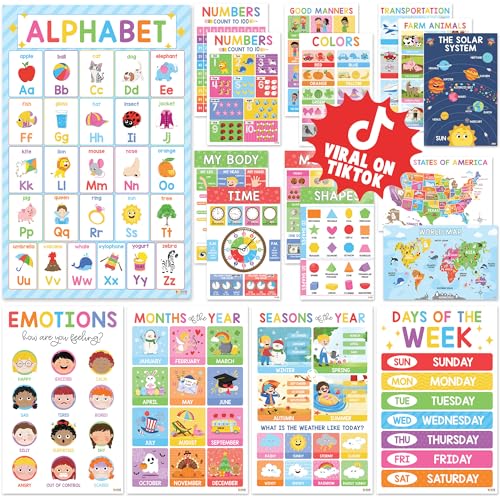
This set delivers 18 laminated posters covering a broad spectrum of early-learning topics, including colors, letters, days of the week, numbers 1-100, and more. The double-layer lamination provides robust durability and waterproofing for busy classrooms. The wide range of visuals supports color recognition, language development, and basic math concepts, making it a versatile choice for busy kindergarten environments.
16 Laminated Educational Posters for Toddlers & Kids

This 16-poster bundle spans basic recognition, geography, and biology, growing with students from toddlers to early elementary grades. The 3mm lamination ensures durability and water resistance, allowing dry-erase markers to be used for interactive practice. Posters ship flat, arrive crease-free, and are ready to hang, reducing setup time for teachers and providing a stable, engaging color-centered learning wall.
Buying Guide: Key Considerations For Color-Focused Kindergarten Posters
- Durability: Look for laminated or coated posters to withstand daily classroom use and frequent handling by young learners.
- Size and Readability: Larger posters (11×17 inches or similar) with bold fonts and high-contrast colors improve visibility from a distance.
- Content Coverage: Choose sets that include core color concepts (color names, color mixing basics) plus related literacy and early math items (letters, numbers, shapes) to support integrated learning.
- Adaptability: Posters that dry-erase friendly or magnetic-ready provide interactive practice and can be reused across activities.
- Classroom Fit: Consider how many posters you need to avoid crowding walls; modular sets can offer flexible display options.
- Educational Alignment: Content should align with early learning standards and support both teacher-led instruction and independent work.
- Visual Design: Bright, engaging imagery with clear labeling helps with color recognition and vocabulary building.
- Ease of Setup: Flat-shipped and crease-free posters save setup time and ensure a tidy wall display.
- Maintenance: Materials that are easy to wipe clean help maintain a tidy, inviting environment for learning colors and related topics.
In selecting color-focused posters for kindergarten classrooms, prioritize durability, readability, and the ability to reinforce color concepts alongside numbers and letters. The right combination supports visual learning, promotes engagement, and creates a cohesive color-themed learning environment.