Best Clock for Learning Time: Top Picks for Teaching Kids to Tell Time
Finding an engaging clock that helps children learn to tell time can boost classroom and home learning. The following selections are designed to build time-telling skills with hands-on activities, visual cues, and interactive features. Each product below is chosen for age suitability, instructional value, and reliable performance for American learners.
| Product | Brand | Why It Stands Out |
|---|---|---|
| BEST LEARNING Learning Clock | BEST LEARNING | Award-winning, interactive talking clock with quiz mode and Sleep Mode for bedtime learning. |
| Learning Resources Time Activity Set | Learning Resources | Comprehensive teaching system with a realistic clock, activity cards, and manipulatives. |
| Oyster&Pop Learning Clock | Oyster&Pop | Silent, non-ticking design with labeled minute and quarter marks and a kid-friendly look. |
| Melissa & Doug Turn & Tell Wooden Clock | Melissa & Doug | Sturdy wooden clock with reversible time cards for hands-on practice. |
| hand2mind Plastic Mini Geared Clock | hand2mind | Color-coded, movable hands that clearly demonstrate hours and minutes. |
BEST LEARNING Learning Clock

The BEST LEARNING clock is designed to engage children with multiple modes that reinforce time concepts. It features a talking function to confirm the time, a quiz mode to test understanding, and a Sleep Mode that doubles as a night-light with classical music. The clock encourages hands-on practice by allowing children to align the hour hand with the hour numerals and then adjust the minute hand to match the desired time. This approach supports gradual mastery from whole-hour to partial-hour reading, suitable for ages 3 through 6 and beyond.
Learning Resources Time Activity Set
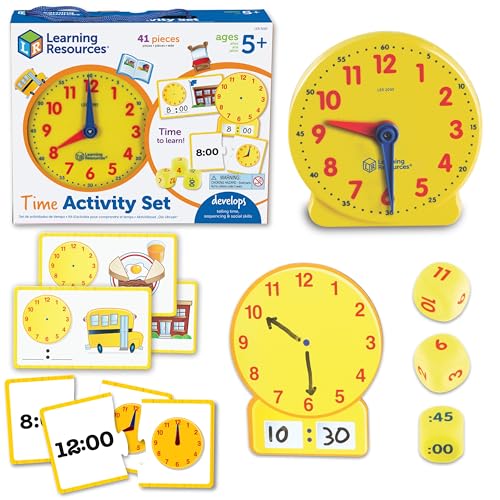
This set provides a comprehensive, multi-sensory approach to learning time. Children explore a realistic clock with synchronized hands that move together, then use color-coded components, activity cards, and dice games to reinforce concepts. The teaching clock, double-sided activity cards, dry-erase board, and additional manipulatives make it a versatile classroom resource for elementary students, homeschool learners, and even small-group activities.
Oyster&Pop Learning Clock

The Oyster&Pop clock emphasizes a quiet learning environment with a silent mechanism, reducing classroom distractions. Its 10-inch face uses labeled minute hands and quarter markers to guide children toward accurate time-reading skills. The design aims to be kid-friendly and classroom-appropriate while offering a free e-book with activity ideas to build confidence in analog time. An acrylic face and simple power source support long-term durability for homes and schools alike.
Melissa & Doug Turn & Tell Wooden Clock

This classic wooden clock includes 12+ reversible time cards, offering a tangible way to practice time concepts. The design allows kids to confirm time by matching analog clock faces to digital or textual representations. It is sturdy and well-suited for hands-on learning, classroom centers, or homeschooling activities, helping students connect numbers with real-world time-telling tasks.
hand2mind Plastic Mini Geared Clock
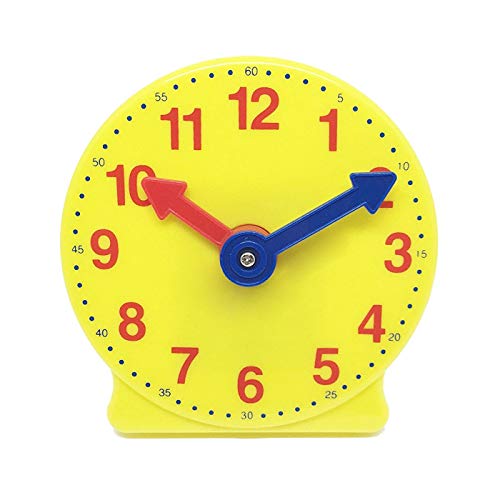
This compact clock focuses on the relationship between hours and minutes through color-coded, movable hands. The clear, large numerals and edge markers support early learners in understanding the flow of time. The kit is ideal for homeschool kits, small-group instruction, and classroom demonstrations, offering a practical way to build foundational time-telling skills with hands-on manipulation.
Buying Guide: Key Considerations When Choosing a Learning Clock
Choosing a clock for teaching time should balance instructional features, durability, and the learning environment. Consider the following perspectives to select the best fit:
- Age and skill level: Start with clocks that offer clear hour and minute indicators suitable for beginners, with gradual steps to introduce quarter hours and fractions of an hour.
- Learning modality: Some clocks emphasize interactive talking features and quizzes, while others rely on hands-on manipulation and color-coding. A mix of approaches can support diverse learners.
- Durability and design: Look for sturdy materials (wood or reinforced plastic) and kid-friendly, uncluttered faces. Non-ticking options are beneficial for quiet study spaces and nap times.
- Instructional tools: Additional resources such as activity cards, worksheets, or e-books enhance practice opportunities and provide structured guidance for parents and teachers.
- Ease of use: Simple setup, intuitive controls, and clear labeling help reduce frustration and keep learners focused on time concepts rather than mechanics of the clock itself.
- Compatibility with environments: Consider whether the clock suits homes, classrooms, or both. Larger clocks may work best on walls or magnetic boards, while smaller clocks fit desks or learning centers.
- Assessment potential: Features like movable hands, digital readouts, or accompanying guides enable quick checks of progress and the ability to tailor instruction to the learner’s pace.
When evaluating options, compare how each clock aligns with your curriculum goals, whether you value classroom-ready materials for group instruction or independent practice for at-home learning. The right clock can support consistent, measurable growth in students’ time-telling abilities while offering engaging ways to explore time concepts across different settings.