Best Busy Board Options for Alzheimer’s Patients in 2026
Finding engaging, calming activities for individuals living with Alzheimer’s or dementia can support mood, routine, and daily engagement. Busy boards and fidget boards offer tactile, visual, and cognitive stimulation designed to reduce anxiety and restlessness. Below are five well-rounded choices that combine varied textures, activities, and portability to suit different needs and environments.
| Product | Brand | Key Benefit |
|---|---|---|
| Assistex Fidget Busy Board for Adults with Dementia | Assistex | Calming activities with a guide book |
| Fidget Blanket for Adults with Dementia | HNYG | 13 sensory items for anxiety relief |
| Dementia Activities for Seniors Set | Lontcs | 12–in–1 sensory engagement with wood design |
| Fidget Busy Board for Adults with Dementia | Potatomato | 12-in-1 activities for cognitive stimulation |
| Joyreal Fidget Busy Board for Adults with Dementia | Joyreal | Engaging sensory activities to promote relaxation |
Note: The five selections focus on accessible materials, portability, and a balance of tactile, visual, and cognitive tasks suitable for daily use in homes, care facilities, or therapy settings. Each option emphasizes anxiety relief, motor skill practice, and sustained engagement without overwhelming the user.
Assistex Fidget Busy Board For Dementia

The Assistex Fidget Busy Board provides a collection of varied activities designed to calm restless hands and support motor skill practice. Its tactile elements and visual stimuli create a quick and comforting engagement for seniors dealing with memory loss or dementia. The included guide book helps caregivers introduce activities consistently, supporting routine and focused sensory exploration. Key benefits include anxiety relief through sensory stimulation and the opportunity for meaningful, hands-on interaction.
- Calming, multi-sensory design
- Includes guide book for caregivers
- Targets relaxation and motor skills
Fidget Blanket For Adults With Dementia

The HNYG fidget blanket blends textured items and portable size to support anxiety relief and calm focus. With 13 sensory items, it provides a broad range of activities that can soothe agitation and promote engagement. Its compact dimensions make it suitable for travel or bedside use, and the durable build supports repeated handling by seniors with dementia.
- 13 sensory items for varied stimulation
- Compact, easy-to-store design
- Ideal for anxiety relief and routine engagement
Dementia Activities for Seniors Set
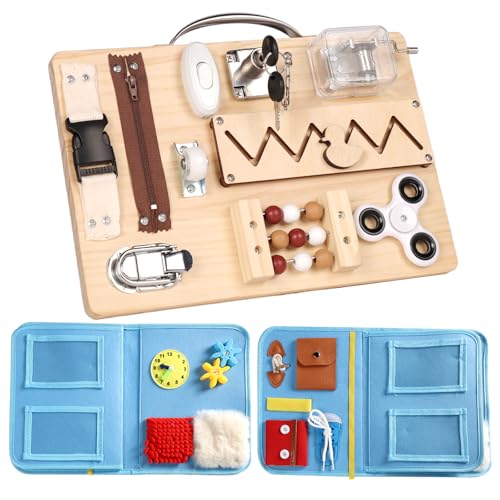
This 12-in-1 activity set combines tactile exploration with cognitive tasks in a Montessori-inspired wood design. It is tailored for seniors with memory loss, dementia, or autism, offering a broad range of sensory experiences. The dual-sided board and varied textures encourage safe, independent exploration while supporting reminiscence and motor skills. The wooden construction emphasizes durability for everyday use.
- 12 distinct activities for versatility
- Montessori-inspired wooden design
- Supports memory, motor skills, and calm engagement
Fidget Board for Dementia Patients

The 12-in-1 design from Potatomato focuses on relaxation and cognitive stimulation. The board provides diverse tactile, visual, and auditory activities aimed at reducing anxiety and restlessness. It is suitable for use at home or in care settings, offering engaging tasks that encourage consistent interaction and skill development over time.
- 12 engaging activities in one board
- Tactile, visual, and auditory stimulation
- Aids in anxiety relief and routine engagement
Joyreal Fidget Busy Board For Adults With Dementia

The Joyreal busy board emphasizes a balanced sensory experience with a focus on relaxation and reminiscence. It offers engaging tactile activities designed for seniors with Alzheimer’s or dementia, promoting motor skill practice and ongoing stimulation. The board is designed to be portable and easy to handle, supporting daily routines and caregiver-facilitated sessions.
- Relaxing, varied sensory activities
- Portability for home and facility use
- Supports motor skills and mental engagement
Buying Guide: Key Purchase Considerations For Busy Boards
Choosing the right busy board for an Alzheimer’s or dementia patient involves evaluating a few core factors. Consider the user’s comfort with different textures, the board’s size, durability, and the types of activities included. Designs should prioritize safety, ease of cleaning, and suitability for daily use in varied environments such as at a bedside, in a living room, or in care facilities.
- Engagement variety: Look for a mix of tactile, visual, and auditory elements to address multiple senses and preferences. A 10–12-item range often provides sufficient diversity without overwhelming the user.
- Portability and size: Smaller boards are easy to carry and place around the home, while larger boards may offer more activities but require more space. Choose based on the patient’s typical environment and routine.
- Durability and materials: Wood or high-quality plastics with secure fastenings tend to withstand repeated handling and reduce risk of small parts detaching. Check for smooth edges and non-toxic finishes.
- Caregiver usability: Boards that include simple setup cues or guides can help caregivers introduce activities consistently and reduce frustration for both patient and caretaker.
- Safety considerations: Ensure there are no sharp edges, choking hazards, or small detachable parts. Consider boards with easy-to-clean surfaces and soft textures for sensitive skin.
- Customization potential: Some boards offer interchangeable activities or removable components to adjust stimulation as needs evolve.
Comparative considerations across the top options include the balance of activities (12-in-1 vs. 10–12 items), the presence of a caregiver guide, and whether a wooden Montessori design enhances reminiscence and engagement. Portability, durability, and ease of cleaning are also critical for long-term use in both home and clinical settings. Evaluating these factors against the patient’s daily routine will help identify the most suitable busy board.