Best Building Toys for 11-Year-Olds: STEM Kits, Robots, and Creative Projects
Finding engaging, educational building toys for an 11-year-old can boost problem-solving, creativity, and STEM skills. The following five selections are designed to challenge curious minds with hands-on construction,Coding concepts, and mechanical play. Each option supports exploration, safe materials, and expandable learning opportunities as kids grow. Below, you’ll find quick details and a buying guide to help compare features, complexity, and play value.
| Product | Brand | Key Appeal |
|---|---|---|
| DIEBA Building 5 in 1 Robot Toys (603pcs) | DIEBA | Remote and app control; 603 pieces; educational coding features |
| Henoda Robot Toys for 8-16 | Henoda | 468+ pieces; multiple remote modes; long-range control |
| Lucky Doug Building Kit Model Car Set | Lucky Doug | 287 parts; real metal components; hands-on engineering |
| COBFDHA STEM Projects (120Pcs) | COBFDHA | 6 robots; solar and battery power; space and science theme |
| Veecafiodi 50-in-1 STEM Kit | Veecafiodi | Multiple models; motorized action; easy set assembly |
Henoda Robot Toys For 8-16 Year Olds
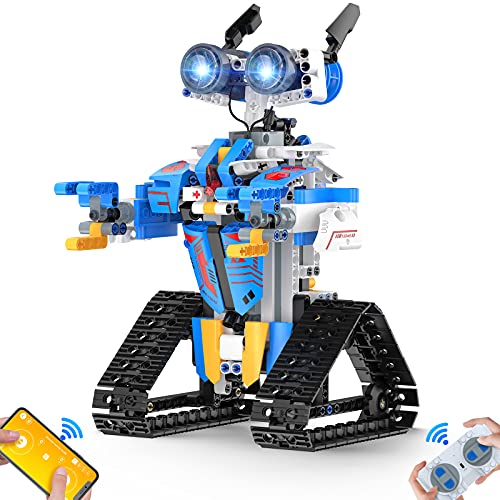
Henoda’s robotics kit offers a substantial build with 468+ pieces, designed to engage older children in engineering basics and programming concepts. The set includes multiple remote control modes and a 2.4GHz remote, plus a smartphone app for Bluetooth control. With forward, backward, left, right motion and 360-degree turns, kids can experiment with motion logic, sequencing, and spatial reasoning. The kit emphasizes hands-on assembly and planning, supporting patience, problem-solving, and fine motor skills. A long-range control experience adds depth to open-ended play and exploration.
Lucky Doug Building Kit Model Car Set

Lucky Doug’s model car kit emphasizes classic engineering, packed with 287 parts including nuts, bolts, screwdrivers, and wrenches. This metal-based build supports durability and real-world magnetic/mechanical understanding. The finished car offers adjustable tail and extended sliding distance with a gentle push, encouraging kids to observe motion, balance, and mechanical advantage. Clear illustrated instructions help young builders follow steps without frustration, reinforcing sequential thinking and reading comprehension while building confidence in problem solving.
DIEBA Building 5 in 1 Robot Toys

DIEBA’s 603-piece robot kit stands out for 5-in-1 versatility, including both remote and app control options. The set encourages kids to assemble multiple robot configurations, fostering adaptability, mechanical reasoning, and programming basics through the included activities. The kit is designed to be kid-safe with sturdy plastic components and a modular approach that supports iterative learning—kids can rebuild and improve designs, exploring optimization and problem-solving strategies while adding a hands-on coding dimension via remote controls and app features.
COBFDHA STEM Projects For Kids
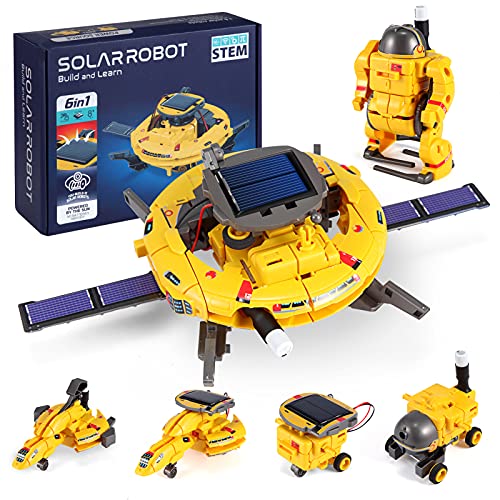
COBFDHA presents a solar-powered and battery-assisted robot-building experience designed for ages 8-12. The kit includes six moving robots with solar energy, emphasizing renewable energy concepts and practical engineering. This project kit supports experimental thinking, as kids compare solar vs. battery-powered operation and learn how energy transfer translates into motion. The set helps develop spatial awareness, measurement, and prediction, while offering a science-focused, outdoor-appropriate learning activity that aligns with classroom STEM objectives.
Veecafiodi 50-in-1 STEM Kit

Veecafiodi’s 50-in-1 kit offers a broad range of build options, enabling children to construct various models such as a radar vehicle, unmanned aircraft, or Ferris wheel. This modular system emphasizes creativity and sequential problem solving, with 107 durable pieces and a built-in motor requiring three AAA batteries (not included). The kit encourages experimentation, planning, and iterative design, helping kids practice engineering concepts while keeping the play engaging through multiple model possibilities.
LEGO Creator 3 in 1 Mighty Dinosaur

LEGO Creator 3-in-1 Mighty Dinosaur provides classic construction play with a prehistoric twist. The T. rex features posable joints and an opening mouth, plus a buildable rib cage for the prey, and it can be rebuilt into a Triceratops or a Pterodactyl. While not the primary focus of modern STEM topics, this set strengthens spatial reasoning, design flexibility, and storytelling, offering a broader building experience that complements more technical kits for a well-rounded development plan.
Smartivity Pinball Machine

Smartivity’s DIY Pinball Machine is a screen-free, hands-on mechanical game designed to boost confidence and creativity. The build guides kids through science-related concepts as they assemble and enjoy a functioning arcade-style pinball. Suitable for a wide age range, the project helps develop fine motor skills, patience, and planning while delivering ongoing, hours-long play with replacements parts available. It’s an engaging, social option that supports collaborative learning with family or friends.
Buying Guide: Key Purchase Considerations And Comparisons
- Age appropriateness and complexity: Look for sets labeled 8-12 or 8+ with gradual progression so an 11-year-old isn’t overwhelmed.
- Hands-on learning focus: Prefer kits that combine assembly with STEM concepts like solar power, robotics, coding, and engineering principles.
- Component quality and safety: Choose durable pieces, non-toxic materials, smooth edges, and clear safety guidance for younger siblings or peers.
- Modularity and future expansion: Kits that support rebuilding into multiple forms or adding accessories offer longer engagement.
- Software and control: Remote or app-enabled options should be evaluated for accessibility, device compatibility, and required batteries or connectivity.
- Time to build and level of supervision: Some kits require longer build times and parental assistance for instruction adherence or programming steps.
- Outdoor vs indoor use: Solar-powered or weather-tolerant kits can be used outdoors, while some are best kept indoors for safety and supervision.
- Value of learning outcomes: Consider whether the kit emphasizes problem-solving, engineering reasoning, or creative storytelling to match a child’s interests.
- Replacement parts: A generous supply of spare pieces or replacement parts reduces frustration during builds.
Overall, when selecting the best building toy for an 11-year-old, it helps to balance complexity with motivation. Curiosity-driven projects that blend hands-on construction with programmable elements tend to sustain interest longer, while traditional models support fine motor skills and mechanical understanding. For families seeking collaborative projects, multi-model kits and rotating configurations offer ongoing challenges and shared learning opportunities. The five highlighted options provide a mix of robotics, vehicle engineering, solar power, and creative construction to support varied interests and skill levels.