Best Bug Jars for Kids: Safe, Engaging Insect Viewers for Learning
Parents and educators seek hands-on tools that spark curiosity in young naturalists. The following bug jars and insect viewers are designed to be safe, engaging, and easy to use for kids. Each option supports close-up observation, gentle handling, and portable exploration—perfect for science activities at home or in the classroom. The list below highlights five standout picks based on build quality, ventilation, viewing clarity, and instructional value.
| Product | Brand | Key Feature |
|---|---|---|
| Hape Explorers Bug Jar | Hape | Lid with magnifying glass; grid base for measuring specimens |
| Coopay 4 Pieces Magnifying Insect Box | Coopay | Four pieces; 3x and 6x magnifiers; ventilation holes |
| National Geographic Bug Catcher Kit | Blue Marble | Two magnifying viewers; 360° habitat; tweezers & net |
| Halloscume 4 Pcs Insect Bug Viewer | Halloscume | Four boxes; double magnifying glasses; ventilation design |
| Skylety 2 Pieces Bug Jars (Pink) | Skylety | Double magnification; three ventilation holes; kid-friendly |
The following sections provide concise overviews of each product, focusing on what makes these bug jars suitable for kids and classroom use. All options prioritize safe handling, clear observation, and ease of cleaning or sharing with peers.
Hape Explorers Bug Jar

The Hape Explorers Bug Jar combines a practical observation box with an educational focus. The lid integrates a magnifying glass to view insects up close, while the base features a grid for measuring specimens. This setup supports structured exploration—kids can identify, compare, and record findings as part of a mini-science project. The design encourages safe capture and release, reducing stress to insects while sustaining curiosity about bug life cycles.
Coopay 4 Pieces Magnifying Insect Box

Coopay’s set provides four separate bug cages, each with dual magnification lenses (3x and 6x). The dual-layer magnifier combines a larger 6x topper with a 3x lower lens for flexible viewing options. Ventilation is built into the design, helping keep insects healthy during observation. This kit supports collaborative learning by letting multiple kids explore different specimens at once, while the accessible size makes it suitable for curious younger learners.
National Geographic Bug Catcher Kit

The National Geographic Bug Catcher Kit offers a comprehensive habitat experience with two built-in magnifying viewers that provide up-close viewing from multiple angles. It includes practical tools such as tweezers and a net, enabling kids to safely capture and release bugs outdoors. The 360° viewing base and removable components create an immersive environment for observing insect behavior, while the sturdy construction supports regular classroom use and at-home exploration.
Halloscume 4 Pcs Insect Bug Viewer

Halloscume’s four-pack bug viewers emphasize durability and safe handling. Each transparent container uses double magnifying glasses to enhance observation, with a ventilation design to maintain air flow for living specimens. The assortment can support group activities, science centers, or seasonal insect studies, allowing kids to compare different bugs side by side while keeping the observation process gentle and informative.
Skylety 2 Pieces Bug Jars (Pink)
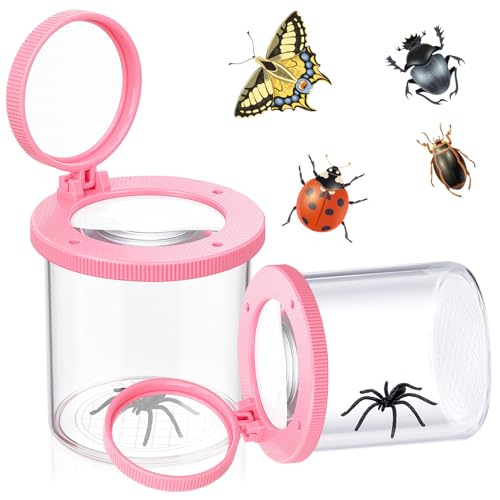
Skylety’s two-piece bug jars emphasize a safe, close-up inspection experience with dual magnifying glasses (3x and 6x). The design includes three small ventilation holes, reducing risk for live insects during observation. The pink variant is visually appealing for kids, while the overall build remains practical for classroom demonstrations or family field trips. This option balances portability with clear magnification for detailed study of bug anatomy and behavior.
Buying Guide
- Ventilation and insect health: Choose jars with built-in ventilation to ensure air flow for live specimens, reducing stress and maintaining natural behavior during observation.
- Magnification options: Dual lenses or adjustable magnification help accommodate different ages and levels of detail while exploring bug anatomy.
- Durability and materials: Look for sturdy plastic constructions with secure lids to prevent escapes and withstand daily handling by kids.
- Ease of cleaning: Removable bases or lids simplify cleaning after use and enable reuse in multiple learning sessions.
- Portability: Lightweight designs with comfortable grips support field trips and classroom centers alike.
- Educational value: Most kits include additional tools (nets, tweezers, guides) that extend learning beyond observation to hands-on experiments and documentation.
- Group usability: If used in classrooms, consider sets with multiple containers to enable small-group exploration and collaborative learning.
- Maintenance considerations: Some viewers require gentle handling to prevent scratches on magnifying surfaces; consider covers or protective cases when transporting.
- Safety first: Always supervise young children during insect handling and ensure release back into appropriate environments after observation.
- Age suitability: Check recommended age ranges and choose simpler designs for younger kids, with more features for older children.
- Supplementary resources: Look for kits that include learning guides or activity ideas to maximize science learning outcomes.
- Storage and organization: Use a dedicated bin or shelf to keep jars accessible and ready for ongoing science exploration.