Best Astronomy Toys for Kids: Top Picks for STEM Fun and Cosmic Exploration
Ignite a child’s curiosity about space with engaging, educational astronomy toys crafted for different ages and skill levels. From beginner telescopes that reveal the Moon’s craters to interactive planetarium kits that project the Solar System onto walls, these selections emphasize learn-by-doing and safe, easy setups. Below you’ll find five well-rounded options designed to boost curiosity, promote scientific thinking, and provide hands-on experiences that inspire a lifelong interest in science.
Summary of chosen products
| Product | Brand | What It Does | Ideal For | Link |
|---|---|---|---|---|
| NASA Lunar Telescope for Kids | Blue Marble | 90x magnification with finder scope; tabletop tripod; beginner-friendly | Ages 6-12, space fans | Amazon |
| Science Can Solar System for Kids | Science Can | 8-planet projection, bilingual talking mode, 24 slides | Ages 5-7, space learners | Amazon |
| ToyerBee Kids Telescope | ToyerBee | Three eyepieces, compass, portable and easy setup | Ages 8-12, budding astronomers | Amazon |
| Koolpte Kids Telescope | Koolpte | 50mm refractor, tripod, beginner-friendly | Ages 6-14, first telescope | Amazon |
| Thames & Kosmos Wow in The World | Thames & Kosmos | 25x and 50x magnification with star wheel and audio content | Ages 6+, interactive astronomy gift | Amazon |
NASA Lunar Telescope For Kids
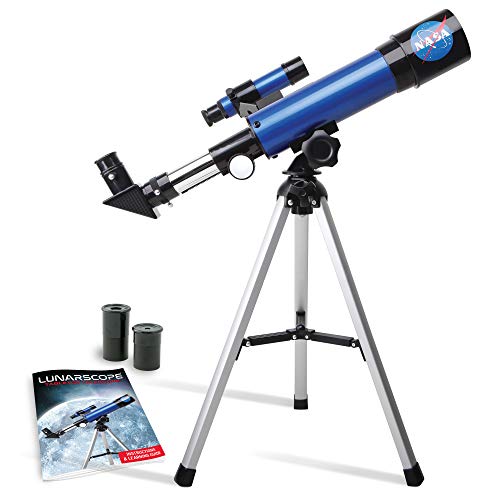
The NASA Lunar Telescope from Blue Marble provides a hands-on entry into astronomy with a 90x magnification capability and a simple, kid-friendly setup. The kit includes two eyepieces, a finder scope, and a tabletop tripod to stabilize viewing. Its design emphasizes ease of use for beginners, enabling children to locate the Moon’s features and zoom in for detailed observations. The smooth mount system helps young observers scan the lunar surface, reinforcing concepts of scale, precision, and observational practice. This package is suitable for families introducing space exploration at home or as a space-themed gift for birthdays and holidays.
Key features include a user-friendly optical system, a straightforward alignment process, and a stable tabletop base that minimizes wobble during target acquisition. While it primarily targets lunar viewing, the telescope’s simple operation also invites exploration of larger celestial objects under clear skies. Careful guidance may help children transition from Moon gazing to studying planetary features, star clusters, or bright galaxies as their curiosity grows.
Science Can Solar System For Kids

This interactive solar system model turns a ceiling or wall into a personal planetarium. By projecting the eight planets orbiting the sun, the toy provides a vivid, immersive learning experience. The model also offers a bilingual learning mode (English and Spanish), enhancing accessibility for diverse learners. Children can press planet patterns on the base to receive educational facts, reinforcing vocabulary, planetary order, and orbital concepts. The 24 space exploration slides offer visual context to accompany slide projections—perfect for group study or solo exploration in a bedroom or classroom setting.
Designed for kids aged 5-7, the Science Can Solar System kit blends storytelling with science. The projector’s simple operation encourages independent use, while the accompanying disks present a library of images showing astronauts, spacecraft, and celestial bodies. This toy supports early astronomy literacy, enabling kids to associate planet names with colors, sizes, and relative distances in a memorable, hands-on way.
ToyerBee Kids Telescope

The ToyerBee telescope is a compact, kid-friendly instrument featuring three eyepieces (20x, 30x, 40x) to accommodate varying observational goals—from plants and insects to distant landmarks and celestial objects. A built-in compass and finderscope help young observers locate targets quickly, making it accessible for beginners. The design emphasizes portability with a lightweight frame and straightforward assembly—no tools required. This makes it easy for children to set up and start exploring at home or during outdoor science adventures. The telescope supports budding STEM skills by fostering careful observation and spatial reasoning.
With its versatile magnification, the ToyerBee telescope supports exploring the Moon’s surface, nearby planets, and terrestrial features like treetops or architecture. The ergonomic design helps with comfortable viewing sessions, while the compass feature adds an element of navigation, encouraging kids to plan observation sessions and track patterns over time. For parents seeking an approachable entry into optics and stargazing, this model provides a balanced mix of practicality and educational value.
Koolpte Kids Telescope

The Koolpte 50mm portable refractor telescope is a solid starter option for aspiring stargazers. Its 50mm aperture and 360mm focal length deliver crisp, bright images of the Moon and brighter celestial objects. The included tripod provides stability, and the instrument is designed for easy, tool-free setup—perfect for young children eager to observe without getting bogged down in technicalities. The binocular-style focus and coated optical lenses reduce distortion, helping kids see clearer details and stay engaged during practice sessions. This model offers a straightforward introduction to optics and astronomical viewing.
As a first-telescope solution, Koolpte emphasizes reliability and ease of use. The lightweight build makes it suitable for indoor demonstrations or outdoor astronomy events, enabling kids to ferry their gear to a park or backyard. Its simple alignment flow helps children quickly locate lunar features, bright planets, and starry skies, supporting an incremental learning path from basic observation to more advanced astronomy concepts as confidence grows.
Thames & Kosmos Wow In The World

The Wow in The World kit from Thames & Kosmos blends astronomy with entertaining narrative content. It features two magnification options (25x and 50x) through a beginner-friendly refractor telescope, plus an adjustable aluminum tripod that can extend to 48 inches for taller kids or indoor setups. The package includes a star wheel and companion audio content to guide exploration and learning. An eight-page illustrated guide helps children understand how the telescope works and what to observe in the night sky, encouraging imaginative inquiry and structured observation of lunar craters, planets, and constellations.
With its dual focus on hands-on equipment and guided learning, this kit supports a holistic approach to astronomy education. The star wheel and audio content provide multimodal learning—visual, auditory, and kinesthetic—which can be especially beneficial for diverse learners. The adjustable tripod ensures longevity as a child grows, while the compact design supports portable use for family camping trips or stargazing nights. This option suits families seeking an interactive, narrative-driven beginning in space science.
Buying Guide: What to Consider When Choosing an Astronomy Toy For Kids
- Age and skill level: Choose gear aligned with a child’s age, motor skills, and interest. Simpler setups build confidence, while more advanced kits can grow with the child.
- Optics quality and ease of use: Look for clear lenses, stable mounts, and simple focusing to reduce frustration and promote longer observation sessions.
- Learning features: Prefer toys with educational content, guided activities, or bilingual options to expand vocabulary and science comprehension.
- Portability and setup: Lightweight, tool-free assemblies encourage independent use and easy transport to different spaces.
- Expandability: Consider future-proof options with adjustable magnification, larger apertures, or modular add-ons to extend learning as interest deepens.
- Safety and durability: Durable materials and child-safe components contribute to long-term use and fewer breakages.
- Supplementary materials: Books, guided activities, and accompanying apps or guides can enrich the learning experience beyond the toy itself.
- Engagement balance: A good astronomy toy blends hands-on exploration with clear explanations, avoiding overwhelming technical detail for younger users.
In selecting these five products, the emphasis is on accessible entry points that encourage curiosity, observation, and foundational science skills. Each option integrates practical optics with educational support, providing a balanced approach to introducing kids to astronomy. Consider your child’s interests—Moon observation, planetary exploration, or interactive planetarium projections—and select a toy that offers a supportive path from exploration to deeper scientific inquiry.