Best Beginner Friendly Telescopes for Astronomy: Top Picks for Star Gazing
The night sky offers a vast canvas for beginner stargazers. This guide highlights five beginner-friendly telescopes that balance ease of use, optics quality, and portability. Each pick is suited for entry-level explorations of the Moon, planets, and bright deep-sky objects, with features like multi-coated optics, adjustable tripods, and helpful accessories. Use the accompanying buying guide to compare key factors and select the best fit for your observing goals and budget.
| Product | Brand | Key Features |
|---|---|---|
| Gskyer Telescope, 70mm Refractor | Gskyer | 70mm aperture, 400mm focal length, wireless remote, smartphone adapter |
| ToyerBee Telescope for Adults & Kids | ToyerBee | 70mm aperture, 15X-150X, adjustable tripod, Barlow lens |
| HEXEUM Telescope, 80mm Aperture | HEXEUM | 80mm aperture, 600mm focal length, multi-coated optics, tripod with phone adapter |
| MEEZAA Telescope, 150EQ Reflector | MEEZAA | 150mm aperture, 650mm focal length, equatorial mount, moon filter |
| Hawkko 90mm Aperture, 900mm Refractor | Hawkko | 90mm aperture, 900mm focal length, full FMC coatings, portable tripod |
Gskyer Telescope, 70mm Refractor

Gskyer’s 70mm aperture refractor is designed for beginners and families. Its 400mm focal length with fully coated optics delivers bright, sharp views of the Moon and planets. The kit includes two eyepieces and a 3x Barlow lens to increase magnification, a 5×24 finder scope for easy object location, and a wireless remote plus a smartphone adapter for quick astrophotography. The lightweight design and travel bag make it ideal for field trips and backyard setups alike.
ToyerBee Telescope for Beginners

ToyerBee offers a versatile 70mm aperture refractor with 15X-150X magnification. It comes with two eyepieces, a 3x Barlow lens, and an adjustable tripod that can range from 13.8 inches to 40.5 inches, supporting varied viewing positions. With a phone adapter and wireless remote, observers can capture planetary and lunar details or share views with others during travel or family observing sessions.
HEXEUM Telescope, 80mm Aperture
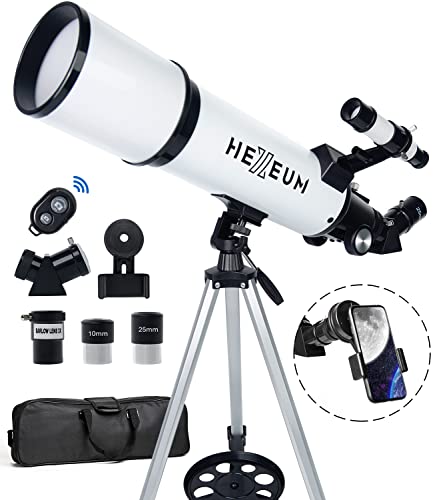
HEXEUM’s 80mm aperture model pairs an 80mm objective with a 600mm focal length for brighter images and broader sky views. It includes two eyepieces (25mm and 10mm), a 3x Barlow lens, and a 5×24 finder scope for locating targets more easily. A phone adapter, adjustable tripod, and carrying bag support on-the-go observing and quick setup for both beginners and casual enthusiasts.
MEEZAA Telescope, 150EQ Reflector
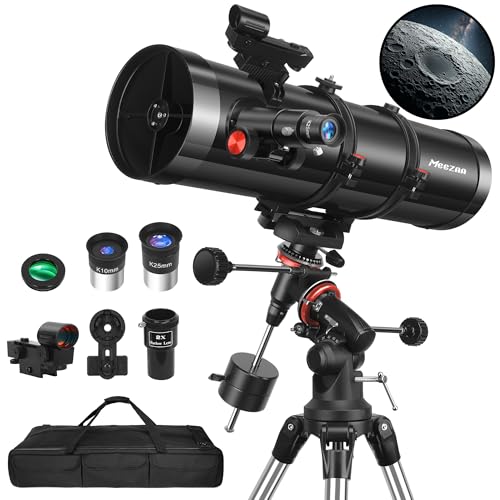
MEEZAA offers a larger aperture with a 150mm reflector, improving light-gathering for brighter planetary details and faint deep-sky objects. The 650mm focal length supports generous magnification options, and the equatorial mount aids tracking with slow-motion controls. A red-dot finder assists aiming, and a moon filter helps reduce glare for comfortable lunar viewing. This setup is well-suited for beginners ready to progress beyond basic views.
Hawkko Telescope, 90mm Aperture

Hawkko’s 90mm aperture refractor emphasizes optical clarity with a 900mm focal length and full multi-coated optics. The sturdy AZ mount and adjustable tripod enable smooth tracking and stable viewing across 360° rotation. The included phone adapter and portable carrying bag support casual backyard sessions, travel stargazing, and quick setup for beginners exploring lunar landscapes and brighter planets.
Buying Guide: Key Considerations for Beginners
Choosing a first telescope involves balancing portability, ease of use, and optics quality. Here are some core factors to guide your decision:
- Refractor vs. reflector design: Refractors are generally easier to use and require less maintenance, making them ideal for beginners. Reflectors can offer larger apertures at similar prices but require more alignment and care.
- Aperture size: A larger aperture gathers more light, improving brightness and resolving fainter details. For beginners, 70–90 mm refractors or 150 mm reflectors are strong starting points.
- Focal length and magnification: Longer focal lengths yield higher magnification, but practical views depend on stability and atmospheric conditions. Look for combinations that include a few eyepieces and a Barlow lens to vary magnification.
- Mount type and stability: Equatorial mounts help tracking celestial objects, albeit with a learning curve. Alt-azimuth mounts are intuitive and work well for casual observing. A sturdy tripod is essential for steady views.
- Accessories: A good beginner package often includes multiple eyepieces, a Barlow lens, a finder scope, a smartphone adapter for images, and a carrying bag for portability.
- Setup and portability: Consider your locations (backyard, park, travel) and choose a compact model with a bag or case for easy transport.
- Educational value: Look for packages with clear manuals or beginner guides, which help users understand alignment, focusing, and basic astronomy concepts.
Observing goals influence choice. If you mainly want lunar detail and planetary views, smaller refractors with easy setup are ideal. If you plan to explore brighter deep-sky targets or practice astrophotography, a larger aperture with a stable equatorial mount offers more long-term value. Always start with a simple setup and gradually add accessories as you gain confidence and knowledge.