Best Archaeology Kits for Students: Hands-on Learning for Curious Minds
For students exploring ancient civilizations, paleontology, and geologic science, archaeology kits offer a tactile route to discovery. The following selection emphasizes engaging, age-appropriate sets that teach excavation techniques, artifact identification, and the science behind digging. Each kit emphasizes safe materials, clear learning goals, and opportunities to build observation and critical thinking skills through in-depth, hands-on activities.
Summary of chosen products:
| Product | Brand | Key Focus | Age Range |
|---|---|---|---|
| Egyptian Mummy Dig Kit | XX | Ancient Egypt excavation with collectible mummy toys | 8-12 |
| I Dig It! Treasure – Egyptian Artifacts | Thames & Kosmos | Hieroglyphics, canopic jars, sarcophagus | 8-14 |
| Dan&Darci Dig a Dozen Gem Blocks | Dan&Darci | Real gemstones, gem-learning cards | 8-12 |
| Paleontological Site Fossil Dig Kit | EDUMAN | 4 eras of fossils, layered excavation | 6+ |
| Dinosaur Excavation Kits (12 Pack) | Liberty Imports | 12 dinosaur species, full excavation kit | 5-12 |
Egyptian Mummy Dig Kit

The Egyptian Mummy Dig Kit provides a compact, kid-friendly excavation experience focused on ancient Egypt. The kit includes a mini digging block designed to reduce mess while giving young researchers the thrill of uncovering hidden mummy-themed toy artifacts. This setup supports early archaeological thinking—planning digs, noting textures, and matching recovered pieces to a broader historical narrative. It is described as a fun and educational gift idea that allows kids to dig like a palaeontologist and learn about Egypt as they excavate. The smaller block size also helps keep play areas tidy and manageable for younger excavators.
Educational value centers on the concept of fieldwork—careful digging, artifact identification, and drawing connections between artifacts and ancient cultures. The kit aligns with science and history curricula by offering a tangible way to explore cultural heritage and the history of archaeology. It is suitable for rainy days, classroom demonstrations, or family science nights, where incremental discoveries sustain curiosity and motivation.
I Dig It! Treasure – Egyptian Artifacts

The Thames & Kosmos I Dig It! Treasure kit invites students to assume the role of archaeologists examining an Egyptian dig site. Excavation reveals replica artifacts such as canopic jars, a canopic sarcophagus, and semi-precious stones, all set within a plaster block designed to simulate authentic dig experiences. A hieroglyphic puzzle embedded in the block adds a problem-solving element—learners must decipher symbols to uncover the burial site’s owner. The accompanying full-color manual provides context on hieroglyphics and ancient Egyptian beliefs, expanding the activity into a broader study of daily life, religion, and burial practices. This kit blends hands-on discovery with structured historical knowledge, making it suitable for science classes and home learning alike.
Strengths include a clear inquiry framework, an authentic archaeology feel, and a pronounced emphasis on interpretation and historical context. It supports collaborative work, critical thinking, and reading comprehension, as students follow instructions, hypothesize about artifacts, and compare findings with historical narratives.
GobiDex Gemstones Dig Kit

GobiDex offers a space-themed twist on the archaeology-learning model with a Gemstones Dig Kit that simulates lunar excavation. The kit includes tools like a hammer, chisel, brush, goggles, and magnifying glass, plus a set of 15 gemstones to excavate. It emphasizes the geology side of archaeology—identifying minerals, understanding gem properties, and learning how scientists document discoveries. The package includes a full-color learning guide and encourages STEM-focused exploration, with a clear emphasis on hands-on technique, safe tool use, and observational skills during the digging process. The solar-system framing can help students connect archaeology with planetary science and material science.
Dan&Darci Dig a Dozen Gem Blocks
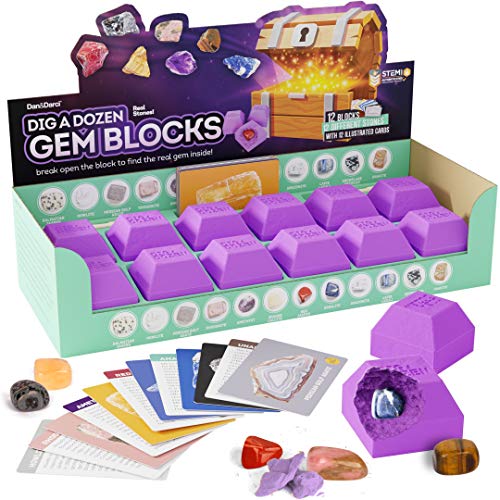
Dan&Darci’s Dig a Dozen Gem Blocks provides a comprehensive gemstone excavation experience. Learners dig through 12 gem blocks to uncover a variety of real gemstones, including Dalmatian Jasper, Agate, and Lapis Lazuli. Each gem comes with a corresponding learning card that details its history, properties, and significance, encouraging learners to researchers and correlate findings with real-world mineral knowledge. The kit includes the digging tools, instruction guides, and a display box for organized presentation. This setup is well-suited for science fairs, classroom centers, or home projects that emphasize minerals, earth science, and the narrative of gem origins.
EDUMAN Paleontological Site Fossil Dig Kit

EDUMAN’s Paleontological Site Fossil Dig Kit transports students through time, offering excavations across four geological eras: Proterozoic, Paleozoic, Mesozoic, and Cenozoic. The kit includes a digging block, hammer, brush, chisel, and a guide book that documents a range of authentic fossils such as seaweed, trilobites, dinosaur skulls, and smilodon teeth. The layered excavation simulates millions of years of Earth’s history, providing a structured narrative for learners to build chronological reasoning and fossil identification skills. The materials are described as safe and non-toxic, with kid-friendly tools designed for ease of use and durability in a classroom or home learning environment.
12 Pack: Dinosaur Excavation Kits

The Liberty Imports Dinosaur Excavation Kits bring a classroom-friendly dinosaur dig experience to multiple learners. Each kit includes a fossil plaster block, a dinosaur figure, hidden bones, and the necessary digging tools within a complete, all-in-one package. The 12-pack format makes these ideal for group activities, party favors, or classroom centers where students rotate through stations. The emphasis is on discovery and play, with enough variety to sustain interest across several sessions. Learners practice careful digging, recognition of dinosaur anatomy, and the relationship between fossils and paleontology in a tangible, approachable way.
Buying Guide: Key Purchase Considerations
- Age appropriateness and safety: Check recommended age ranges and ensure tools are kid-friendly, non-toxic, and have rounded edges. Consider whether the kit includes a parent or teacher guide to support instruction.
- Educational focus: Decide whether you want archaeology-centric (artifacts, artifacts history, hieroglyphics) or paleontology-focused (fossils, bones, geology). Some kits blend both with strong learning manuals.
- Hands-on depth vs. breadth: Some kits offer many small discoveries, while others provide fewer, larger artifacts. Choose based on how long you want students to engage with the activity and whether you prefer deep investigation or wide exploration.
- Materials and cleanliness: Look for kits with tools designed to minimize dust and mess, especially for home use or classroom settings with limited cleanup time.
- Supplementary learning resources: A kit with a well-illustrated manual, history context, and learning cards can enhance literacy, critical thinking, and research skills.
- Multi-student usability: If you plan to use the kit in a classroom or group setting, consider kits that include multiple pieces or a way to scale activities to several learners.
- Storage and presentation: Kits with display boxes or clear containers help students organize discoveries and prepare reports or displays for presentations.
- Interdisciplinary potential: Favor kits that connect to broader themes—history, geography, science, and art—allowing cross-curricular projects and longer engagement.
Overall, the best archaeology kits for students combine safe, durable materials with engaging, age-appropriate challenges. They should offer clear learning goals, opportunities for observation and interpretation, and enough structure to guide young researchers while leaving room for curiosity and exploration. The five selections highlighted above provide varied angles—from ancient Egypt to dinosaurs and gemstones—ensuring a well-rounded, inquiry-based approach to archaeology and earth science learning.