Best Alphabet Toys for 1 Year Olds to Spark Early Learning
Finding engaging alphabet toys for 1-year-olds helps develop early literacy, letter recognition, and language skills through play. The selections below focus on interactive, safe, and developmentally appropriate options that captivate toddlers while introducing A-Z in fun ways. Each item emphasizes hands-on exploration, sounds, and catchy rhythms to support cognitive growth during the critical first years. The picks also offer variety—from books and wall charts to spin-and-sing toys and wooden puzzles—so caregivers can mix sensory play with letter identification for a well-rounded approach.
| Product | Brand | Highlights |
|---|---|---|
| LeapFrog Spin and Sing Alphabet Zoo, Pink | LeapFrog | Letters, animals, three play modes |
| Just Smarty Alphabet Wall Chart for Toddlers | Just Smarty | Alphabet sounds, numbers, music, speech therapy support |
| LeapFrog Dino’s Delightful Day Alphabet Book | LeapFrog | Alphabet order storytelling with sound and musical play |
| Duchong Spin and Sing Alphabet Zoo | Duchong | Six learning modes, letters, animals, sounds |
| Alphabet Puzzle, WOOD CITY | WOOD CITY | Wooden letters, upper/lowercase matching |
LeapFrog Spin And Sing Alphabet Zoo, Pink
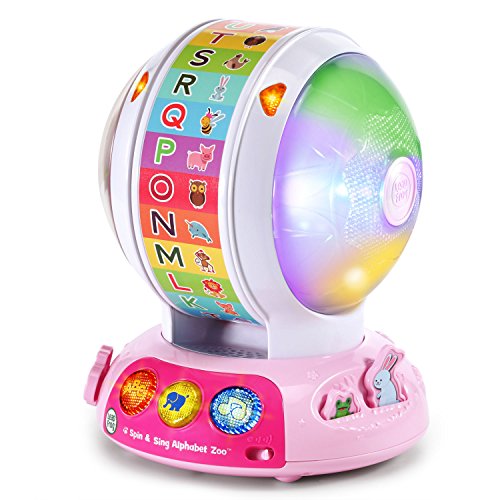
The LeapFrog Spin and Sing Alphabet Zoo introduces the A-Z letters along with animal names and sounds. It features three distinct learning modes—letter, animal, and music—allowing toddlers to explore phonics, vocabulary, and rhythm as they spin the wheel. This design supports early letter recognition, auditory discrimination, and fine-motor skills through interactive spinning that rewards curiosity with immediate feedback. The playful animal theme and catchy tunes help maintain engagement during short play sessions, making it a practical option for parents seeking a compact, multifaceted alphabet toy.
LeapFrog Spin And Sing Alphabet Zoo

This version of the LeapFrog Alphabet Zoo reinforces letter names and sounds through interactive play. With multiple modes and the familiar spin-and-sing mechanic, it encourages hands-on exploration and repetition—key for letter-sound associations at this age. The toy’s bright visuals and music are designed to capture attention while supporting vocabulary expansion, early phonemic awareness, and problem-solving as toddlers navigate different activities tied to letters and animals.
Just Smarty Alphabet Wall Chart For Toddlers

The Just Smarty Alphabet Wall Chart for Toddlers is a visual and musical tool designed to teach alphabet sounds, basic words, and numbers. It also supports speech therapy goals, offering an accessible resource for language development in toddlers with diverse needs. The chart’s bright, labeled letters and accompanying songs help with word recognition and auditory processing, while its wall-mounted format makes it a constant, interactive reference that children can revisit daily. This toy blends education with sensory engagement, reinforcing learning through music and repetition.
LeapFrog Dino’s Delightful Day Alphabet Book
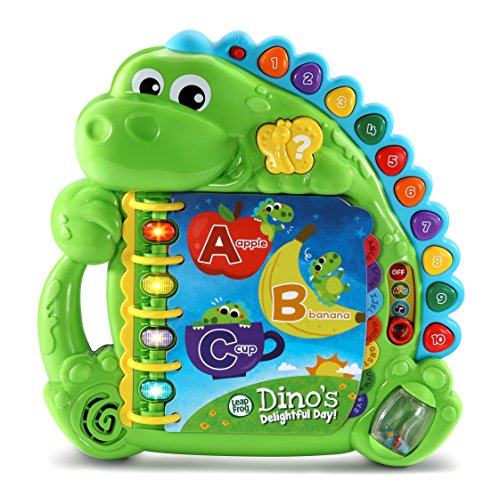
This interactive Alphabet Book takes toddlers through a story that weaves letters and words into a simple narrative. Pages flip to play sound effects and musical cues, reinforcing letter recognition in a narrative context. A light-up button provides immediate feedback with letter names, sounds, and words, helping young learners connect spoken language with written symbols. The combination of storytelling and phonics supports early literacy development while keeping children engaged through a familiar, familiar dinosaur-friendly theme.
Duchong Spin And Sing Alphabet Zoo

Duchong’s Spin and Sing Alphabet Zoo provides six learning modes designed for early language development. Toddlers can explore A-Z letters, 26 animals with sounds, interactive games, and soothing melodies. The multiple modes encourage active participation and help with letter recognition, phonemic awareness, and auditory discrimination. The toy’s engaging wheel-based interaction supports gross motor coordination and turn-taking, making it well-suited for shared play sessions and independent exploration alike.
Alphabet Puzzle, WOOD CITY
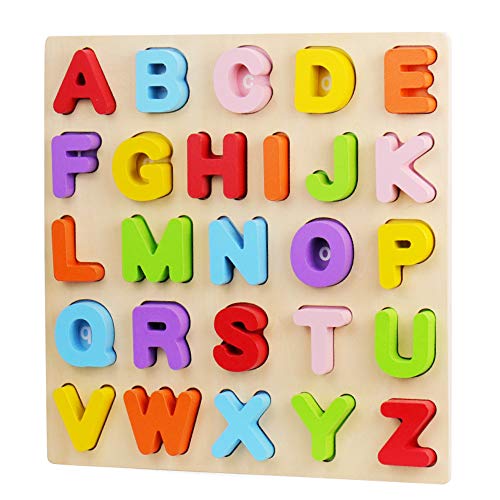
WOOD CITY’s Alphabet Puzzle offers a wooden approach to early literacy. The 26 uppercase letters fit into a wooden board, with lowercase letters distributed beneath the pieces. The puzzle supports letter recognition, uppercase-lowercase matching, and basic spelling as children arrange letters to form simple words or their own names. The natural wood finish and non-toxic paints provide a durable, safe option for toddlers, while the tactile blocks encourage hands-on problem solving and fine-motor development.
Melissa & Doug Deluxe Alphabet Nesting And Stacking Blocks

The Melissa & Doug Alphabet Nesting and Stacking Blocks combine letter learning with hands-on play. The set includes 10 nesting blocks presenting letters and familiar pictures, promoting recognition, sequencing, and memory. Blocks nest for compact storage, which helps with organization and clean-up. While appropriate for toddlers, this toy also scales well to early preschoolers, supporting increasingly complex word-building and letter-order skills as children grow and engage in stacking challenges.
Buying Guide: Key Considerations For Choosing Alphabet Toys
- Age-appropriate complexity: For 12-18 month olds, look for toys with simple, intuitive interactions, clear sounds, and large, safe buttons or pieces. By 2 years, children typically enjoy more complex activities like puzzles and multi-mode toys.
- Letter recognition vs. phonics: Some toys emphasize letter names and visuals, while others introduce phonemic awareness—sound-letter connections essential for early literacy.
- Social vs. independent play: Spin-and-sing toys encourage shared play and turn-taking, while books and puzzles support solitary exploration. A mix helps collaborative and independent skills.
- Durability and materials: Wooden toys tend to be durable and tactile, whereas plastic toys often provide brighter colors and louder sounds. Consider safety standards and non-toxic finishes.
- Multisensory engagement: Choose items that combine visuals, sounds, and textures to reinforce memory through multiple senses, aiding retention and engagement.
- Portability and storage: Compact options with easy storage are practical for travel and small living spaces, while larger puzzles may invite longer play sessions at home.
- Language support: For children with speech development needs, toys that provide singing, repetition, and slows-paced pronunciation can be particularly beneficial.
- Replacement and durability: Look for toys designed for rough toddler use, with parts that are unlikely to pop off or pose choking risks for younger siblings.
These selections offer a spectrum of approaches to alphabet learning, from music-driven engagement and narrative books to hands-on puzzles and colorful wall charts. When pairing items, consider a routine that alternates between active, movement-based play and quiet, reflective activities to support consistent exposure to letters and sounds. The overarching goal is to foster curiosity and a positive association with letters during the critical window of early language development.