Best Abacus Toys for Toddlers
Parents and caregivers look for toys that blend fun with early math skills. Abacus toys offer hands-on counting, color recognition, and fine motor development in a compact, timeless format. Below you’ll find five highly-regarded abacus-themed options that suit toddlers and preschoolers, with quick takes on what makes each a strong choice for early-number exploration.
Summary Table
| Product | Brand | Main Benefit |
|---|---|---|
| Melissa & Doug Abacus Classic Wooden Counting Toy | Melissa & Doug | Classic counting with 100 beads; durability |
| B. Toys Fruity Abacus | B. toys | Colorful fruit beads; patterns and basic arithmetic |
| Melissa & Doug Add & Subtract Abacus | Melissa & Doug | 55 beads; addition and subtraction practice |
| Mushie Wooden Abacus | mushie | Calm palette; counting, sorting, and patterning |
| CHILDLIKE BEHAVIOR Bead Abacus | CHILDLIKE BEHAVIOR | Hands-on learning with color and shape differentiation |
Melissa & Doug Abacus Classic Wooden Counting Toy

The Melissa & Doug Abacus Classic Wooden Counting Toy presents a traditional counting frame with 100 beads arranged on 10 wires. Its solid hardwood base and coated wires provide a sturdy structure designed for long-term use. Eight extension activities accompany the set, supporting early math, counting, and logical thinking from ages 3 to 5. The timeless design makes it a versatile learning tool that fits many playroom styles while encouraging independent exploration and guided counting exercises.
B. Toys Fruity Abacus for Kids

This wooden abacus features 10 rows of 10 colorful fruit-shaped beads, delivering a visually appealing twist on the classic tool. Beyond counting, the toy supports pattern recognition, color learning, and basic arithmetic concepts like addition and subtraction. Its bright, approachable design makes it particularly inviting for toddlers who respond well to color-coded cues and playful themes while introducing structured math play.
Melissa & Doug Add & Subtract Abacus

The Add & Subtract Abacus from Melissa & Doug combines 55 colorful beads with two interchangeable double-sided boards. The boards feature addition and subtraction activities alongside color matching, enabling a progression from simple counting to basic arithmetic and color recognition. The wooden construction adds durability for active toddlers, and the varied play modes help sustain engagement as counting skills grow.
Brooklyn Neutral Boho Abacus

The Brooklyn Neutral Boho Abacus blends Montessori-inspired design with a modern aesthetic. Its neutral palette and boho rainbow accents make it a stylish addition to nurseries or playrooms while offering math-focused play. The beads encourage hand-eye coordination and early counting, and the design aims to fit in with contemporary décor, making learning a visually pleasing activity for toddlers and preschoolers alike.
CHILDLIKE BEHAVIOR Wooden Bead Abacus
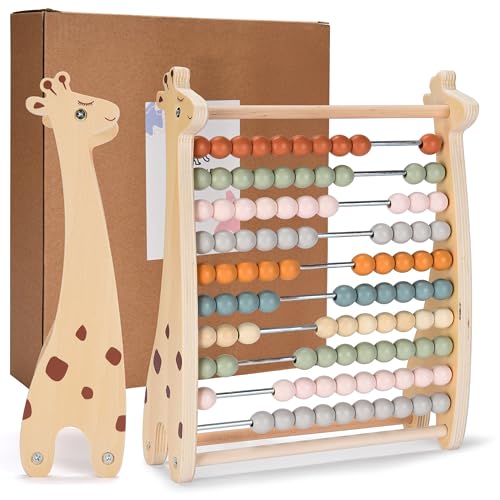
This abacus emphasizes hands-on learning for early math readiness, offering both counting and simple arithmetic through colorful beads. Its design supports color and pattern recognition, as well as fine motor development essential for toddlers. The compact wooden frame makes it easy to introduce counting concepts during playtime, travel, or quiet learning sessions.
Bead Maze for Babies Bead Abacus

The Bead Maze merges an abacus with a bead-rolling maze, offering a playful setup that supports color recognition, hand-eye coordination, and early math concepts. With multiple beads and animals, it introduces patterns and sequencing in a tactile, engaging way, appealing to toddlers who benefit from mixed-action play experiences.
Buying Guide: Key Purchase Considerations
- Age appropriateness: Look for toys labeled for toddlers or preschoolers, typically ages 1-5, with simple counting to basic arithmetic progression.
- Material and durability: Wooden abacuses tend to be sturdy and long-lasting, often with smooth finishes and rounded beads for safe play. Avoid small parts that could pose a choking risk for very young children.
- Bead design and color coding: Beads in bright, contrasting colors help with color recognition and counting. Some models separate beads by color for easier grouping and pattern work.
- Educational scope: Some abacuses emphasize counting only, while others integrate addition, subtraction, or pattern recognition. Consider your child’s current skill level and future learning goals.
- Portability and storage: Compact designs are ideal for travel and small play areas. Check for a stable base to prevent tipping during enthusiastic play.
- Maintenance and safety: Ensure non-toxic finishes and smooth bead edges. Regular inspection of wires and frames helps prevent loosening or breakage.
- Aesthetics and room fit: If this toy will double as décor, color schemes and design styles like boho, neutral, or bright primary colors can influence how well it blends with your space.
- Value and longevity: A well-made wooden abacus with multiple play modes offers longer-term engagement, supporting continued skill development over time.
- Learning progression: Choose toys that can scale with your child—from simple counting to basic arithmetic and pattern recognition—without needing frequent replacements.