Best 3D Pen for 8-Year-Olds: Safe, Creative Tools for Young Makers
Choosing a kid-friendly 3D pen means prioritizing safety, ease of use, and engaging design for early makers. Below are five well-suited options that balance simple operation with creative potential, designed with younger users in mind while still offering room to grow as skills develop.
| Product | Brand | Overview |
|---|---|---|
| SCRIB3D P1 3D Pen | SCRIB3D | Starter kit with 3 colors, stencil guide, and adjustable speed for precise control. |
| 3Doodler Start+ Essentials | 3Doodler | Child-safe, no hot parts, safer plastic filaments; expanded accessory set. |
| SCRIB3D Advanced 3D Pen | SCRIB3D | Enhanced features, LCD display, multiple speed options for accurate doodling. |
| 3Doodler Flow | 3Doodler | Flow design with real-time temp monitoring; versatile for teens and younger creators. |
| MYNT3D Super 3D Pen | MYNT3D | Stepless speed control and durable nozzle for reliable drawing sessions. |
Note: The table above highlights options with safety features, kid-friendly design, and straightforward operation suitable for ages around 8 and up. Each product supports creativity, drafting, and hands-on learning in a way that complements at-home projects, STEM activities, and school assignments.
SCRIB3D P1 3D Printing Pen with Display

The SCRIB3D P1 is a beginner-friendly option designed to support early spatial thinking and creative projects. It includes a stepless speed function for precise control, making it suitable for small hands learning to manage flow and line thickness. The kit arrives with three colors of PLA filament, a power adapter, a stencil guide, and a project guide, helping young creators start drawing 3D shapes and simple figures right away. The plug-and-play setup typically warms up in a few minutes, and the pen provides straightforward forward and reverse controls to feed or retract filament as designs develop. This model emphasizes ease of use and child-friendly operation for repeated practice and experimentation.
Key considerations for this pen include its beginner-oriented features, clear warm-up indicators, and the included starter materials that reduce the setup friction for first-time users. For parents, the headroom to adjust speed offers a gentle progression from simple doodles to more intricate constructions as confidence grows. While not a toy, the P1 provides a structured entry into 3D drawing with safety-conscious design and a practical workflow for kids.
3Doodler Start+ Essentials 3D Pen Set
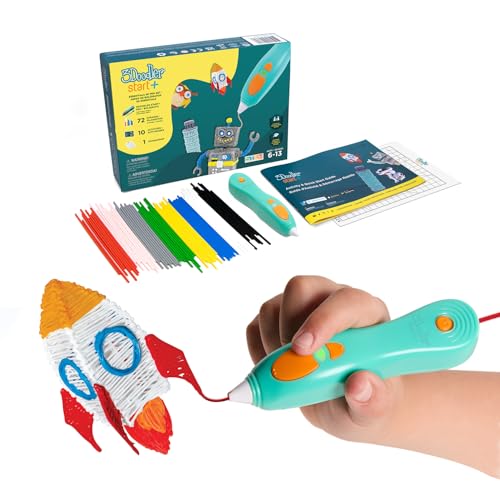
The 3Doodler Start+ Essentials family-oriented kit emphasizes safety for younger users, featuring a no-hot-parts design and kid-safe filaments. The Start+ upgrade adds more plastics, stencils, and a safety standby mode to extend playtime with fewer interruptions. Its ergonomic form and parent-friendly charging are aligned with screen-free, hands-on learning, supporting STEM concepts through tactile exploration. With a lighter wand and safer materials, this option helps 8-year-olds build confidence in freehand drawing, following templates, or collaborating on simple group projects.
From a learning perspective, Start+ is well-suited to early geometry, spatial reasoning, and creative storytelling through 3D shapes. Teachers and parents may appreciate the low-risk design and the ability to introduce arts-and-crafts activities that align with STEAM goals. The balance between play and education makes Start+ a strong contender for family crafts and classroom-style stations at home.
SCRIB3D Advanced 3D Printing Pen
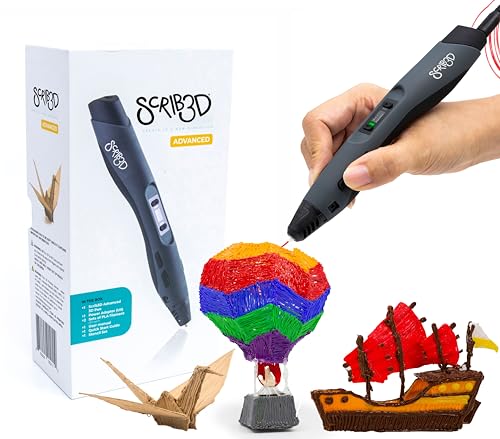
SCRIB3D Advanced builds on beginner models with a larger LCD display, variable speed control, and a more robust design intended to deliver a smoother doodling experience. It includes two colors of PLA and a stencil guide within a ready-to-use kit, making it a natural step up for kids who have mastered basic operation and are ready to tackle more complex ideas. The extended control options help refine line thickness and heat settings, supporting more precise creations such as architectural models, character designs, and layered sculptures.
Considerations for this model include its ergonomic hand feel and the availability of an 8-year-old-friendly workflow that still accommodates careful experimentation. The LCD display facilitates monitoring temperature and settings, reducing the chance of overheated plastic. Parents can use the guided setup to teach responsible use and safe handling while expanding a child’s creative range.
MYNT3D Super 3D Pen

MYNT3D Super 3D Pen centers on control and reliability with a stepless speed slider that enables smooth, adjustable flow. The pen is compatible with ABS and PLA, giving a balance of material options for young creators who want to experiment with different textures and effects. The nozzle is designed for durability in regular drawing sessions, making cleanup and maintenance straightforward. While it is a solid choice for beginners, the real value lies in its dependable performance, enabling kids to translate 2D ideas into tangible 3D forms without frequent interruptions.
From a safety and learning perspective, the MYNT3D pen encourages patience and focus, with intuitive control that supports incremental skill growth. For parents seeking a pen that can handle longer sessions without frequent jams, this model provides a sturdy option that still remains approachable for younger users with proper supervision and a simple strip of guidelines.
Buying Guide: Key Purchase Considerations
- Safety first: Look for child-safe designs with low-heat plastics options, minimal hot parts, and straightforward power controls. Pens marketed for kids often feature No-Heat or safe filament compatibility to reduce burn risk.
- Ease of use: Choose models with intuitive controls, simple loading procedures, and clear heat-up indicators. A step-by-step manual or stencil guides can help kids start quickly.
- Age appropriateness: Align the pen’s target age with your child’s development. Some products are clearly designed for ages 6+, while others target older kids and teens.
- Material options: PLA is generally easier to work with, less prone to warping, and safer for beginners. Consider pens that support PLA and ABS if your child will experiment more later.
- Tooling and accessories: Starter kits with multiple colors, stencils, or an included stencil book can extend engagement by offering guided projects and structured play.
- Display and control: An LCD display or adjustable speed helps kids learn about temperature, speed, and material flow, supporting progressive skill-building.
- Longevity and maintenance: Eco-friendly refills, compatibility with standard filaments, and durable nozzles contribute to long-term value and fewer interruptions during play or learning.
- Safety supervision: For younger children, supervision is essential. Establish safe usage rules and storage practices to avoid pinched fingers or misplaced filament.
- Educational value: Look for kits that tie into math, art, architecture, or science concepts to maximize the learning impact beyond free drawing.
Overall, for eight-year-olds, prioritizing safety, simple operation, and engaging guided projects yields the best balance of creativity and learning. Each option above presents a pathway from basic doodling to more structured construction, with a focus on hands-on discovery and confidence-building as young makers grow their 3D drawing abilities.