Best Balance Bikes for 4 Year Olds to Learn Riding Fast
Choosing a balance bike helps young riders master balance and steering before transferring to a pedal bike. The options below focus on 14-inch and 12-inch models suitable for children roughly ages 2 to 6, with adjustable seats and handlebars, lightweight frames, and safety-focused designs. This guide highlights five well-rounded choices based on build quality, growth adaptability, and user-friendly features for new riders.
Summary of chosen products
| Product | Brand | Key Feature | Ideal For |
|---|---|---|---|
| 14 Inch Balance Bike for Kids 3-6 Year Old, No Pedals | bicystar | Adjustable seat & handlebar; ultra-lightweight | Growing riders ages 3-6 seeking easy balance practice |
| KRIDDO Toddler Balance Bike 12 Inch | KRIDDO | Customizable plate; versatile for ages 2-5 | Early learners who want personalization |
| SEREED Toddler Balance Bike 12-13 Inch | SEREED | Tool-free adjustments; up to 110 lbs capacity | Riders seeking quick setup and growth support |
| Ridego 14 Inch Balance Bike 2-6 | Ridego | Air rubber tires; lightweight frame | All-surface riding and easy carrying |
| Birtech 12 Inch Toddler Balance Bike | Birtech | Inflation-free EVA tires; adjustable seat/handlebar | Budget-friendly growth bike with eco-friendly build |
Below are five balanced options that stand out for quality, longevity, and ease of use. Each product section provides quick at-a-glance details and practical considerations for parents selecting a first bike for their child.
14 Inch Balance Bike For Kids 3-6 Year Old (Blue)

The 14 Inch Balance Bike from Bicystar focuses on teaching balance before pedaling. At about 8.5 lbs, the bike is designed to remain light for small riders while offering a stable frame that supports gradual skill development. Its adjustable seat height (13-21 inches) and handlebar height (21.6-24 inches) help accommodate growing children, making it a practical long-term companion as kids transition to pedal bikes. The pedals are intentionally unused to reinforce balance practice, while the foot rest provides a safe place for feet during early learning.
Key considerations: A light, manageable weight supports confidence, and the adjustable geometry ensures growth alignment. The lack of pedals makes it ideal for initial balance training, while the bright blue color may appeal to four-year-olds seeking a vibrant ride.
KRIDDO Toddler Balance Bike 12 Inch

KRIDDO’s 12-inch balance bike introduces toddlers aged roughly 2 to 5 years to riding in a simple, hands-on way. The bike includes a removable customizable plate, enabling kids to personalize their ride with stickers or drawings. Its sturdy carbon-steel frame supports up to 110 lbs and offers a soft PU seat with comfortable rubber grips. With a focus on safety and personalization, KRIDDO’s balance bike helps children practice balance, steering, and confidence before pedaling.
Key considerations: The removable plate adds a playful creative element, while the no-pedal format fosters natural balance learning. The high weight capacity ensures durability as a child grows, making it a versatile option for multi-year use.
SEREED Toddler Balance Bike 2 Year Old

The SEREED balance bike emphasizes safety and adjustable growth. It features a wide carbon-steel frame that supports up to 110 lbs, a safety footrest pad, rubber grips, and a soft saddle. A quick-adjust mechanism enables seat height from 12.6 to 17.1 inches and handlebar height from 19.6 to 22.5 inches without tools, facilitating rapid adaptation as your child grows. The no-pedal design encourages balance and steering practice, while the included customizing plate and stickers offer personalization options for young riders.
Key considerations: Tool-free adjustments reduce setup time for parents, and the robust frame provides lasting use through multiple growth spurts. Personalization features add a motivational element to practice sessions.
Ridego 14 Inch Balance Bike for Kids

Ridego’s 14-inch balance bike is designed for ages 2 to 6, offering a lightweight frame and air rubber tires that absorb shocks on varied surfaces. Weighing about 8.16 lbs with a robust design, it supports riders up to 110 lbs. The all-terrain tires provide reliable grip on grass, gravel, and pavement, helping kids feel secure as they learn to balance, steer, and glide without pedals. This model emphasizes a straightforward, enjoyable learning curve with durable construction for longer use.
Key considerations: The air-filled tires improve ride comfort on uneven surfaces, while the low weight makes it easy for kids to handle. A longer-term value comes from its ability to keep pace with a child’s growing balance skills across multiple seasons.
Birtech 12 Inch Toddler Balance Bike
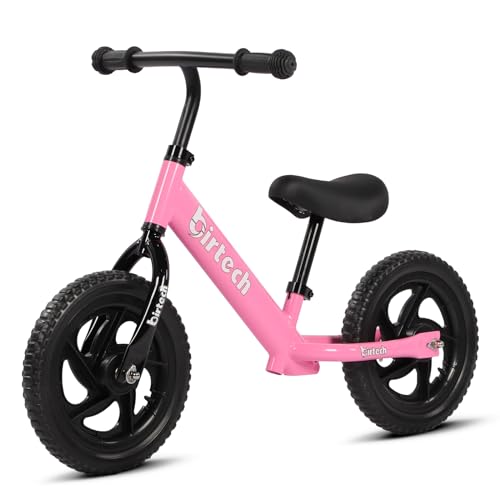
The Birtech 12-inch balance bike is a compact option for youngsters aged roughly 2 to 5 years. Its lightweight frame (about 6 lbs) and adjustable seat and handlebars make it easy for kids to find a comfortable riding position as they practice balance. The inflation-free EVA tires and anti-rust carbon steel frame contribute to a low-maintenance design, while a non-slip rubber handle and thick, cushioned seat enhance safety and comfort during early rides.
Key considerations: A budget-friendly choice without sacrificing essential safety features, suitable for families seeking a straightforward, growth-oriented balance bike. Its eco-friendly materials may appeal to environmentally conscious buyers seeking durable, kid-friendly components.
Buying Guide: Key Purchase Considerations And Comparisons
Age and size: Balance bikes are generally designed for toddlers and preschoolers aged 2–6. Look for adjustable seat heights and handlebar heights that accommodate your child’s growth, ideally spanning at least 4–6 inches in seat height and a similar range for handlebars.
Weight and durability: A lighter bike (typically under 9 lbs) is easier for small riders to maneuver and control. Frames made from steel or strong plastics with reinforced joints raise durability and safety during early riding attempts.
Wheels and tires: For beginners, air-filled tires provide better shock absorption and grip on uneven surfaces, supporting a smoother learning experience. EVA tires are maintenance-free and can be a good alternative for casual use with minimal upkeep.
Safety features: Look for a secure, low center of gravity design, non-slip footrests, and well-padded seats. Quick-adjust mechanisms (tool-free) allow quick fitting for different heights without interrupting practice time.
Personalization and motivation: Some bikes offer customizable plates, stickers, or color options. Personalization can boost a child’s excitement and commitment to practicing balance and steering skills.
Long-term value: Consider whether the bike will adapt with your child across multiple years. Models with wide height ranges and sturdy construction tend to deliver better long-term value and reduce the need for frequent replacements.