Best Architecture Kits for Kids: Inspire Creativity With Hands-on Building Projects
From budding architects to curious engineers, children can explore design fundamentals through engaging, hands-on kits. This article highlights five top architecture and engineering kits that pair creative play with real-world concepts like geometry, forces, and structural integrity. Each product includes multiple build options, step-by-step guides, and a mix of material science and design thinking. Whether your child loves drawing, modeling, or constructing working systems, these kits offer a meaningful way to learn while having fun.
Summary of Selected Products
| Product | Brand | Key Focus | Typical Projects |
|---|---|---|---|
| MindWare Art-chitect Home Model Building | MindWare | Architecture design basics, floor plans | 3D home design, concept to model |
| Thames & Kosmos Structural Engineering: Bridges & Skyscrapers | Thames & Kosmos | Force, load, tension, compression | 20 different models, experiment manual |
| Snap Circuits BRIC: Structures | Snap Circuits | Electric circuits integrated with bricks | 20+ projects combining lights and circuitry |
| Engino STEM Toys: Structures, Buildings & Bridges | Engino | Building forces in structures | 9 working models including houses and bridges |
| Thames & Kosmos Architectural Engineering | Thames & Kosmos | Architectural modeling, real-world structures | 26 models with flexible pieces |
MindWare Art-Chitect Home Model Kit

Designed for kids aged 8 and up, this kit blends artistic design with foundational architectural drafting. The program guides children through conceptual planning, floor plan design, and the construction of a 3D home model. The included materials foster spatial thinking while reinforcing geometry skills. As children sketch, adjust, and build, they gain an understanding of how design decisions affect form and function. The kit emphasizes creativity alongside practical techniques, making it a strong option for early architectural exploration.
Key features include a home design planner that teaches creative design and drawing techniques, a floor plan design focus that helps visualize spaces, and a complete kit that supports conceptualizing and building from start to finish. The hands-on approach is intended to build confidence in design thinking while encouraging an interest in architecture for kids. This kit is suitable for classroom or home use, providing a tangible way to see how ideas translate into a physical structure.
Thames & Kosmos Structural Engineering: Bridges & Skyscrapers

This kit invites young learners to explore the science behind structures by constructing 20 distinct models themed around bridges and tall buildings. The emphasis on force, load, compression, and tension helps relate physics concepts to real-world engineering challenges. With more than 285 interchangeable building pieces and a 36-page illustrated manual, kids can test ideas, compare designs, and observe how different configurations affect stability and performance. The comprehensive guide supports independent experimentation and guided learning alike.
Projects span from simple foundations to more complex frameworks, enabling a progressive understanding of structural engineering. The included assembly guide helps ensure accuracy while the varied pieces encourage experimentation with different load paths and materials. This kit is well-suited for curious minds who enjoy testing hypotheses and iterating designs as they learn.
Snap Circuits BRIC: Structures

This kit merges construction play with electronics. It enables kids to build dozens of gadgets using Snap Circuits components in combination with building bricks. The BRIC-2-Snap adapters allow lights, sounds, and moving parts to integrate with brick-based structures for 3-D circuit projects. With 20 Snap Circuits parts, 75 BRIC adapters, and 130+ compatible bricks, children can explore a wide array of STEM concepts while creating interactive models. The included full-color instruction book offers clear project ideas for guided play or independent invention.
As a value-focused option, BRIC kits encourage experimentation with electronics and construction in a safe, structured environment. Kids learn how circuitry interacts with physical structures, enabling creative problem-solving as projects come to life. The kit’s modular design supports expansion with additional bricks and modules for ongoing learning.
Engino STEM Toys: Structures, Buildings & Bridges
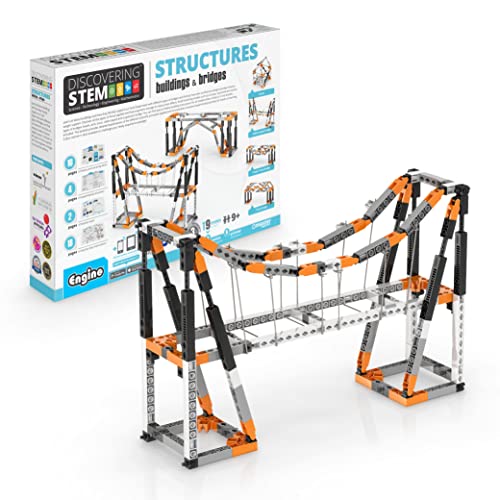
Engino’s building kit emphasizes architectural and structural concepts through nine working models, including a house, pyramid, and various types of bridges. The kit showcases how different forces act on buildings and how designs can optimize weight and stability. Clear, step-by-step instructions are complemented by ten pages of theory and facts that explain the underlying scientific principles, plus a three-page quiz section to reinforce learning. The project-based approach supports hands-on discovery and helps kids connect abstract ideas with tangible results. It’s a solid bridge between play and STEM education.
The set is highlighted as a recommended STEM toy by educators and creators, underscoring its value for turning curiosity into inquiry. The combination of practical building tasks and accessible theory makes it a strong choice for homes and classrooms seeking durable, repeatable learning experiences in architecture and engineering.
Thames & Kosmos Architectural Engineering

In this kit, learners take on the role of architect and engineer as they build more than 20 models of structures and structural elements. The curriculum starts with basic elements like trusses, arches, and domes, then progresses to scaled-down representations of real-world buildings. The new flexible building pieces mimic steel frames, and all plastic components are compatible with other Thames & Kosmos engineering kits, enabling expansions and cross-kit experimentation. This integrated approach helps students understand how complex buildings stand up to loads while showing how different construction methods achieve stability and efficiency.
With a focus on architectural design alongside practical engineering, this kit provides diverse model options and hands-on experience in building techniques. It’s suitable for longer-term projects and can be used to compare structural concepts across different designs, materials, and scales. The versatility makes it a strong pick for inquisitive kids who enjoy iterative design challenges.
Buying Guide: How to Choose Architecture Kits for Kids
Key considerations help align a kit with a child’s age, interests, and learning goals. First, assess the kit’s complexity and the level of guidance provided. Kits with detailed manuals and step-by-step instructions suit beginners, while projects that encourage independent exploration benefit more advanced learners. Second, consider the core learning outcomes: geometry, forces, structural engineering, or a blend of design and circuitry. Third, examine materials and safety. Durable, kid-friendly components that can be reused across projects extend a kit’s value. Fourth, evaluate expansion options. Kits that interconnect with others or offer additional bricks and modules support ongoing engagement. Fifth, think about integration with other learning activities, such as drawing, math, or science experiments. Finally, parent or teacher involvement matters: some kits are designed for solo work, while others thrive with guided collaboration. By weighing these factors, families can select kits that maximize hands-on learning and sustain curiosity over time.
Comparative considerations include whether you want a purely architectural focus (design planning, floor plans, 3D models) or a broader engineering approach (forces, loads, and modular construction). Some kits emphasize electronics integration with bricks, offering a bridge between architecture and circuitry. Others provide flexible pieces that mimic real-world materials, creating deeper realism in model building. When shopping, review user ratings and age recommendations to ensure the chosen kit aligns with your child’s developmental stage and interests. With the right selection, these kits can create meaningful, project-based learning experiences that pair creativity with foundational STEM skills.