Best Alphabet Toys for 3-Year-Olds: Engaging Letter Learning Sets for Little Learners
Choosing the right alphabet toys for toddlers can boost early literacy, fine motor skills, and memory through play. The following selections offer hands-on letter practice, color and shape recognition, and interactive work that suits energetic 3-year-olds. Each option blends age-appropriate design with enduring value for preschool learning environments.
| Product | Brand | Key Benefit |
|---|---|---|
| Melissa & Doug Self-Correcting Alphabet Puzzle (52 pcs) | Melissa & Doug | Self-correcting letters and images for independent exploration |
| Zeoddler Alphabet Puzzles, Wooden | Zeoddler | Natural wood letters with sturdy, kid-friendly design |
| Walenty 26PCS Dinosaur Alphabet Learning Toys | Walenty | Double-sided uppercase/lowercase letters with fun dinosaur shapes |
| School Zone Go Fish Alphabet Game Cards | School Zone | Colorful flash-card style gameplay for letter recognition |
| LiKee Alphabet Flash Cards Wooden Puzzle | LiKee | Large, durable cards paired with wooden blocks for hands-on matching |
Melissa & Doug Self-Correcting Alphabet Puzzle

The Melissa & Doug Self-Correcting Alphabet Puzzle contains 52 wooden pieces with clear letter labels and matching pictures. Each piece’s unique fit helps children practice letter recognition by testing correct matches, fostering confidence through hands-on discovery. The puzzle also functions as a portable learning set with a sturdy toy storage box for quick cleanups and easy transport—ideal for travel or classroom rotation. This open-ended activity supports early literacy, fine motor development, and problem-solving as kids sort and connect uppercase and lowercase letters.
Zeoddler Alphabet Puzzles, Wooden

Zeoddler Alphabet Puzzles present 26 uppercase wooden letters designed for little hands. Made from natural wood, these puzzles emphasize durability and tactile learning. Their size and thickness are optimized for easy grasping, supporting fine motor development and hand-eye coordination. The set is a versatile preschool activity that blends cognitive challenges with motor practice, encouraging children to recognize letters, associate shapes with sounds, and learn the alphabet through hands-on play.
Walenty 26PCS Dinosaur Alphabet Learning Toys

This 26-piece alphabet set uses double-sided dinosaur shapes to teach uppercase and lowercase letters. The bright, kid-friendly designs support letter recognition while sparking imagination. As a Montessori-style learning tool, it enhances fine motor skills, hand-eye coordination, and cognitive development through sorting and matching. The included storage keeps pieces organized, helping children build independence as they arrange the letters and begin forming basic word associations.
School Zone Go Fish Alphabet Game Cards

Go Fish Alphabet Game Cards combine classic matching with letter recognition in a playful format. The set features bold, bold-style letters and vibrant animal illustrations to engage preschoolers. The game supports early literacy skills, word-picture associations, and social play—allowing children to practice listening, turn-taking, and basic phonics while building vocabulary in a cooperative setting. It’s compact for travel or indoor activity time in a classroom or family home.
LiKee Alphabet Flash Cards Wooden Puzzle
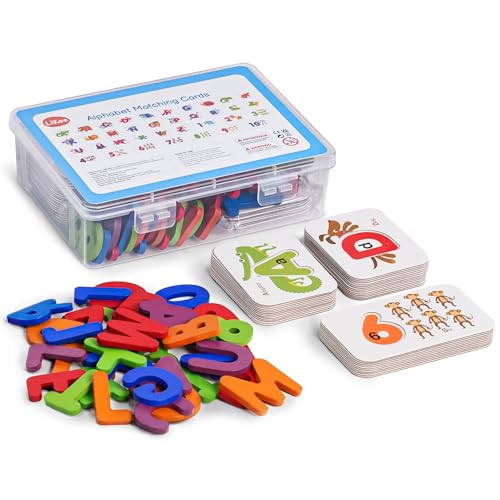
LiKee’s Alphabet Flash Cards pair large, durable cards with wooden puzzle pieces for a multisensory approach to learning. The 26 letter cards feature visuals that link objects to letters, helping kids remember order and sound. The wooden blocks are sized for little hands, facilitating easy grasp, turn-taking, and cooperative play. This setup supports letter recognition, early phonics, and counting activities—providing a well-rounded early literacy toolkit that blends tactile and visual learning.
Melissa & Doug Ms. Rachel Wooden Phonics Alphabet Puzzle

The Ms. Rachel Wooden Phonics Alphabet Puzzle introduces letter sounds through interactive play. Lift-the-letter design encourages engagement with each letter, linking the physical action of placing pieces to auditory cues and spoken words. The sound feature (light-activated sound effects) provides an interactive component that reinforces memory and phonemic awareness. It’s a solid choice for toddlers ready to combine tactile puzzles with early reading skills in a structured yet playful format.
Learning Resources Mini ABC Pops

Mini ABC Pops simplifies letter learning with 26 popsicle-shaped pieces featuring uppercase letters on top and lowercase letters with pictures underneath. The set supports color matching, letter recognition, vocabulary development, and phonics through a multi-learning approach. Children can practice fine motor skills by popping tops on and off, sorting popsicles, and pairing letters with pictures—an engaging, hands-on method to reinforce early literacy foundations.
Buying Guide
When selecting alphabet toys for 3-year-olds, consider these factors to match developmental readiness and learning preferences:
- Age-appropriateness and safety: Look for pieces that are large enough to avoid choking hazards and edges that are smooth and rounded.
- Letter form focus: Decide whether you want uppercase-only, lowercase-only, or mixed-case sets to align with your curriculum or at-home teaching goals.
- Tactile and multisensory elements: Puzzles, wooden pieces, and cards with textures or sound can enhance memory and engagement.
- Durability and storage: Wooden sets with sturdy storage options are ideal for kids who frequently travel or share toys in classrooms.
- Sequential learning progression: Begin with recognition and matching, then progress to phonics, letter sounds, and simple word-building as confidence grows.
- Portability: Compact, self-contained sets are convenient for car trips, daycare, and quick classroom activities.
- Pairing with support tools: Some sets pair well with guided reading activities or parent/teacher-led prompts to maximize learning outcomes.
Overall, the best alphabet toys for 3-year-olds blend open-ended exploration with structured practice, offering a spectrum from independent puzzle play to collaborative games. Parents and teachers can rotate between different formats—puzzles, flash cards, and memory-style games—to sustain interest and accommodate varied learning styles. The selections above provide a range of materials that emphasize recognition, fine motor skills, and early phonics, supporting a strong literacy foundation for preschoolers.