Best ADHD Toys for 7 Year Olds: Engaging Tools to Boost Focus and Calm
Finding engaging, developmentally appropriate toys for seven-year-olds with ADHD, ADD, autism, or anxiety can boost focus, provide sensory input, and reduce stress. The following picks come from reputable brands and are designed to entertain while supporting attention, motor skills, and emotional regulation. Each option includes a quick feature snapshot to help you compare at a glance.
| Product | Brand | Key Benefit | Best For |
|---|---|---|---|
| Scientoy Fidget Toy Set, 35 Pcs | Scientoy | Large variety, safe ABS; motion timer; stress relief | Sensory kids, classroom rewards |
| CUBIDI Rainbow Puzzle Ball I Brain Teasers | CUBIDI | Color-matching puzzle; portable; challenging | Travel, focus and problem solving |
| ASIOWELY Transformable Fidget Spinner Toys | ASIOWELY | 3 colors; transformable chains; spinner and gyro | ADHD, anxiety relief, fine motor work |
| Shashibo Shape Shifting Box | Shashibo | Over 70 shapes; magnetic connections; compact | Calming, creativity, screen-free play |
| Kids Montessori Magnetic Wooden Toys | TMGOT | Wooden color matching; portable; Montessori style | Color recognition, hand-eye coordination |
This article presents five top picks that align with a seven-year-old’s developmental needs and attention patterns. Each product supports sensory input, goal-oriented play, and safe exploration. The sections below provide concise product overviews, usage ideas, and how each item may fit into daily routines at home or in classrooms.
Scientoy Fidget Toy Set: 35-Piece Sensory Collection
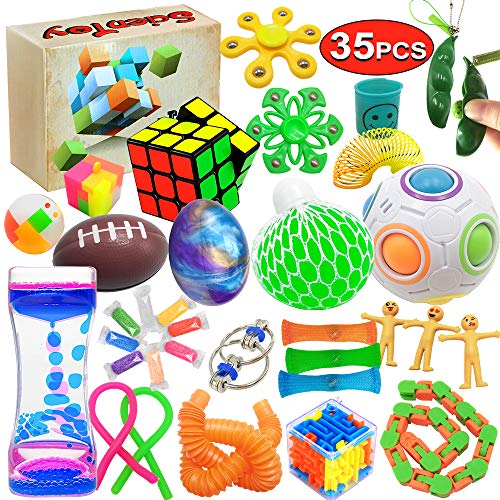
The Scientoy set provides a wide range of fidget tools, including a rainbow magic ball, a liquid motion timer, squeeze balls, and mesh-and-marble fidgets. This variety supports several sensory modalities, which can help a child self-regulate during tasks or transitions. Constructed from ABS plastic, the items are designed to meet safety standards and are non-toxic. The included gift box makes it suitable for classroom rewards or birthday gifts. Use one or two fidgets during reading time to aid focus without distracting peers.
How it helps ADHD and sensory needs: The assortment allows choosing items that best match a child’s current focus or anxiety level. Rotating through textures, squeezing, and tracing motion can channel excess energy into constructive activity. The 2.7″ components and the larger 5.8″ motion timer offer tangible, low-disruption engagement that can be used during homework breaks or calming routines.
CUBIDI Original Rainbow Puzzle Ball
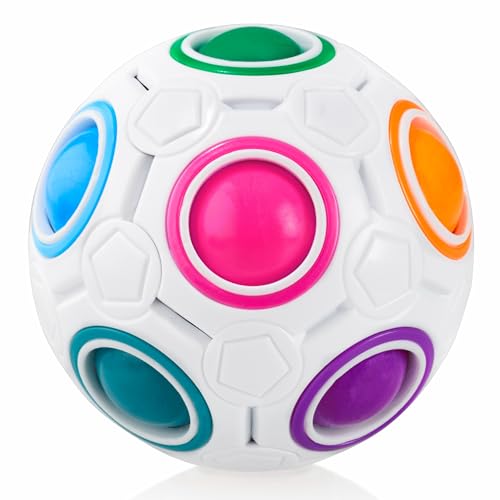
The Rainbow Puzzle Ball by CUBIDI is a color-matching brain teaser with 12 outer holes and 11 internal balls. Its bright colors and tactile puzzle encourage visual tracking, pattern recognition, and spatial reasoning. For a seven-year-old, this activity supports concentration, fine motor control, and executive functioning when guiding internal pieces to their matching rings. It’s compact for travel and can be used during car rides or quiet classroom centers.
How it helps ADHD and sensory needs: The puzzle creates a goal-driven task with immediate feedback as colors align. Repeated attempts can improve patience, persistence, and cognitive flexibility. The toy’s independence makes it suitable for solo play, but it can also be used in small groups to encourage collaboration and turn-taking during a puzzle challenge.
ASIOWELY Transformable Fidget Spinner

This ASIOWELY set includes three colors with transformable chains and expressive ends, along with a 360° rotating finger gyro. The items provide tactile feedback and motor engagement that can help to improve hand strength and fine motor skills. The inclusion of different shapes and “robot” themes adds a playful element to keep a child engaged for longer periods, reducing restlessness during learning tasks.
How it helps ADHD and sensory needs: Rotating spinners and transformable forms offer continuous movement without loud noise, ideal for quiet environments. The tactile variation satisfies sensory needs for some children who crave texture and kinetic input. This set also doubles as a compact travel toy to reduce anxiety during transitions between activities or venues.
Shashibo Shape Shifting Box

The Shashibo Shape Shifting Box is an award-winning sensory puzzle with magnets that let it transform into over 70 shapes. The compact cube is designed to be quiet, portable, and highly engaging, making it an ideal travel companion or classroom calm-down tool. It’s suitable for kids, teens, and adults, offering a layered challenge that can evolve as a child’s skills grow. The magnetic connections invite collaborative play and creativity as children connect multiple boxes to form larger sculptures.
How it helps ADHD and sensory needs: The shape-shifting mechanic provides a focused, constructive outlet for restless energy. Focusing on rotation, folding, and aligning magnets fosters concentration and problem-solving without screens. The device’s silence and portability also support a calm-down routine during busy days.
TMGOT Kids Montessori Magnetic Wooden Toys

These Montessori wooden toys focus on color matching and problem solving with a magnetic pen and 16 round wooden pieces. The set is designed to build color recognition, hand-eye coordination, and fine motor skills. It’s a sturdy, low-tech option that supports steady engagement during learning activities, including early STEM and pattern recognition exercises. The portability makes it a good choice for travel, school, or home use, particularly for children who prefer hands-on, reflective play.
How it helps ADHD and sensory needs: The wooden, non-digital format reduces overstimulation while providing clear, tangible feedback. Matching cards and the magnetic pen encourage planning and attention to detail. The design is especially suited for children who enjoy repetition and structured tasks, which can help in reducing anxiety through predictable play sequences.
Buying Guide: Key Considerations For Choosing ADHD Toys For 7 Year Olds
- Sensory profile alignment: Look for a mix of tactile, visual, and kinesthetic tools. Some children prefer quiet, steady play; others benefit from more dynamic activities. Aim for a balanced set that covers multiple senses without causing overwhelm.
- Safety and materials: Prioritize non-toxic, durable materials like ABS plastic or well-finished wood. Check for small parts if the child tends to mouth objects, and ensure age-appropriate complexity to prevent frustration.
- Portability and simplicity: For daily routines, choose toys that are easy to carry, quick to set up, and resistant to frequent handling. Travel-friendly options help during commutes and trips.
- Focus on skill development: Favor products that encourage fine motor skills, hand-eye coordination, problem-solving, color recognition, and sequencing. Progressive challenges help maintain engagement over time.
- Calm-down and regulation potential: Include items designed to reduce anxiety, such as slow-motion timers, magnetic shapes, and low-noise fidget tools. These can support transitions and social interactions.
- Durability and maintenance: Consider toys that are easy to clean and withstand frequent use. Removable parts should be easy to reassemble to minimize frustration.
- Age appropriateness: Ensure tasks match a seven-year-old’s cognitive level. Toys with simple rules but room to grow keep interest high as skills advance.
- Social play options: Some toys work well in groups, while others are best for solo use. A mix can promote cooperation, sharing, and communication among peers.
- Budget-friendly variety: A combination of a broad set and a few focused, high-quality items maximizes value and versatility across home, school, and travel contexts.
When selecting ADHD toys for seven-year-olds, the goal is to blend engagement with practical development benefits. The five products featured here offer a diverse set of experiences—from tactile fidget sets and color-moding brain teasers to magnetic and wooden Montessori designs. Together, they form a well-rounded toolkit for focus, calm, and cognitive growth in children who benefit from sensory-rich, structured play.