Best Active Toys for 2 Year Olds to Boost Motor Skills and Fun
Finding engaging, age-appropriate toys for active toddlers helps promote balance, coordination, and imaginative play. This guide highlights five hands-on options that suit energetic 2-year-olds, blending physical activity with safe design. Each choice encourages movement, imagination, and early development while working well for indoor or outdoor use.
| Product | Why It’s Great | Play Style |
|---|---|---|
| iPlay, iLearn Bouncy Pals Unicorn | Stable four-leg design supports balance and muscle development. | Ride-on bounce |
| iPlay, iLearn Bouncy Pals Dinosaur | Removable plush cover adds tactile comfort and cleanup ease. | Ride-on bounce |
| Melissa & Doug Bowling Friends | Soft pins and carry case for easy setup anywhere. | Indoor/outdoor play |
| HopeRock Frog Game | Multiple modes and spray feature for interactive learning. | Educational interactive play |
| Simplay3 Two Sided Rock Around | Dual-function wobble disk and climbing dome for versatile activity. | Balance and climbing |
iPlay Bouncy Pals Unicorn Hopper Toy
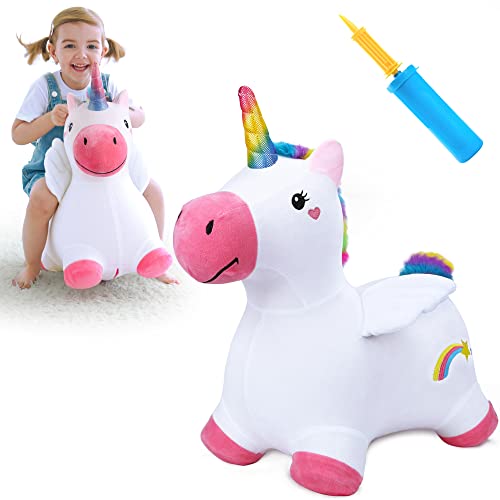
The iPlay, iLearn Bouncy Pals Unicorn combines a friendly design with a four-leg base to stabilize toddlers during active play. The hopping mechanism encourages leg strength, core stability, and balance, making it suitable for growing kids who enjoy ride-on dynamics. Parents should supervise children under two years old during use, particularly on uneven surfaces or near stairs. The unicorn’s decorative features capture attention and inspire imaginative rides indoors or outdoors.
iPlay Bouncy Pals Dinosaur Hopper Toy
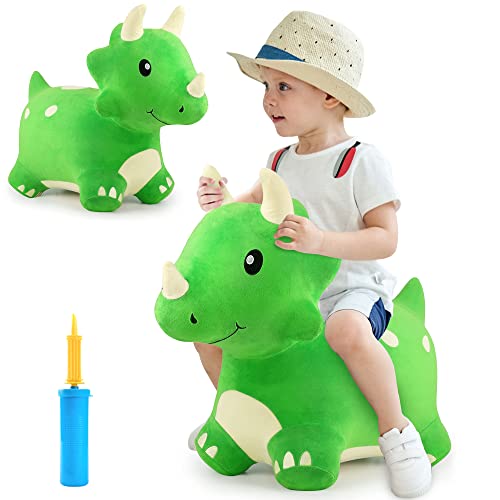
Designed with a family-friendly, removable plush cover, this dinosaur hopper emphasizes soft touch and low-friction materials for sensitive skin. The four legs deliver stability to reduce tipping, helping toddlers build confidence as they bounce. It’s a versatile toy for indoor use, parks, or driveways, supporting motor planning, balance, and imaginative play as young children explore their prehistoric friend.
Melissa & Doug Bowling Friends Set

This soft-animal bowling game offers a beginner-friendly setup that’s easy to transport thanks to a zippered carrying case. Each pin has a weighted base for stability, making it suitable for younger toddlers learning aim, hand-eye coordination, and gross motor play. The set supports cooperative play, whether used in living rooms, backyards, or classrooms, and scales well as little ones grow more confident with throwing and rolling.
HopeRock Frog Interactive Toy With Modes

HopeRock’s Frog Game Toy offers five modes and 45 levels of increasing difficulty to challenge early learners. Features include light-up frogs, a spray function, and a two-player mode that encourages parent-child interaction. The toy promotes fine motor skills, timing, and musical recognition while keeping kids engaged with dynamic visuals and sound effects. It’s a strong option for shared play that prevents screen dependence.
Simplay3 Rock Around Wobble Disk

The Simplay3 Rock Around Wobble Disk combines a rocking seat with a built-in climbing dome, offering two modes of play that grow with a child’s abilities. It supports balance, coordination, and gross motor skills while enabling indoor/outdoor use. The two-sided design invites kids to switch between movement styles, providing variety in active play and a durable option for year-round engagement.
GMAOPHY Toddler Basketball Hoop

Adjustable height and soft, lightweight balls make this mini basketball hoop ideal for younger toddlers who are learning aim, hand-eye coordination, and shooting mechanics. The base supports stability, with options to add weight for extra sturdiness. It’s well suited for small living spaces or outdoor patios, encouraging active play with a safe, controlled environment and no pressure to perform beyond developmental milestones.
Montessori Car Ramp Track Set

In addition to its six-car layout and ramp tracks, this set introduces early engineering concepts: cause-and-effect, sequencing, and teamwork. It’s designed to support fine motor control as kids place cars on ramps and guide them down the course. The multiple garages and race options help sustain longer play sessions while promoting turn-taking and cooperative play in small groups.
Buying Guide: Key Purchase Considerations
- Age appropriateness: Look for toys labeled for ages 2-4 and with simple, safe mechanisms that support gross motor development without small parts that pose choking risks.
- Stability and safety: Choose designs with wide bases, non-slip surfaces, and soft materials to minimize tipping and injuries during active play.
- Durability: Prioritize sturdy plastics, reinforced stitching, and washable covers for long-lasting use in homes, classrooms, or playgrounds.
- Indoor vs. outdoor use: Decide where the toy will mostly be used; some items perform well in both settings, but storage and weather exposure can influence material choices.
- Educational value: Favor toys that integrate problem-solving, balance challenges, or rhythm and music to support broader developmental goals.
- Maintenance: Consider how easy it is to clean temporary covers, replace parts, or dry after outdoor use.
- Social play: If siblings or peers frequently join, select items that encourage cooperative play, sharing, and turn-taking.
- Portability: For families on the go, carry-case or compact designs help with transport to parks or visits with relatives.
- Budget and value: Compare multi-function toys with upgrade paths (e.g., a wobble disk that also serves as a climbing structure) to maximize learning value per dollar.
Active toys for 2 year olds should balance safety, engagement, and educational value. The five selected products provide a mix of bounce, ride-on, and problem-solving play that supports gross motor skills, balance, coordination, and early cognitive development. Each option offers distinct advantages for homes, classrooms, and outdoor spaces, helping toddlers explore movement with confidence.
Notes On Use
Always supervise toddlers during play, especially with bouncing or climbing equipment. Start with lower settings or simpler modes, then gradually introduce more challenging activities as confidence and motor skills improve. Clear play areas, avoid hard floors without mats, and ensure toys are age-appropriate for the child’s developmental stage.