Best Push Bikes for Babies and Toddlers: Safe 5-in-1 Ride-on Options
Choosing the right push bike or tricycle for a toddler can support early balance, steering, and confidence. This guide highlights five versatile options that grow with your child—from early push trikes to pedal-ready balance bikes. Each model emphasizes safety, durable construction, and easy mode transition to suit 12–36 months and beyond.
| Product | Brand | Key Modes | Suggested Ages |
|---|---|---|---|
| newyoo TR007 Toddler Bike, 5-in-1 | newyoo | Tricycle, Balance Bike, Bike, Push Tricycle, Push Balance | 12–36 months |
| newyoo 5-in-1 Toddler Tricycle with Push Handle | newyoo | Push Tricycle, Push Balance Bike, Tricycle, Balance Bike, Bike | 12–36 months |
| SEREED Baby Balance Bike | SEREED | Balance Bike (Pedal-Free) | 12–24 months |
| JMMD 7-in-1 Tricycle Stroller | JMMD | 6 Modes (Tricycle, Push, Balance, 360 Seat, Recline, Canopy) | 18 months–5 years |
| newyoo TR008 Toddler Tricycle with Push Handle | newyoo | Parent Steering Push, Tricycle, Balance Bike, Bike | 12–36 months |
Note: All products above feature adjustable components and safety designs suitable for early riders. Each option supports progression from push-assisted riding to independent pedaling, helping kids build balance and coordination in a fun, supervised way.
newyoo 5-in-1 Toddler Bike, TR007

The TR007 model from newyoo combines five modes in a single frame, allowing easy conversion between tricycle, balance bike, and standard bike configurations. It’s suitable for ages 12–36 months with a simple button-press mechanism for mode changes. The design emphasizes quick setup, with a lightweight structure that can be assembled in minutes. Safety features include a carbon steel frame, nylon rear legs, and EVA wheels designed for durability and stability. The seat height and pedal configuration accommodate growing children, while the EN188 and ASTM certifications support long-term use.
Key considerations
Pros: Versatile, growing with the child; straightforward mode changes; sturdy materials.
Cons: Some older infants may prefer a fixed-trike without frequent mode switching.
newyoo 5-in-1 Toddler Tricycle, Khaki
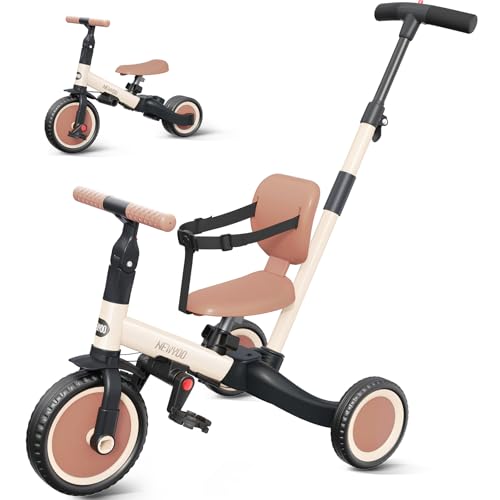
This 5-in-1 model expands from push tricycle to balance bike and bike modes, with a 135-degree steering handlebar to control speed and direction. It includes adjustable handlebars, seat, and pedals to accommodate growth, and a red button makes mode changes quick and tool-free. The parent-friendly design supports supervised riding with a height-adjustable push handle and a safety-conscious build that helps prevent falls during early practice.
Key considerations
Pros: Adjustable components; parent-assisted steering; multiple modes for long use.
Cons: Some parts may require periodic re-tightening as the child grows.
SEREED Baby Balance Bike
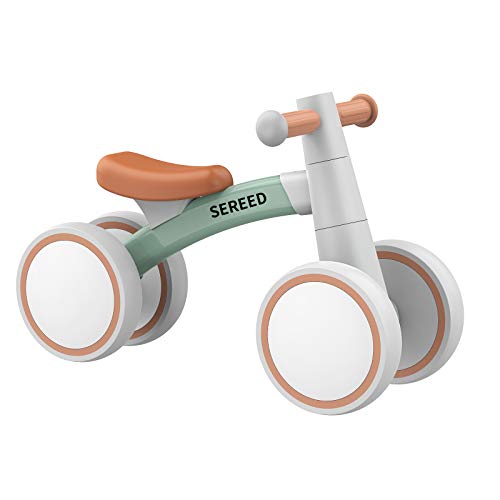
The SEREED balance bike is designed for early riders aged 12–24 months, focusing on balance, steering, and coordination without pedals. Its lightweight aluminum frame, non-slip TPU handles, and a softly cushioned seat contribute to a comfortable ride. Wide, wear-resistant wheels enable safe indoor or outdoor use, with a 135-degree turning limit and gravity steering that helps prevent tipping. The design aims to foster confidence as babies learn balance before transitioning to pedaled bikes.
Key considerations
Pros: Pedal-free design reduces friction and risk; indoor/outdoor versatility; focused balance development.
Cons: Limited progression to pedal-equipped bikes without additional purchases.
JMMD 7-in-1 Tricycle Stroller

The JMMD tricycle offers six or more modes in a single system, designed to grow from 18 months to 5 years. Features include a 3-point safety harness, detachable safety bar, double brakes, and a UV-protective canopy. The robust steel frame supports up to 55 lbs and uses non-inflatable EVA wheels for stability on diverse surfaces. The seat ares include ventilation and a reclinable backrest for comfort during longer rides. The push handle and adjustable components enable parents to guide and assist younger riders as they develop independence.
Key considerations
Pros: Long-term use; strong safety features; versatile for multiple terrains.
Cons: Heavier frame; larger footprint may require more storage space.
newyoo TR008 4-Mode Toddler Tricycle

The TR008 variant provides four primary modes: parent-steering push, tricycle, balance bike, and standard bike. It features an adjustable handlebar and seat with three pedal positions to accommodate mode changes. The 135-degree steering limit helps maintain control, while the carbon steel frame and EVA wheels aim to balance durability with a lighter ride. This model emphasizes ease of use for parents and safety during early riding stages.
Key considerations
Pros: Flexible modes; parent-steered assurance; adjustable setup for growth.
Cons: Fewer modes than some 6- or 7-in-1 designs, depending on configuration.
Buying Guide: How To Choose The Right Push Bike For Your Child
Assess your child’s age and development stage. For 12–24 months, a pedal-free balance bike or a 3-wheeled push tricycle can help develop balance and basic steering. For 2–3 years, look for models that transition to pedals or two-wheeled balance configurations to introduce independent riding. If you want a single device that grows with your child, choose a 4–7-in-1 system with multiple configurations and adjustable components.
- Safety and durability: Prioritize steel frames, non-slip wheels, and secure harnesses or safety bars. Check for certifications such as ASTM or EN188 when available.
- Adjustability: Look for adjustable handlebars, seats, and pedals to accommodate growing children. A user-friendly mode-switch mechanism reduces frustration for both kids and parents.
- Weight and portability: Lighter frames are easier for parents to lift and transport, but heavier builds often offer more stability. Consider storage space at home.
- Terrain versatility: EVA wheels and taller wheelbases enable smoother rides on both hard surfaces and light outdoor terrain.
- Maintenance: Favor models with straightforward assembly and fewer small parts that might loosen over time. Reviews noting easy repairs are a plus.
These products provide a range of options from pedal-free balance experiences to fully transitional ride-ons, helping families select the best fit for safety, growth, and enjoyment. Always supervise young riders, use protective gear, and pick a model with appropriate weight limits and age guidance.