Best Building Sets for 8-Year-Olds: STEM Toys for Creative Minds
From robotics to solar-powered circuits, the right building set can spark curiosity, foster problem-solving, and support hands-on learning. This guide highlights five engaging options ideal for 8-year-olds who love building, engineering, and imaginative play. Each choice combines durability, clear instructions, and age-appropriate challenges to keep kids motivated while developing core skills.
style=”display:none;”>Summary Table of Chosen Products
| Product | Brand | Key Benefit |
|---|---|---|
| Henoda Robot Toys for 8-16 Year Olds | Henoda | Remote/App control, 468+ pieces |
| STEM 13-in-1 Education Solar Power Robots | Bottleboom | Solar-powered, 13 builds |
| Karei 3-in-1 Robot Building Kit | Karei | Remote & App control, 3 models |
| LEGO Technic Off-Road Race Buggy | LEGO | Realistic engine and suspension |
| Veecafiodi 50-in-1 STEM Building Kit | Veecafiodi | Multiple models, motorized |
Henoda Robot Toys For 8-16 Year Olds
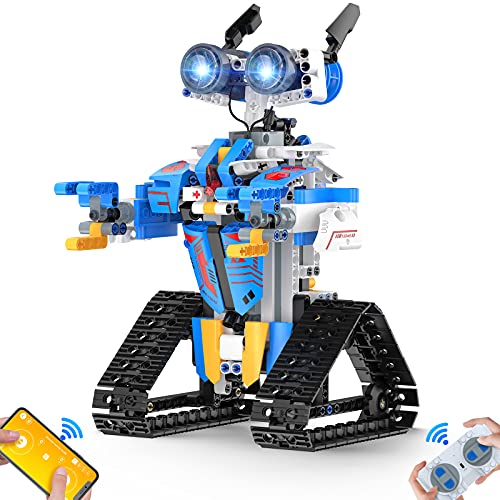
Henoda’s 468+ piece set blends construction with programmable features to create a dynamic educational robot. The kit supports STEM learning by linking building with practical problem solving and motor skill development. Kids can explore autonomous movement, sensor-based tasks, and basic programming modes, while enjoying a robust, hands-on building experience. The remote and app-connected control expand play possibilities, enabling path planning, voice interaction, and gravity-sensing features. This versatile set is designed to sustain interest through evolving challenges as children grow.
STEM 13-in-1 Solar Power Robots

This solar-powered robotics kit guides children through 13 distinct builds, moving from land to water with interchangeable parts. The inclusion of gears, plates, tires, and shafts supports iterative exploration and mechanical understanding. Made with non-toxic materials, it emphasizes safety while encouraging experimentation with solar energy as an alternative power source. The step-by-step manual makes assembly approachable, while disassembly and reassembly cycles deepen understanding of modular design and problem-solving.
Karei 3-in-1 Robot Building Kit

The Karei set offers three models in one package: a robot, an excavator, and a garbage truck. Remote control and smartphone app compatibility enable learners to program paths, practice sequencing, and explore engineering concepts. With synchronized gears, movable limbs, and LED lights, the kit creates a tangible link between digital instructions and physical mechanisms. It’s well-suited for ages 8–14, providing scalable challenges that keep beginners engaged while promoting persistence and experimentation.
LEGO Technic Off-Road Race Buggy

LEGO Technic offers a build that blends authenticity with play value. The model features a moving 4-cylinder engine, functional steering, and a working suspension, reflecting real-world automotive mechanics. The process of assembling the buggy builds fine motor skills, spatial reasoning, and attention to detail. As a LEGO Technic set, it provides a durable, reusable platform that supports iterative builds and extended play sessions, appealing to kids who enjoy vehicles and engineering challenges.
Veecafiodi 50-in-1 STEM Building Kit

This expansive set offers 50 possible builds from a single kit, encouraging kids to experiment with different configurations. With 107 durable pieces and a motor-powered option, it supports creative engineering play while introducing basic concepts of motion, gears, and mechanism design. The included instruction manual helps structure learning, while the flexibility to switch models supports divergent thinking and perseverance in problem-solving tasks.
Buying Guide
- Age appropriateness: Look for sets specifically labeled for ages around 8, offering moderate complexity without being overwhelming.
- Educational emphasis: Choose kits that balance hands-on building with STEM topics like gears, motors, solar energy, or programming.
- Play value and replayability: A multi-model or modular kit provides extended use, increasing long-term engagement.
- Safety and materials: Prioritize non-toxic plastics and smooth edges; verify that small parts are appropriate for the child’s age to minimize choking hazards.
- Learning path: Some kits introduce programming or app-based control; ensure compatibility with devices the child owns (tablets, smartphones).
- Durability and resale: Reusable parts and sturdy construction help keep the set valuable for siblings or friends.
- Storage: Large piece counts benefit from organized storage so kids can clean up easily after play sessions.
- Support and instructions: Clear, step-by-step guides or visual manuals support independent building and reduce frustration.
- Social and collaborative play: Consider sets that can be built together with others to encourage teamwork and discussion of design choices.
- Cost-to-value balance: Higher-priced kits with advanced features may offer richer educational outcomes, but ensure the complexity remains appropriate for the child.