Best Tent for Autistic Child: Calming Indoor Hideouts for Sensory Comfort
Choosing the right tent can help create a calm, private space for autistic children to decompress, relax, and practice self-regulation. The following tents prioritize blackout interiors, soothing dark environments, and practical features like easy setup and storage. Each option below is designed to reduce sensory overload while offering a safe, inviting spot for focus or quiet play. This guide highlights five strong choices and compares their notable attributes to help caregivers select the best fit for home, school, or therapy settings.
Summary of selected products:
| Brand | Name / Model | ||
|---|---|---|---|
| Peaceful Playtime | Blackout Sensory Tent for Kids | 51″ x 51″ x 40″ | Dark calming space with clear phone pocket and mesh storage |
| RIYDH | Sensory Tent for Kids with Autism | 47.2″ | 100% blackout, string light, iPad pocket |
| ultrapopp | Ultrapopp Pop up Sensory Tent | 47″ x 47″ | Instant setup, fully blackout interior |
| FVMOTO | Pop Up Sensory Tents for Autistic Children | 72 x 72 x 92 cm (approx 28″ x 28″ x 36″) | Calm space with versatile decorating options |
| Ysityum | Large Sensory Tent for Kids with Autism | 47″ x 47″ | Fully blackout, calming space with air flow |
Peaceful Playtime Blackout Sensory Tent

The Peaceful Playtime tent focuses on a calming, dark space to help children manage sensory overload. Its blackout design reduces visual stimuli, supporting self-regulation during anxiety or overstimulation. The tent’s 210d polyester construction offers durability while remaining portable. A clear phone pocket and mesh storage add practical value for caregivers and kids who want easy access to calming tools or favorite items during quiet time. Easy setup and a included carrying bag with a cord lock support quick transitions between rooms or locations.
RIYDH Sensory Tent With String Light
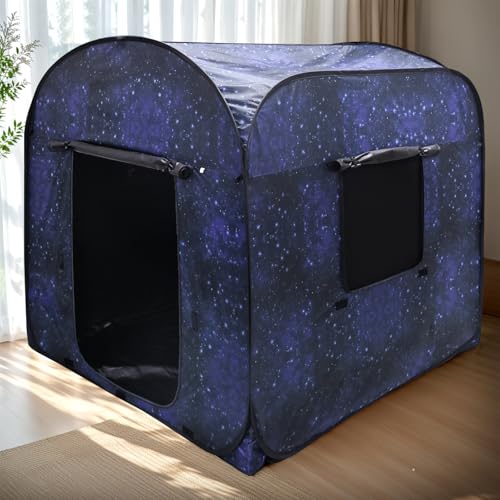
The RIYDH tent emphasizes immersive calm through a 20-foot string light that can transform the space into a cozy, magical environment. It is designed for complete blackout to minimize anxiety triggers, with breathable mesh for airflow and a spacious interior that accommodates 2-3 children. Additional features include an iPad pocket and two storage pockets, supporting both quiet reading and sensory play. The durable polyester construction supports repeated use in homes, classrooms, or therapy settings.
Ultrapopp Pop Up Sensory Tent

This tent offers an extra-large, fully blackout interior designed as a calming hideout. Its pop-up design means no assembly, which reduces setup time and caregiver effort. The 47×47 inch footprint provides spacious room for a child’s personal space, with a roll-up door and window for easy access and venting. A included storage bag enhances portability for travel or school use, making it a flexible option for sensory regulation across environments.
FVMOTO Pop Up Sensory Tent

The FVMOTO tent is designed to create a calm corner for children with SPD, anxiety, or autism. Its blackout interior supports a distraction-free zone ideal for focused play or quiet time. The tent emphasizes versatility, encouraging caregivers to decorate with lights, cushions, or favorite toys to foster a comforting environment. A portable, collapsible design allows for easy transport to classrooms or therapy sessions, and the note on indoor use ensures appropriate application in most settings.
L’Arche Sensory Tent With LED Lights

The L’Arche tent blends blackout performance with LED lighting for engaging ambiance. It includes dual windows for airflow and inner pockets to store sensory tools. The space is designed to decompress in a safe, enclosed area, making it suitable for use at home, clinics, or classrooms. The LED lights offer customizable mood settings via a remote control (battery-powered), enabling tailored sensory experiences while maintaining portability and ease of setup.
Ysityum Large Sensory Tent

The 47×47 inch Ysityum tent offers a full blackout interior designed to provide a non-stimulating space for self-regulation. It emphasizes a calming environment while including mesh windows for ventilation and Velcro-backed window covers to adjust light and noise. Designed for indoor use, its compact footprint makes it suitable for a home sensory corner, classroom, or therapy room, supporting children who benefit from a secure, quiet place to decompress.
Buying Guide: Key Purchase Considerations
When selecting a tent for an autistic child, consider blackout effectiveness, size, portability, and ease of use. A calm, dark interior reduces visual stimuli and helps regulate arousal levels, while adequate space ensures comfort without making the space feel crowded. Look for breathable materials and mesh windows to promote airflow and prevent overheating. Portability and quick setup matter for caregivers who need to move the tent between rooms, classrooms, or travel. Storage options and pockets keep sensory tools, toys, or devices organized. Finally, consider additional features such as LED lights, iPad or toy pockets, and durability to maximize long-term value in homes and schools.
Size and layout should align with the child’s typical needs. If a child prefers deeper darkness, prioritize tents with a true blackout interior and dense fabric. If caregivers anticipate shared use, a larger footprint allows multiple children to use the space without crowding. For therapy settings, collapsible or pop-up designs save setup time, while sturdier, freestanding tents offer stability during active play. It may help to test a few options in a calm area before committing, ensuring the chosen tent integrates well with existing routines and sensory strategies.
Accessibility and safety are also important. Check for sturdy poles, secure seams, and smooth zippers or closures. Ensure there are multiple entry points or wide doors to accommodate caregivers, and confirm that lighting (if used) does not create glare or overstimulation. Finally, consider whether the tent can be easily cleaned and stored, as hygiene and maintenance influence daily use in busy environments.