Best Walkers for 2-Year-Olds: Safe First Steps and Learning
The right walker can support a toddler’s first steps while encouraging curiosity and motor development. Below are five highly walk-focused options that suit most two-year-olds, emphasizing safety, durability, and engaging play features. The selections include wooden, multi-feature activity walkers and sit-to-stand designs to suit different learning styles and environments.
| Product | Brand | Type |
|---|---|---|
| 2-in-1 Baby Push Walker – Wooden Push Walker and Tool Toy | bpmfkid | Wooden push walker with tool toy set |
| iPlay, iLearn 3 in 1 Baby Walker Sit to Stand Toys | iPlay, iLearn | Activity table and walker combo |
| SYNCFUN Baby Learning Walker, 2 in 1 Sit to Stand | SYNCFUN | Push walker with detachable play panel |
| WOODMAM Wooden Baby Walker, Adjustable Speed | WOODMAM | 10-in-1 Montessori walker |
| Labebe Wooden Baby Push Walker – Fire Truck | labebe | Wooden push walker with toy storage |
2-in-1 Wooden Push Walker With Tool Toy

The 2-in-1 Wooden Push Walker combines sturdy wood construction with a tool toy set that encourages fine motor skills and early problem solving. The walker supports first steps, provides floor-protective rubber wheels, and offers two modes of play: push walker and tool table. Dimensions are suitable for toddlers and the assembly is straightforward with a screwdriver and illustrated instructions.
iPlay, iLearn 3 in 1 Baby Walker Sit to Stand
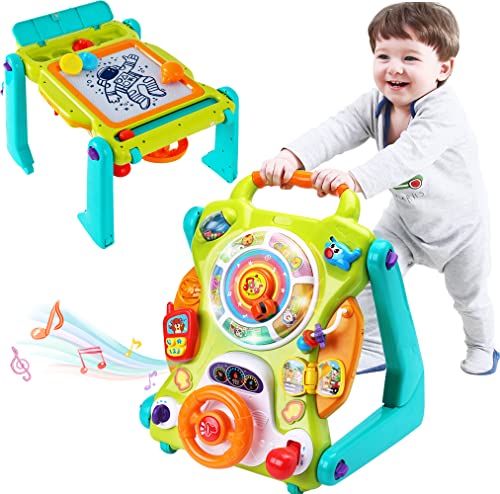
This 3-in-1 activity center combines a learning table with musical features and a walking aid. It supports sit-to-stand progression and walking, with interactive scenes and animals that stimulate motor skills and cognitive development. The magnetic doodle board adds creative play, making it adaptable for several ages within the recommended 9–36 months range as children grow.
SYNCFUN 2 in 1 Sit to Stand Learning Walker

This 2-in-1 design prioritizes safety and engagement with adjustable speed settings and a detachable play panel. The panel can be used on the floor or attached to a crib or walker, expanding play space beyond the push walker. Light-up buttons, sounds, and a piano panel provide auditory and visual stimulation to support early cognitive development while encouraging walking practice.
WOODMAM 10-in-1 Montessori Wooden Walker

This adjustable-height walker supports 50–75 cm tall toddlers and offers a comprehensive Montessori-inspired setup: gears, beads, mirror, xylophone, shape sorter, and more. The 10-in-1 configuration promotes cause-and-effect learning, hand-eye coordination, and fine motor development while providing a stable push experience for early walkers.
Labebe Wooden Push Walker With Fire Truck

This wooden walker combines a push mechanism with a toy storage chest, enabling sit-to-stand and push-to-move play. Rubber rings protect floors and provide stable speed control, while a broad base enhances balance. The toy chest feature adds an extra dimension of engagement for toddlers who enjoy carrying small items as they walk.
Buying Guide: Key Considerations for Choosing a Walker
- Safety and stability: Look for sturdy construction, rounded edges, wide bases, non-slip wheels, and a low center of gravity to minimize tipping risk.
- Age and height range: Verify recommended ages and adjustable height options to suit a growing toddler’s steps and posture.
- Material and durability: Wood walkers offer natural durability and a classic feel, while plastic or composite designs may be lighter and easier to clean.
- Imaginative play features: Toy panels, gears, sounds, lights, and shape sorters can extend play value beyond walking practice and support cognitive development.
- Portability and storage: Consider weight, foldability, and integrated storage options if you need a walker for travel or small living spaces.
- Maintenance and assembly: Check for simple assembly and easy-clean surfaces. Some models include toolsets or replaceable parts in case of wear.
- Two-in-one functionality: Walkers that convert to sit-to-stand tables or have detachable play panels provide long-term versatility as your child grows.
- Floor protection: Rubber wheels or floor-safe bases protect surfaces from scuffs and reduce resistance on different floor types.
When selecting a walker, prioritize models that balance safe walking support with engaging activities to foster curiosity, coordination, and independent exploration. The five options highlighted here offer a range of materials, features, and configurations designed to accommodate different learning styles while supporting first steps and early learning milestones.