Best Pianos for 8 Year Olds: Top 5 Kid-Friendly Keyboards for Young Musicians
Parents looking to spark a child’s love of music often turn to beginner pianos and keyboards designed for kids. The following selections focus on 61-key and 37-key electric pianos that are ideal for 8-year-olds. Each option combines beginner-friendly features—such as learning modes, recording and playback, built-in demos, and kid-friendly microphones—with sturdy construction and engaging light-weight designs. The list below highlights five top performers that balance play and education, helping young players develop rhythm, pitch, and confidence while having fun.
Summary Table of Selected Products
| Product | Brand | Key Feature | Ideal For |
|---|---|---|---|
| 61 Key Upgrade Piano Keyboard for Kids | Drmukie | MP3 Play, LCD Screen, Record & Play, 16 Tones | Beginners seeking demos and recording |
| Upgrade Keyboard Piano 61 Key with LED Screen | TWFRIC | LED Screen, MP3, 6 Demos, 8 Percussions | Young explorers who like visuals and singing |
| Kid Keyboard Piano 37 Keys | M SANMERSEN | Microphone, 8 Tones, 8 Rhythms, 19 Demos | Toddlers to early elementary learners |
| Toy Piano Keyboard for Kids Upgrade | M SANMERSEN | Record & Playback, 19 Demos, 6 Tones | Beginner performers who want real playback |
| Love&Mini Piano Toy | Love&Mini | 37 Keys, 22 Demos, 4 Rhythms | Budget-friendly starter with fun demos |
61 Key Upgrade Piano Keyboard for Kids
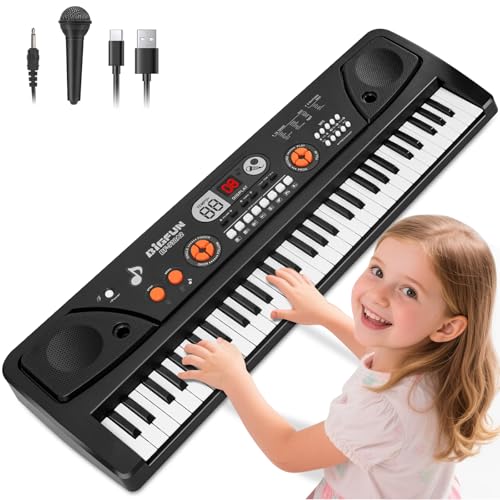
The Drmukie 61-key keyboard is designed for beginners and early learners. It features an LCD display, MP3 playback, and a microphone, enabling kids to sing along while playing. The device supports a “Record & Playback” function, which helps children hear their progress and refine timing. With 16 tones, 5 rhythms, 6 demos, 8 percussion sounds, and a user-friendly layout, this toy is well-suited for 8-year-olds practicing basic melodies and rhythms. It also includes Follow, One Key for One Note, and other functions that simplify early music theory concepts.
Upgrade Keyboard Piano for Kids Beginners 61 Key with LED Screen

The TWFRIC 61-key keyboard emphasizes a visual LED screen along with MP3 play, 16 tones, 5 rhythms, and 6 demos. It includes a micro-phone and a single-speaker design that encourages kids to sing while they play, supporting expressive performance and confidence. The device’s Record & Playback function helps track progress, and the “One Key for One Note” feature makes it easier for young hands to hit correct pitches during practice sessions. Suitable for both children and beginners who want a simple, engaging entry into music.
Kid Keyboard Piano — 37 Keys
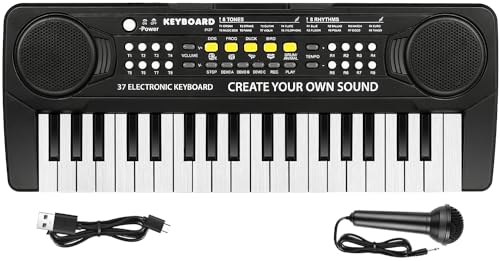
The M SANMERSEN 37-key keyboard is designed for small fingers and early music education. It offers a microphone, 8 tones, 8 rhythms, and 19 demos along with 4 percussion sounds. The compact setup makes it easy for a child to manage while sitting at a small desk or table. The inclusion of a record/playback function supports independent practice, while the instrument’s classroom-friendly features help children explore rhythm and melody in a playful way. This option is ideal for 8-year-olds starting structured practice and creative play.
Toy Piano Keyboard for Kids Upgrade — 37 Keys

The M SANMERSEN 37-key model offers a familiar piano-like keyboard with a microphone and a versatile range of demos, tones, and rhythms. It emphasizes a hands-on learning approach through a recording feature and playback, enabling kids to hear their performances and improve timing. The product’s emphasis on easy assembly and kid-friendly controls makes it a practical choice for 8-year-olds beginning to establish regular practice routines or to explore different musical styles in a structured way.
Love&Mini Piano Toy — 37 Keys

The Love&Mini 37-key piano toy is presented as a budget-friendly option with 22 demo songs and 4 rhythm patterns. It’s designed to be easy to assemble and use, making it a strong introductory instrument for younger kids or for families exploring multiple options before committing to a larger keyboard. With its kid-focused features and approachable sound palette, it serves as a practical first step into piano-based play and basic music theory for eight-year-olds.
EKKBHKI 32 Keys Kids Piano Keyboard
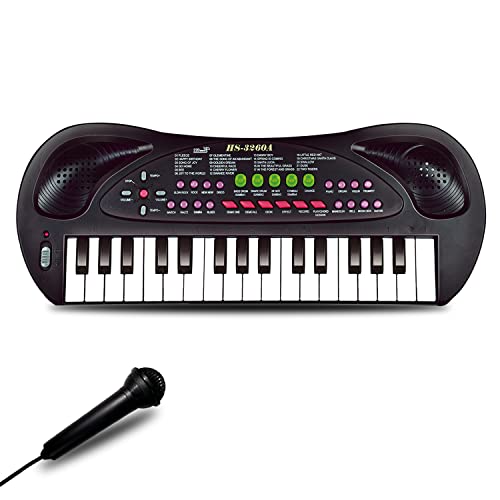
The EKKBHKI 32-key keyboard offers a detachable microphone for sing-along sessions and a multifunction setup that includes recording and playback, ensemble mode, and 22 demos across 8 tones and 8 rhythms. Although smaller than the 61-key models, this option supports early learners by focusing on core skills such as rhythm, pitch recognition, and performance expression. The educational design aims to build motor coordination and basic music theory comprehension through engaging play.
Buying Guide: Key Purchase Considerations
- Key count and portability: For eight-year-olds, 37- to 61-key models balance range with ease of play. Consider whether the child will transport the instrument to lessons or performances.
- Learning features: Look for built-in demos, record/playback, and LED or LCD displays. These features support practice routines and progress tracking.
- Microphone and singing integration: A microphone encourages vocal participation, which can boost confidence and stage presence during practice or informal performances.
- Sound options and rhythms: A variety of tones, rhythms, and percussion options allow experimentation with different musical styles and foster creativity.
- Durability and safety: Ensure sturdy construction and age-appropriate volume controls. Parental supervision during initial use helps prevent accidental damage and keeps play safe.
- Expansion potential: Some models enable USB playback or connect to external music sources. This can grow with the child’s advancing skills and interests.
- Price vs. value: Compare the number of features against the cost. A model with reliable playback, recording, and teaching tools often provides better long-term value for beginners.
Comparative Perspectives
- Educational focus: If the goal is to build reading and playing skills quickly, models with practice modes and record/playback offer concrete feedback loops for learners.
- Creative exploration: For kids who enjoy singing and improvisation, keyboards with a microphone and diverse tones promote expressive performance.
- Family sharing: Shared family use benefits from keyboards with simple setup and durable design, ensuring multiple children can learn on the same device.