Best Picture Cards for Babies: Top Picks for Early Language and Sensory Play
Choosing picture cards for babies supports early language, memory, and sensory development. The following five products offer high-contrast visuals, bilingual exposure, and tactile or interactive features that can engage infants and toddlers. Each option emphasizes visual cues, real-world objects, and easy readability to suit American families seeking educational, screen-free learning tools.
| Product | Brand | Key Benefit |
|---|---|---|
| Touch & Feel English Spanish Bilingual Picture Cards | UGOS | 36 tactile cards with dual-language labels for early bilingual exposure |
| 50 First Words Flash Cards | ALSOLIFE | High-frequency word set with interactive videos for speech practice |
| First Words Flash Cards | Scholastic | Classic beginner set focused on essential words |
| 100 First Words Flash Cards | THE BAMBINO TREE | 104 words across 9 everyday themes with mini games |
| Beiens High Contrast Baby Flashcards | beiens | High-contrast visuals designed for newborns and very young infants |
Touch & Feel English Spanish Bilingual Picture Cards
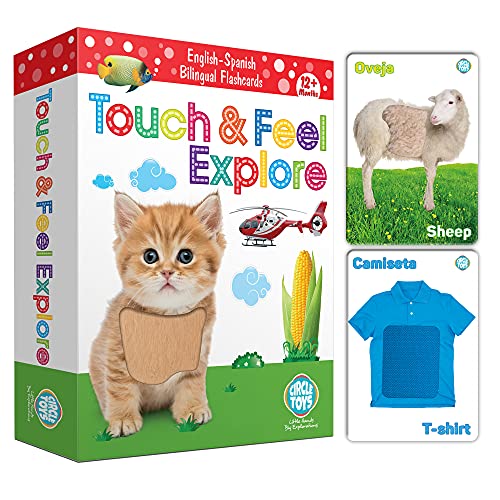
The UGOS set focuses on tactile learning and bilingual exposure. It includes 36 vivid illustrations of daily life objects and animals, with 18 double-sided cards featuring varied textures. The two-language format supports early reading readiness and word association in both English and Spanish. Designed for infants to toddlers, these cards are portable for travel and classroom use, with guidance on how to play by naming figures and describing textures.
ALSOLIFE 50 First Words Flash Cards

ALSOLIFE’s flash cards prioritize high-frequency words used in daily life, supporting early speech and language development. The set includes 50 picture cards and is complemented by interactive videos that illustrate word usage, turning learning into engaging visual practice. The white-background image cards simplify object recognition, and the back side lists the word to reinforce memory and pronunciation during language exercises or speech therapy activities.
First Words Flash Cards

Scholastic’s First Words Flash Cards provide a classic approach to vocabulary building. While compact in description here, the set is designed to introduce foundational words that toddlers encounter daily. This option suits households seeking a straightforward, easily accessible learning tool that pairs with everyday activities and storytime routines, helping with word-object associations and early reading readiness.
100 First Words Flash Cards – The Bambino Tree
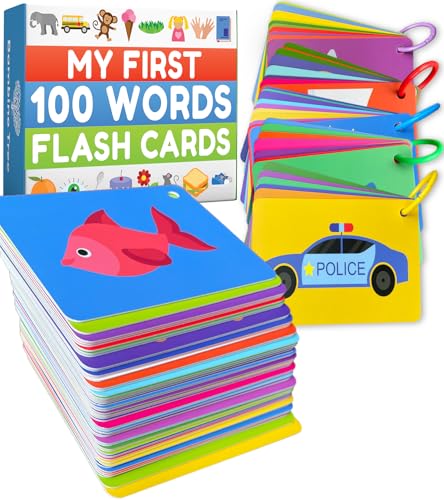
THE BAMBINO TREE presents a broad range of 104 words across nine everyday themes, including animals, food, transport, and more. The set emphasizes visual clarity and provides interactive mini-games such as scavenger hunts and what’s missing to sustain engagement. This option supports memory, comprehension, and active play, making it a versatile tool for parents and teachers focusing on early vocabulary expansion.
Beiens High Contrast Baby Flashcards

Beiens creates high-contrast visual stimulation cards designed for newborns and very young infants. The set focuses on fast visual recognition and memory, with a structure that grows across developmental stages (0-3 to 12-36 months). The curated themes and geometric shapes aid early perceptual development and right-brain engagement, offering a straightforward, no-fruss learning tool for early cognitive building.
Buying Guide: Key Purchase Considerations
- Age appropriateness: Choose cards that match your child’s development stage, from newborn visual stimulation to toddler word recognition.
- Language goals: If bilingual exposure is important, select sets with dual-language labels and audio/video supplements for reinforcement.
- Texture and interactivity: Tactile, high-contrast, or interactive components can boost engagement and sensory learning.
- Content breadth: Consider the number of words and themes covered. More topics support broader vocabulary but may be overwhelming for very young babies.
- Visual design: High-contrast imagery benefits infants, while simple scenes improve quick recognition for early talkers.
- Durability and portability: Look for sturdy cards with protective coatings and a compact size for travel or library visits.
- Supplementary materials: Some sets include videos or online resources that can enhance speech development or parent-led activities.
Buying Guide: Product Comparisons
- Bilingual vs. single-language: If you want dual-language exposure, prefer bilingual sets like the UGOS cards, which pair English with another language clearly on each card.
- Word density: Sets with 50–104 words provide broader vocabulary-building opportunities, but smaller sets can be easier to manage and teach one concept at a time.
- Interactivity: Interactive videos or games can reinforce learning, though some families may prefer purely visual cards for screen-free play.
- Visual style: High-contrast black-and-white or bold colored imagery supports early recognition; consider which style your child responds to best.
- Durability: For babies, durability matters. Cards with rounded corners and wipe-clean finishes reduce wear from drool and handling.