Best Educational Toys for 14 Month Old: Engaging Picks for Early Learning
Finding developmentally appropriate toys for a 14-month-old can support early milestones like fine motor skills, color and shape recognition, and sensory exploration. The following selections focus on simple, interactive play that encourages curiosity, movement, and problem-solving. Each option is designed for toddlers around 12–18 months and beyond, with safe materials and age-appropriate activities. Use this guide to compare different play styles—from pretend play to hands-on sorting and early STEM concepts.
| Product | Brand | Type | Key Benefit | Age Range |
|---|---|---|---|---|
| Learning Toy for Toddlers 1 2 3 Years Old | Play-Act | Montessori style sorting & counting | Colorful barns, train play, early math | 12–36 months |
| Laugh & Learn Smart Stages Chair | Fisher-Price | Interactive learning chair | Music, lights, 3 stages of learning | 12–36 months |
| Montessori Wooden Sorting & Shape Puzzles | Tonberless | Wooden shape sorter & stacker | Color/shape recognition, fine motor | 12–36 months |
| Toddlers Montessori Wooden Shape Sorting Toys | KMTJT | Shape sorting & color blocks | Sorting, matching, imaginative play | 12–36 months |
| Montessori Fishing Toy Set | Gagule | Fishing & stacking cups with numbers | Color/number recognition, fine motor | 12–36 months |
Play-Act Montessori Learning Train Set

The Learning Toy for Toddlers from Play-Act is designed to introduce basic counting and sorting through a bright, interactive train theme. The set includes 9 farm animals and a farmer, with 10 numbered barns and 4 wagon carriages pulled by a locomotive. The detachable roof on the train enables hands-on participation as children place figures inside and maneuver pieces around the tracks. This modular approach supports color and number recognition as kids load, unload, stack, and sort while following along with pretend play. The toy’s physical components are sized for small hands, encouraging grip development and hand-eye coordination.
Key features include a colorful sorting experience that reinforces color differentiation and number familiarity, interactive play with a detachable roof, and opportunities to practice sequencing as children arrange barns and carriages. The open-train design invites toddlers to engage in imaginative scenes, fostering early storytelling and social interaction. While designed for a 1–3 year age range, younger toddlers can explore foundational concepts with caregiver guidance, making it a flexible choice for a family’s early-learning toolbox.
Fisher-Price Laugh & Learn Smart Stages Chair
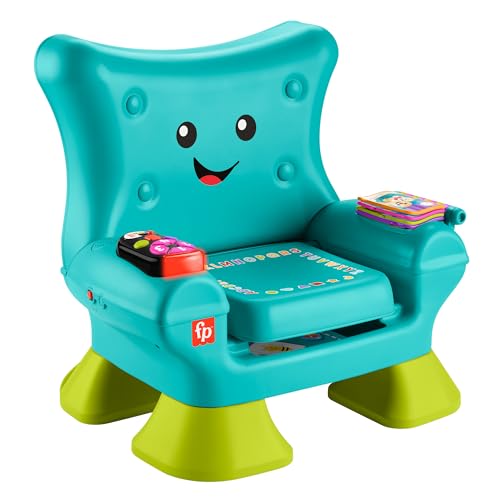
This interactive chair is designed to keep a growing toddler engaged with music, lights, and phrases that adapt through three smart stages. With 120+ songs, sounds, and activities, the seat responds to sitting or standing, encouraging movement and exploration. The Smart Stages feature helps introduce colors, shapes, numbers, counting, and opposites in a developmentally appropriate sequence, aligning with early childhood education goals. Its compact footprint makes it suitable for living rooms and play areas where space is at a premium.
Research-backed benefits of electronic learning toys in early development include reinforcement of auditory and visual processing, vocabulary growth, and cause-and-effect understanding. This Fisher-Price chair balances sensory input with active participation, which is essential for 14-month-olds beginning to experiment with new sounds and actions. Caregivers should supervise use to maximize learning moments and reduce overstimulation, but the toy’s built-in progression helps scale as a child matures.
Tonberless Wooden Sorting & Shape Puzzles

Tonberless offers a wooden learning set that emphasizes shape sorting, color recognition, and thematic engagement through a farm-themed puzzle set. The wooden construction uses water-based paint featuring vivid, non-toxic colors with rounded edges to prioritize safety. The 20-piece puzzle includes five colors and five shapes, providing varied opportunities to practice matching and spatial awareness. The shapes include pentagon, square, rectangle, triangle, and circle, helping toddlers distinguish basic geometry while improving hand-eye coordination.
Parents and caregivers will appreciate the natural material feel and reduced glare compared to plastic toys. The durable build also supports repeated play, which is beneficial for toddlers exploring cause-and-effect relationships. This set works well as a standalone learning activity or as part of a broader Montessori-inspired play routine to reinforce daily routines, color theory, and shape sorting in simple, tangible steps.
KMTJT Wooden Shape Sorting Toys

KMTJT’s wooden sorting kit includes 12 fruit blocks, 8 carrots, 10 worms, and a five-sided cart with assorted shapes. Built from high-quality wood and finished with safe, water-based paint, this set emphasizes safe handling for little hands. The product supports multiple modes of play, including sorting by color and shape, stacking, and immersive pretend play, which can help with early cognitive and motor development. The substantial pieces are designed for easy grasp by toddlers while maintaining kid-safe dimensions to minimize choking hazards.
By combining sorting, matching, and imaginative play, this toy promotes early STEM thinking and practical problem solving. It also provides a multisensory experience—visual color cues paired with tactile blocks—to help children better recognize patterns and develop memory for shapes and colors. While robust enough for ongoing use, it’s light enough for easy storage and travel, making it suitable for busy families who value portability and ease of cleanup.
Gagule Montessori Fishing Toy Set

The Montessori Fishing Toy Set from Gagule features a fishing rod and a mat that doubles as a storage bag, along with 15 fish pieces and 5 stacking cups labeled with numbers and letters. The set is designed to be safe and engaging for children 12–18 months and older, with sewn Velcro on the rod for simple catching and gentle play. The stacking cups help with counting and basic literacy, while the numbers and letters introduce early numeracy and alphabet familiarity. The soft fabric pieces are machine washable, supporting everyday use for toddlers.
In addition to fine motor and hand-eye coordination, this toy supports sensory development through varied textures and colors. The portability of the folding mat/storage bag makes cleanup straightforward, and the design encourages cooperative play when siblings or caregivers assist with “fishing” tasks. For parents seeking a gentle, Montessori-style introduction to sorting and early numeracy, this set provides a practical, low-pressure learning experience that scales with a child’s growing abilities.
Buying Guide: Key Purchase Considerations
- Age appropriateness: Choose toys labeled for 12–18 months to align with a 14-month-old’s developing abilities, while leaving room for continued use as the child grows.
- Motor skill development: Look for activities that encourage crawling, standing, walking, grasping, and pincer grip to support fine motor skills.
- Safety and materials: Prioritize non-toxic finishes, rounded edges, and sturdy construction. Wood and BPA-free plastics are common safe options; always supervise use with small pieces.
- Learning focus: Separate toys by learning goals—sorting, counting, shape recognition, and pretend play—to build a balanced playset that covers multiple developmental domains.
- Durability and cleanability: Items should withstand rough toddler play and be easy to clean, especially fabric parts or vinyl covers that may come into contact with saliva or food.
- Portability and storage: Consider toys that are easy to store in a bin or bag, and that travel well for car rides or visits to relatives.
- Caregiver involvement: Toys that invite caregiver participation—imitation, storytelling, or guided counting—tend to maximize learning outcomes in early years.
- Value and versatility: Multi-purpose toys (sorting, stacking, and basic counting) offer more learning opportunities without crowding the play space.
When selecting, balance toys that promote independent exploration with those that require a caregiver’s guidance. A mix of push-and-go toys, shape sorters, and interactive items provides a comprehensive early-learning toolkit. While prices are not listed here, compare durability, age labels, and the range of skills each toy helps develop to determine overall value for your family.