Best Model Kits for 10 Year Olds: Hands-on STEM Projects to Build Skills
Model kits designed for 10-year-olds blend learning with hands-on fun, helping kids explore science, technology, engineering, and math through creative play. The selected kits below emphasize engineering principles, mechanism design, and problem-solving, offering safe, age-appropriate challenges. Each option features clear instructions, durable parts, and engaging activities that fit classroom or family learning time. Whether kids are curious about hydraulics, combustion engines, or LEGO-based mechanisms, these kits inspire curiosity and build confidence through constructive play.
Summary of Featured Products
| Product | Brand | What It Teaches | Key Feature |
|---|---|---|---|
| Thames & Kosmos Mega Cyborg Hand STEM Experiment Kit | Thames & Kosmos | Hydraulics, pneumatics, fine motor control | Wearable, air-powered grasping fingers |
| Discovery Model Engine Building Kit | Discovery | Cranks, belts, pistons, basic engine operation | Working 4-cylinder engine with LEDs and belts |
| Klutz Lego Gear Bots | Klutz | LEGO Technic mechanisms, axles and cams | 8 kinetic, physics-driven models |
| Poraxy 5 in 1 STEM Kits | Poraxy | Multiple model cars, hands-on engineering | Five different car models in one kit |
| Lucky Doug Army Tank Set | Lucky Doug | Metal construction, precision assembly | 284 pieces for a detailed model tank |
Thames & Kosmos Mega Cyborg Hand STEM Kit

The Mega Cyborg Hand kit teaches pneumatic science and mechanical engineering through a wearable hydraulic hand. No motors or batteries are required; the system relies on air pressure and the user’s hand movement to operate gripping fingers. Hydraulic pistons enable the fingers to open, close, and grip objects with measurable force, offering opportunities to study force transmission, leverage, and control. Each finger joint can be adjusted, allowing learners to experiment with angles and precision. The kit emphasizes hands-on manipulation and fine motor development, making it a compelling choice for curious 10-year-olds exploring real-world mechanics.
Key features focus on: air-powered actuation, adjustable finger joints, and scalable grip strength. The all-ages educational value is enhanced by the opportunity to compare different grab strengths and finger positions, enabling practical experiments in ergonomics and design. This kit suits classrooms, after-school programs, and families who want tactile demonstrations of pneumatics in action.
Discovery Model Engine Building Kit
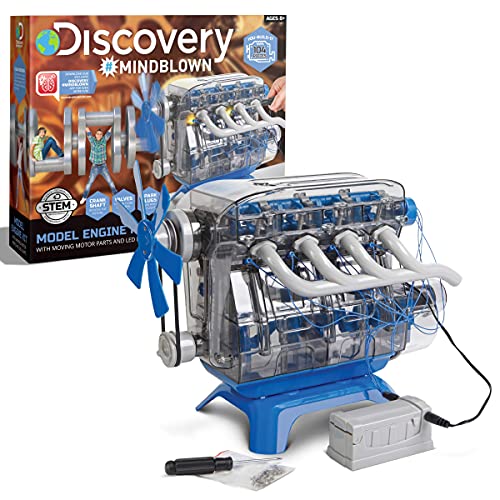
This kit animates classic internal combustion engineering with a working 4-cylinder engine, providing tactile exploration of crankshafts, pistons, belts, valves, and LED-laden indicators. It invites kids to follow step-by-step construction, then see the engine come alive as the pistons move and the fans rotate when connected to the battery pack. The hands-on process strengthens logical thinking, measurement, and patience while modeling real-world car engine components. The kit’s practical assembly experience helps young builders understand how timing belts, belts, and exhaust systems coordinate to power movement.
Educational highlights include critical thinking, mechanical reasoning, and cause-and-effect reasoning. Builders gain confidence as they assemble complex mechanisms, test different configurations, and observe how components interact within a simplified engine system. It’s a rewarding project for budding engineers who enjoy exploring mechanical systems and seeing tangible results from their efforts.
Klutz Lego Gear Bots

Klutz Lego Gear Bots combines LEGO Technic bricks with a 64-page guide to teach axles, cams, and gears through papercraft and model building. This kit includes all necessary LEGO elements and provides accessible, structured STEM content that explains how gears, levers, and linkages translate into motion. The project-based format emphasizes sequence, planning, and iterative problem-solving as kids build eight kinetic creatures. It’s well suited for group activities, family STEM time, and classroom centers where peer collaboration reinforces learning outcomes.
The instructional book integrates STEM theory with practical assembly, guiding learners from concept to finished model. The result is a tangible balance of theory and application, helping 10-year-olds connect abstract ideas in physics and engineering to concrete, playable models. The kit’s modular nature also invites multiple builds, encouraging experimentation with gear ratios and motion paths.
Poraxy 5 in 1 STEM Kits
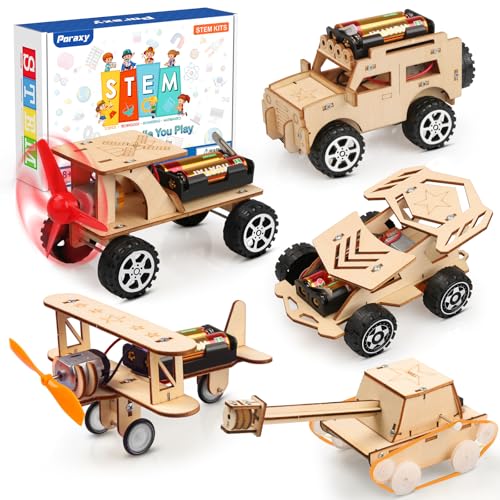
Poraxy’s 5-in-1 STEM kit offers a versatile set of model cars, delivering multiple engineering challenges within a single purchase. Learners can assemble five different car models, exploring various mechanisms, gears, and structural designs. The kit emphasizes hands-on experimentation, helping kids understand how design choices influence performance, stability, and motion. It’s particularly appealing for students who enjoy modular projects and want to compare several configurations without buying separate kits.
Educational benefits include developing practical engineering skills, spatial reasoning, and problem-solving. The parts are designed for 8- to 12-year-olds, with clear instructions to guide independent building or guided family projects. The 5-in-1 format encourages experimentation, repeated attempts, and iterative refinement—valuable habits for any budding engineer.
Lucky Doug Army Tank Set

The Lucky Doug Army Tank set delivers a metal-based construction challenge with 284 pieces, combining durability with a realistic military vehicle aesthetic. The kit emphasizes precise assembly, with detailed instructions and included wrenches and screwdrivers to support independent building. For 10-year-olds who enjoy serious build projects, the tank’s components encourage careful measurement, frustration-free problem solving, and patience as components fit together to form a sturdy, functional model. The metal construction offers a tactile contrast to plastic kits and enhances long-term durability.
This project strengthens fine motor skills and hand-eye coordination while teaching room-to-room planning, tool handling, and step-by-step execution. The assembly process fosters persistence and attention to detail as builders follow the sequence to achieve a finished model with moving parts and authentic detailing.
Buying Guide
When selecting model kits for 10-year-olds, consider the following dimensions to ensure a fit with interests, safety, and learning outcomes:
- Learning objectives — Decide if the child is most engaged by hydraulics, engines, LEGO-based systems, or multi-vehicle kits. Choose options that align with their curiosity and skill level.
- Complexity and guidance — Some kits provide highly guided step-by-step instructions, while others encourage independent problem-solving. For beginners, look for clear diagrams, color-coded parts, and supplementary tips.
- Materials and durability — Metal components tend to be more durable but heavier, while plastic parts are lighter and often easier for younger builders. Consider the child’s handling style and storage space.
- Safety and supervision — Ensure small parts and tools are appropriate for the child’s age and that adult supervision is available for tool use and assembly guidance.
- Educational balance — Look for kits that explain the underlying science, not just assembly steps. Supplemental resources, like real-world applications or experiments, can deepen understanding.
- Future-proofing — Some kits unlock additional builds or upgrades, extending the learning experience beyond a single project.
- Maintenance and organization — A kit with organized compartments or labeled components helps children stay focused during the build and clean up afterward.
In selecting among these options, consider the child’s interest: mechanical engineering, traditional model building, or multi-model experimentation. A mix of kits that emphasize hands-on assembly with clear explanations can provide both practical skills and theoretical context, supporting steady growth in STEM confidence and curiosity.