Best Coding Toys for 7 Year Olds: Screen-Free STEM Fun
Discover engaging, screen-free coding toys that help 7-year-olds build foundational programming skills. This guide highlights five top options that blend hands-on play with critical thinking, problem solving, and early robotics literacy. Each selection emphasizes age-appropriate challenges, safe materials, and clear learning paths for curious kids.
| Product | Brand | Key Benefit |
|---|---|---|
| Learning Resources Botley the Coding Robot | Learning Resources | Screen-free coding with 80-step programs and obstacle tasks |
| Snap Circuits Jr. SC-100 | Snap Circuits | 100+ projects to build basic electronics concepts |
| Learning Resources Cooper The STEM Robot | Learning Resources | Multi-mode, interactive robot with 40 coding cards |
| Learning Resources Code & Go Robot Mouse | Learning Resources | Easy push-button coding with a programmable mouse |
| Makeblock mBot Robot Kit | Makeblock | Scratch & Arduino compatible for beginner to intermediate coding |
Botley The Coding Robot

Botley offers screen-free coding experiences, introducing foundational programming concepts without tablets or smartphones. It supports 80-step sequences, loops, and obstacle detection, providing a scalable challenge as a child grows. Ready to use out of the box, Botley uses a simple remote that young learners can master. A reliable entry point for early STEM education that emphasizes hands-on problem solving and critical thinking.
Snap Circuits Jr. SC-100

Snap Circuits Jr. introduces basic electrical engineering through a safe, colorful circuit-building system. With over 100 projects and a clear color-coded manual, kids explore gadgets and circuits, fostering practical understanding of electronics, circuits, and problem solving. The kit’s modular parts support endless experimentation, making it a popular STEM gift that grows with a child’s curiosity.
Cooper The STEM Robot

Cooper the STEM Robot emphasizes screen-free coding through command buttons and 40 coding cards, encouraging critical thinking and sequencing. It offers multi-mode play, including line tracking and obstacle avoidance, plus a USB-C charging cable for convenient reuse. This interactive robot supports varied learning experiences and collaborative exploration in classrooms or homes.
Code & Go Robot Mouse
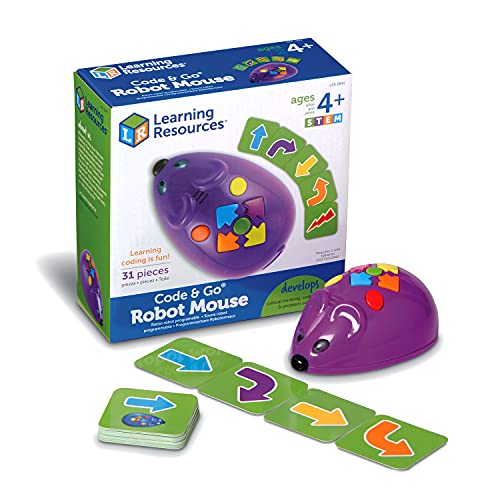
Code & Go Robot Mouse centers on simple, easy programming using pictorial cards to plot a path. The programmable mouse provides immediate feedback with lights and sounds, reinforcing sequencing and basic directional concepts. It requires three AAA batteries and is ideal for tabletop or floor play, supporting turn-taking and cooperative learning.
Makeblock mBot Kit

mBot is a versatile, entry-level coding robot kit that supports Scratch and Arduino. It’s designed for kids aged 8–12 to learn programming with easy-to-build instructions and a suite of apps. Features include line-following and obstacle-avoidance, plus rich tutorials that guide beginners through foundational electronics and robotics concepts. The kit encourages hands-on experimentation and long-term skill development.
Buying Guide
- Age-appropriate complexity: Start with basic push-button or drag-and-drop experiences, then progress to multi-mode robots or kits with more steps and conditional logic.
- Screen-free vs. screen-assisted: Screen-free options build tactile problem solving and sequence planning, while some kits offer companion apps for expanded learning.
- Hands-on components: Look for durable parts, snap-together assemblies, and safe materials suitable for frequent handling by younger children.
- Learning trajectory: Choose products that clearly outline skill progression—single-step commands, loop routines, obstacle navigation, and collaborative challenges.
- Upgrade potential: Kits that scale—adding new modules or compatible accessories—extend value as a child’s interests grow.
- Maintenance and accessibility: Consider rechargeable options, battery needs, and availability of replacement parts or manuals for ongoing use.
- Safety and certifications: Prefer products with rounded edges, non-toxic materials, and compliance with safety standards suitable for children ages 7+.
- Educational scope: Compare whether the kit emphasizes coding concepts, electronics basics, robotics, or a mix to align with learner goals.