Best Alphabet Toys for 2-Year-Olds: Fun Ways to Learn Letters
For parents seeking engaging, development-boosting games, alphabet toys for 2-year-olds are a perfect fit. These toys help with letter recognition, early literacy, fine motor skills, and color-word associations through playful, hands-on activities. The following selections from Amazon offer a mix of sensory play, interactive learning, and durable wooden design to suit curious toddlers and their growing skills.
Summary table of chosen products:
| Product | Brand | Key Focus | Typical Learning Benefit |
|---|---|---|---|
| Mini ABC Pops | Learning Resources | Letter recognition, phonic games, fine motor play | Upper/lowercase matching, color sorting, vocabulary basics |
| Alphabet Acorns Activity Set | Learning Resources | Visual and tactile ABC learning, vocabulary | Alphabet familiarity with animals, plants, colors |
| Elmo’s Learning Letters Bus | Sesame Street | Interactive letters and songs | Letter sounds, spelling practice, motor interaction |
| 2-in-1 LeapTop Touch | LeapFrog | Letter/number learning, tablet mode | Alphabet practice, name spelling, role-play |
| ABC Learning Apple | VTech | Letters, phonics, melodies | Multi-mode learning with letter voices and songs |
The top five picks below are organized to help parents evaluate how each product supports early literacy, fine motor skills, and cognitive development in two-year-olds. Each section features a concise product overview, the official image, and the core features that align with early alphabet learning.
Mini ABC Pops — Alphabet Toys

Learning Resources’ Mini ABC Pops offer a hands-on approach to letter recognition. The set includes 26 popsicle-shaped pieces with uppercase letters on the top and lowercase letters with pictures underneath. This design encourages children to match uppercase and lowercase letters while linking letters to familiar images, aiding memory and vocabulary growth. A multi-learning approach shines here: color matching, phonics exploration, and word-building ideas can be integrated into simple play sessions. The pops-and-sorts format also supports fine motor development as little fingers pop tops on and off, and the visual cues support quick letter recall.
Alphabet Acorns Activity Set

This acorn-themed set emphasizes visual and tactile learning. With 78 pieces designed to help children understand the ABCs through hands-on exploration, kids can connect letters with animals, plants, and everyday items. In addition to alphabet recognition, the activity set supports color recognition and basic word-building attempts, such as forming simple words from acorn letter tiles. The tactile nature of the pieces aligns well with kinesthetic learners, promoting engaged, interactive play for toddlers stepping into early literacy.
Alphabet Puzzles by Zeoddler

Zeoddler offers 26 uppercase letter puzzles made from natural wood, a strong choice for durability and safe, child-friendly design. This Montessori-inspired activity helps kids learn letters through tactile puzzle assembly, reinforcing hand-eye coordination and visual discrimination. The wooden construction adds a sensory-rich element that stands up to regular toddler play, making it a reliable option for ongoing alphabet exploration. It also encourages independent or guided play as caregivers model letter naming and sound association during puzzle assembly.
Elmo’s Learning Letters Bus Activity Board

The Sesame Street Elmo’s Learning Letters Bus combines exploration with interactive play. The board includes a bus and 26 letters, with Elmo’s songs and phrases that reinforce alphabet concepts. The removable letters facilitate spelling activities, while pressing the Elmo button delivers music and phrases that reinforce letter sounds. The bus format introduces a narrative play element—children can practice alphabet-related tasks as they “travel” through their day with Elmo. This setup supports auditory learning, memorization, and fine motor skills during letter manipulation.
LeapFrog 2-in-1 LeapTop Touch

The LeapFrog 2-in-1 LeapTop Touch blends laptop and tablet play for preschoolers. The device features an A-Z keyboard and numbers 1-10, with a transformation into a touch tablet for versatile learning modes. Kids can simulate writing emails or naming objects, which promotes early literacy and phonics skill development. The dual-mode design encourages role-play and imaginative engagement, essential for sustained interest in learning letters. The interactive screen, audible prompts, and age-appropriate content make this a strong option for households seeking tech-integrated alphabet activities.
VTech ABC Learning Apple
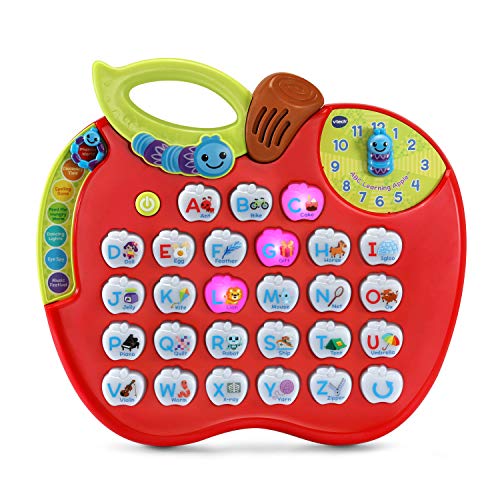
The VTech ABC Learning Apple uses a bright, interactive design to introduce preschoolers to letters, phonics, spelling, and time concepts. With seven play modes and 26 light-up letter buttons, children hear letter names and sounds, associating letters with objects. The device’s melodies and sound effects keep learning engaging while offering scalable challenges that can be adjusted as the child grows. This option suits families looking for a pocket-sized, visually stimulating path to letter recognition and early word-building.
Buying Guide
When choosing alphabet toys for a 2-year-old, consider the child’s current development stage, safety, and the variety of learning modalities offered by the toy. A mix of hands-on manipulation (puzzles, popsicles, acorns), auditory input (songs, phonics, spoken letters), and visual cues (colorful images) supports a well-rounded approach to early literacy. Durability is important—toddlers drop, throw, and chew, so wooden or high-quality plastic that withstands rough handling is ideal.
Key purchase considerations:
- Letter coverage: Ensure the toy introduces uppercase and lowercase letters, and includes letter-sound associations for phonics.
- Motor skills: Look for pieces that promote fine motor development (popping, fitting, stacking) alongside cognitive tasks.
- Engagement and durability: Toys with interactive elements (buttons, music, removable letters) retain interest, while sturdy construction ensures long-term use.
- Learning style alignment: Visual learners benefit from color and imagery; kinesthetic learners prefer tactile pieces; auditory learners value songs and spoken letter names.
- Parent involvement: Some toys support guided activities, while others enable independent exploration. Consider how you will integrate the toy into daily routines.
To maximize impact, combine several options across the categories—puzzle-based letter discovery, interactive electronic toys, and story or play-based setups. This mixed approach reinforces recognition, memory, and phonemic awareness as toddlers advance from recognizing letters to making simple words.