Best RC Planes for Kids — Top Picks for Safe, Fun Flight
Discover beginner-friendly remote-controlled planes that are durable, easy to control, and great for young pilots. This guide highlights five kid-friendly RC planes, focusing on stability, takeoff options, and safety features to help first-time flyers enjoy outdoor play and learning. Each product section includes key features to compare at a glance and exercise tips for budding aviators.
| Product | Brand | Key Feature | Flight Time (approx.) |
|---|---|---|---|
| TOIBUS RC Plane | TOIBUS | 2 Batteries, LED lights, gyro stability | Up to 30 minutes |
| Remote Control Airplane (dosumik) | dosumik | 6-axis gyro, 2.4GHz, 50m range | ~10-15 minutes typical |
| MATHSLICE RC Airplane | MATHSLICE | 2.4GHz, lightweight EPP, 2 extra batteries | ~15-20 minutes |
| 4DRC V32 Foam RC Plane | 4DRC | 360° flips, LED lights, multiple modes | ~25-30 minutes |
| DEERC RC Plane (2 Batteries) | DEERC | 6-axis gyro, durable EPP, 164 ft range | ~15-20 minutes |
These five selections emphasize safety-minded design, easy control for beginners, and robust materials to withstand learning mishaps. They also offer features like LED lighting for dusk or dusk-like conditions, ground or hand-launch options, and extended training via extra batteries. Use this guide to compare how each plane handles light winds, accuracy in steering, and how quickly a young pilot gains confidence in the sky.
TOIBUS RC Plane — F-22 Style Beginner Drone
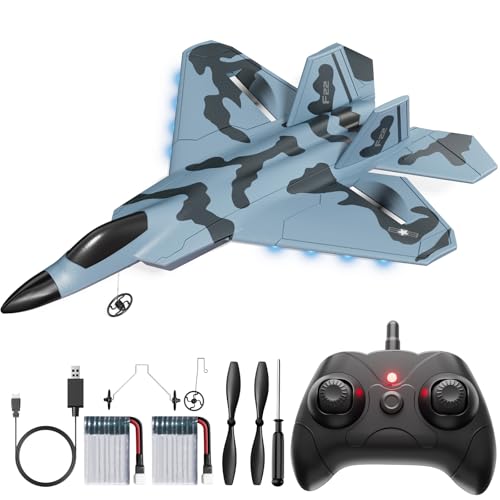
The TOIBUS F-22-inspired RC plane is built from lightweight EPP foam, delivering durability for young flyers. Bright LED lights enhance night flight visibility, appealing to kids and families. It includes two rechargeable batteries, offering up to 30 minutes of flight time (15 minutes per battery), and a robust power system that supports a 320–400 feet flight distance. A 6-gyro stabilization system helps recover balance during turns, making it accessible for beginners, including children under 12. Ground takeoff and hand launch modes add to the ease of use and fun value for new pilots.
Remote Control Airplane (dosumik) — Beginner 6-Axis Gyro
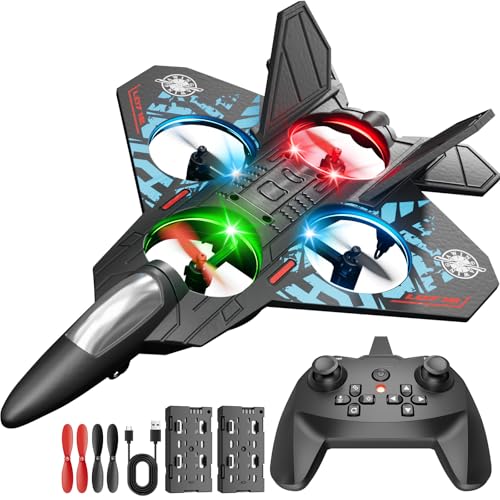
The dosumik RC plane focuses on stable hovering via a 6-axis gyro stabilization, offering a smooth learning curve for all ages. It supports 2.4 GHz remote control with anti-interference, enabling multi-operator play within a 50-meter range. A one-button option for 360° flips adds excitement while maintaining intuitive controls, making it a strong pick for kids who want quick, visible flight results without advanced piloting skills.
MATHSLICE RC Airplane — Lightweight Starter

MATHSLICE offers a lightweight 2-channel, 2.4 GHz RC aircraft built from EPP material. With a takeoff weight around 38g and dimensions suitable for indoor and small outdoor spaces, it delivers 10–20 minutes of flight per charge. The package includes multiple batteries, helping kids practice more flights and extend learning sessions. A simple control scheme and stable performance support beginners as they learn basic maneuvers like ascent, descent, and gentle turns.
4DRC V32 Foam RC Plane — Stunt Ready

The 4DRC V32 is a feature-rich foam plane designed for kids and adults to enjoy. It supports 360° flips, stunts, and a variety of flight modes, plus bright LED lighting for visibility during low-light sessions. No assembly is required, and a one-button takeoff/landing feature simplifies the process for younger pilots. Its durable foam construction helps withstand rough landings and playful crashes common with beginners.
DEERC RC Plane — Eagle Design with Batteries

The DEERC RC Plane emulates a bold eagle silhouette with a realistic camo paint motif, appealing to young aviation enthusiasts. It uses a 6-axis gyro stabilization system for smooth handling and a lightweight EPP airframe designed to resist impacts during learning flights. The kit includes two batteries, expanding practice time, and a flight range reaching approximately 164 feet, suitable for backyards and parks. It’s built to be easy to control for beginners while still delivering engaging flight dynamics as skills improve.
Buying Guide — Key Purchase Considerations
- Skill Level and Learning Curve: Begin with planes that advertise beginner modes, 6-axis gyro stabilization, tilt- or hand-launch options, and simple one-button takeoffs or landings to help new pilots gain confidence quickly.
- Durability and Materials: Look for EPP foam or similarly impact-tolerant frames that endure inevitable crashes without heavy damage. Foam aircraft are forgiving and safer for kids.
- Flight Time and Battery Availability: Plan for models that include at least one extra battery or two, enabling longer practice sessions and less downtime between flights. Ensure charger compatibility and safe charging practices are included.
- Control Range and Interference: For family play, prefer 2.4 GHz controllers with anti-interference features and ranges that suit your outdoor space. Check if multiple planes can be flown simultaneously without signal conflicts.
- Launch Method and Accessibility: Ground takeoff and hand-launch options provide flexible entry points for different spaces. Ground launch is generally easier for beginners; hand-launch can be fun but requires practice.
- Safety and Supervision: Choose planes with bright LED lights for visibility in low light and ensure age-appropriate supervision, especially for younger children during outdoor use.
- Maintenance and Parts Availability: Favor models with readily available spare parts or replacement batteries to extend the learning life and reduce downtime after crashes.
- Learning Outcomes: Beyond fun, select planes that encourage piloting fundamentals—pitch, roll, and throttle control—while gradually increasing flight complexity as skills improve.
When selecting the right RC plane for a child, consider space availability, weather conditions, and how often the child will fly. A model with easy-to-learn controls and durable construction is typically the best choice for building confidence and sustaining interest in the hobby.