Best Telescopes for 10-Year-Old Explorers: Easy Space Viewing
Finding a kid-friendly telescope that fuels curiosity without overwhelming a beginner can be challenging. The options below are tailored for bright, age-appropriate astronomy experiences for 10-year-olds (and families). Each model emphasizes ease of use, safety, and clear views of the Moon, planets, and nearby galaxies. This guide compares five popular beginner refractors that balance quality, portability, and learning potential for young stargazers and their mentors.
Product Summary
| Product | Brand | Aperture x Focal Length | Key Features |
|---|---|---|---|
| Gskyer Telescope, 70mm Aperture 400mm AZ Mount | Gskyer | 70mm / 400mm | Coated optics, 3x Barlow, 5×24 finder, wireless remote, phone adapter |
| NASA Lunar Telescope for Kids | Blue Marble | Hardware geared for table-top use | Moon-focused detail, two eyepieces, tabletop tripod, finder scope |
| Telescope for Adults & Kids, 70mm Aperture 360mm | ToyerBee | 70mm / 360mm | 15x–150x magnification, two eyepieces, 3x Barlow, phone adapter, wireless remote |
| Telescope 80mm Aperture 600mm | HEXEUM | 80mm / 600mm | Multi-coated optics, 2 eyepieces, 3x Barlow, finder scope, tripod and bag |
| Telescope for Kids & Adults – 70mm 500mm | HEXEUM | 70mm / 500mm | 70mm aperture, 2 eyepieces, 3x Barlow, finder, phone adapter, carrying case |
These selections emphasize safety, simple assembly, and reliable views to inspire ongoing exploration. Each model supports a quick start, educational value, and the flexibility to adapt as a child’s curiosity grows.
Gskyer Telescope, 70mm Aperture 400mm AZ Mount

The Gskyer refractor combines a modest 70mm aperture with a 400mm focal length, delivering bright, sharp images suitable for beginners. Its fully coated optics help protect young eyes while producing clear views of the Moon and planets. The kit includes two eyepieces and a 3x Barlow lens, which increases magnification for more distant targets. A 5×24 finder scope with cross-hair lines helps new observers locate objects quickly. Wireless remote control and a phone adapter make it easy to capture images of celestial events without complex setup, supporting interactive learning for 10-year-olds.
NASA Lunar Telescope for Kids – 90x Magnification
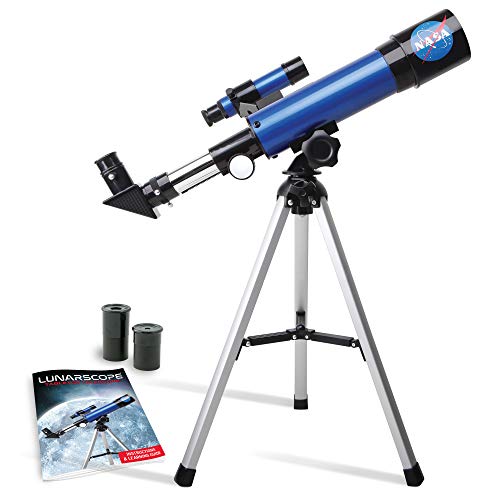
This tabletop telescope centers on lunar observation, ideal for budding space enthusiasts who want to study craters and maria in detail. It ships with a finder scope, low- and high-power eyepieces, and a tabletop tripod for stable viewing. The Moon’s surface offers a perfect starting point for beginners to learn scale, phases, and surface features. The user-friendly design minimizes setup time and helps a 10-year-old build confidence in aiming, adjusting, and analyzing what they see on screen or through the eyepiece.
Telescope for Adults & Kids, 70mm Aperture 360mm

The ToyerBee 70mm refractor emphasizes accessibility for both adults and kids. It offers magnification from 15x to 150x with two eyepieces (H20mm and H6mm) plus a 3x Barlow lens, enabling clear views of nearby planets and lunar features. The larger 70mm aperture improves light collection for brighter images, which helps beginners discern details without frustration. A wireless remote and phone adapter support capturing images or videos, fostering interactive learning and STEM engagement for families.
Telescope 80mm Aperture 600mm – HEXEUM
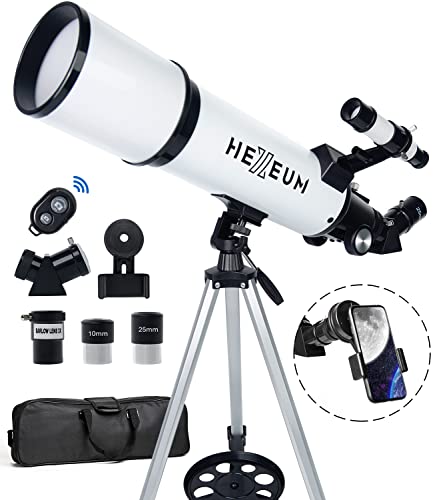
The HEXEUM 80mm telescope provides a larger aperture (80mm) and a longer focal length (600mm) for brighter, more detailed lunar and planetary views. It ships with two eyepieces and a 3x Barlow lens, boosting magnification to accommodate diverse targets. The 5×24 finder scope simplifies star-hopping, while the included phone adapter and carrying bag support on-the-go learning and field trips. Its multi-coated optics improve brightness and contrast, helping a young observer differentiate features more clearly.
Telescope for Kids & Adults – 70mm 500mm
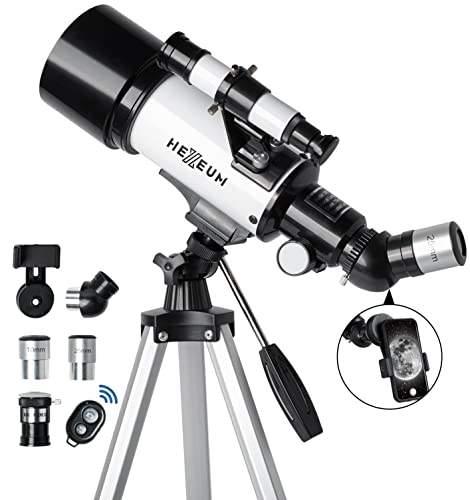
With a 70mm aperture and 500mm focal length, this HEXEUM model emphasizes portability and convenience for families. Two eyepieces plus a 3x Barlow lens grant flexible magnification, while a finder scope assists with object acquisition. The included carrying bag and phone adapter enable quick field setup and easy sharing of observations via a mobile device. The overall design prioritizes ease of use, making it a strong option for beginner astronomers in a household setting.
Buying Guide: Key Purchase Considerations
What to look for when selecting a telescope for a 10-year-old:
- Ease of use: Favor simple setups, stable mounts, and intuitive controls to minimize frustration and maximize curiosity.
- Aperture and focal length: A 70–80mm aperture is a sensible sweet spot for beginners; longer focal lengths help with brighter images but require steadier support.
- Eyepieces and magnification: Look for two eyepieces and a Barlow lens to enable a range from low to high magnification without frequent component swapping.
- Stability and portability: A sturdy tripod or table-top design helps reduce shaking; weight and size matter for younger users or family travel.
- Accessories: Phone adapters and wireless remotes support easy image capture, which can boost engagement and learning.
- Learning resources: Choose kits with clear manuals or kid-friendly guides to help families structure observation sessions and science questions.
- Durability and safety: Ensure eye safety, tubing length, and ergonomic design to prevent mishaps during use.
- Future-proofing: A model with upgrade options (additional eyepieces, mount upgrades) can grow with a child’s astronomy interests.
Comparison Perspectives
- Moon-first approach: The NASA Lunar Telescope uniquely emphasizes lunar studies, making it ideal for focused early experiments and guided lessons.
- Portability versus light gathering: Larger apertures collect more light for crisper images but add weight and setup complexity; lighter 70mm models are easier for kids to manage.
- Tech integration: Telescopes with phone adapters and wireless remotes enable digital capture and quick sharing of discoveries, reinforcing learning through visualization.
- All-ages usability: Some models are marketed as “Adults & Kids,” which can be practical for family learning but may require adult supervision for younger children.
- Budget versus capability: Higher-priced kits often include more accessories and sturdier builds; for beginners, a balanced kit with essential components is typically sufficient to spark interest.
Buying Guide: Practical Tips for Selecting a Gift
– Start with set-up time: Choose a kit that assembles quickly and requires minimal tools.
– Prioritize stability: A solid tripod and calm mount reduce learning curves and encourage longer observing sessions.
– Consider future studies: If the child progresses, a modular system that can be expanded with better optics or tracking features is valuable.
– Plan for use cases: Decide if the telescope will be used mainly for the Moon, planets, or terrestrial viewing to tailor magnification needs.
– Community and support: Look for brands with robust customer support and kid-friendly tutorials to aid ongoing exploration.
– Safety first: Ensure protective caps, safe storage, and clear handling instructions to support responsible astronomy practice.
Choosing the right beginner telescope combines ease of use, useful features, and opportunities to grow. The options above present reliable paths for a 10-year-old to begin a lifelong journey among the stars, with family involvement encouraged to enrich the learning experience.