Best Fruit Toys for Toddlers for Color Sorting and Pretend Play
Exploring fruit-themed toys helps toddlers practice color recognition, sorting, sharing, and early math skills through imaginative play. The following selections emphasize bright, durable pieces designed for safe exploration, with realistic shapes and varied textures to keep little hands engaged. Each option below aligns with common early learning goals while offering different play patterns—from pretend grocery shopping to kitchen pretend play and sensory exploration. Read on to compare features and find the best fit for your toddler’s development and play style.
| Product | Brand | Highlights |
|---|---|---|
| Learning Resources Farmer’s Market Color Sorting Set | Learning Resources | Color sorting, pretend food, bushel baskets |
| Battat – Play Food with Farmers Market Basket | Battat | Complete 37-piece set, chopping action, realistic visuals |
| JOYIN Educational Play Food Set | JOYIN | Color sorting, five baskets, multiple food categories |
| hahaland 16 PCS My First Fruit Vegetable Set | hahaland | plush sensory pieces, crinkle and rattle, color matching |
| Wooden Play Food for Kids Kitchen | Airlab | Wooden, safe dyes, multiple pieces, durable storage |
Learning Resources Farmer’s Market Color Sorting Set
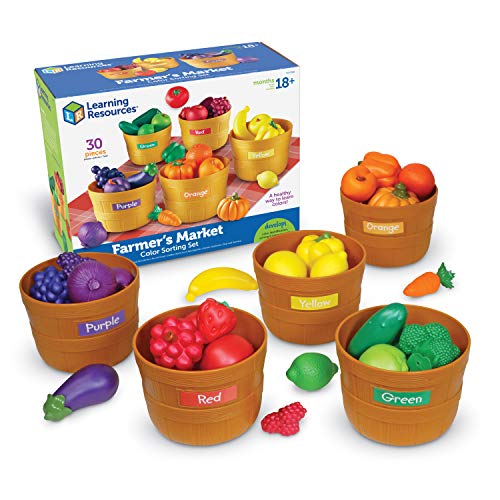
This set focuses on color recognition and sorting through realistic play food and color-coordinated bushel baskets. Children build school-ready skills by sorting by color and naming familiar foods during pretend market games. The pieces are sized for toddlers and designed to be visually engaging while supporting early vocabulary development.
Battat – Play Food With Farmers Market Basket
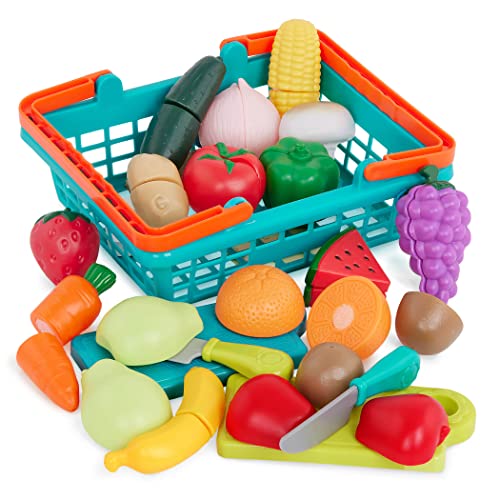
This 37-piece play food set includes a toy basket, two chopping boards, two knives, and a variety of play foods. The pieces are designed to fasten together for easy pretend chopping and reassembly, promoting fine motor skills and imaginative play. It’s ideal for kitchen pretend play and early math concepts like counting, patterns, and basic fractions during group play.
JOYIN Educational Toys Play Food Set

This color-sorted play food collection comes with five baskets for organizing fruits, vegetables, and meats. The organized layout supports color recognition, categorization, and storytelling during pretend kitchen and grocery scenarios. The set emphasizes vibrant colors and clear name tags to reinforce vocabulary and classification skills in toddler play.
hahaland Baby Sensory Toys – 16 PCS

This plush, sensory-rich set combines fruits and vegetables with rattles and crinkle textures to stimulate early sensory processing. Inspired by Montessori principles, it encourages independent exploration, fine motor skill development, and color matching as babies and toddlers engage with squeezable, tactile pieces and learn through exploration.
Wooden Play Food for Kids Kitchen

This wooden set emphasizes durability, traditional play food aesthetics, and safe, water-based dyes. The pieces detach and reassemble with nylon buckles, producing a satisfying “crunch” when cut. It supports creative play while helping children practice hand-eye coordination and fine motor skills with a natural, premium material palette.
Buying Guide
Choosing fruit toys for toddlers involves balancing safety, durability, and developmental value. Consider these factors when selecting sets for your child beneath the age of five:
- Safety and materials: Look for rounded edges, non-toxic paints, and durable plastics or wood. Washable surfaces help with cleanliness during frequent toddler play.
- Educational value: Prioritize sets that promote color recognition, sorting, vocabulary, counting, or early fractions. Multi-faceted sets support varied learning goals.
- Open-ended play: Toys that resemble real food encourage imaginative scenarios like grocery shopping, kitchen pretend play, and market setup, which foster social skills and storytelling.
- Storage and durability: Sturdy baskets or containers are essential for tidy play and travel. Easy-to-clean surfaces reduce maintenance time for caregivers.
- Age appropriateness: Ensure the complexity aligns with your child’s developmental stage. Some sets include more pieces; others emphasize sensory features like plush textures or crinkles.
- Versatility: Consider whether the toy scales with play beyond toddler stages, supporting preschool activities like early math and categorization games.
When comparing options, think about your child’s primary play style. For quick, structured activities, a color-sorting set with labeled baskets accelerates recognition. If the goal is immersive role play, larger sets with multiple food items and accessories support longer, cooperative play. For sensory-focused toddlers, plush fruit with varied textures invites tactile exploration and early language growth. Finally, wooden sets offer a durable, classic feel that complements traditional pretend play kits while providing a tactile experience valued by many parents and teachers.