Best Picture Cards for Toddlers to Boost Language Skills and Word Recognition
Picture cards for toddlers are a practical tool for early language development, helping little learners name objects, learn basic vocabulary, and build sentence structure through interactive play. This article highlights five high-quality options that emphasize real images, durability, and engaging activities. Each product includes visible pictures, age-appropriate content, and practical features that support parent-led learning at home or in preschool settings.
| Product | Brand | Key Focus |
|---|---|---|
| First Words Flash Cards | Scholastic Teaching Resources | Real-world images, foundational vocabulary |
| BenBen Flash Cards for Toddlers, 250 Images | BenBen | Eight topics, durable double-sided cards |
| My First Touch and Feel Language Picture Cards | DK | Touch-and-feel elements for multisensory learning |
| LearnWorx 101 Baby Flash Cards | learnworx | 101 words, varied categories, interactive games |
| ALSOLIFE 50 First Words Flash Cards | ALSOLIFE | Short list of high-frequency words, videos included |
First Words Flash Cards

Scholastic Teaching Resources’ First Words Flash Cards are designed to introduce common nouns, verbs, and adjectives through vivid real-life photos. The set supports early vocabulary building, enabling toddlers to connect spoken words with visual cues. These cards are suitable for guided_sessions or independent exploration, making them a reliable option for parents and educators seeking straightforward picture cards with clear image references.
Key features include durable card stock and simple prompts that can spark conversation, imitation, and expansion of basic sentences. The package is particularly useful for bilingual households as a starting point for word association and daily routines. Realistic imagery can assist in quick recognition and retention, while a compact format makes it easy to carry for on-the-go learning.
BenBen Flash Cards for Toddlers, 250 Images

BenBen’s comprehensive set includes 125 double-sided cards across eight subjects, offering 250 vivid images. The heavy-duty, thick cards with rounded corners are designed to withstand toddler handling, making them suitable for daily practice in classrooms or at home. The real imagery supports concrete word learning, while the backside prompts encourage interaction and questions that promote vocabulary expansion and critical thinking.
Useful in language development activities, these cards support learning across letters, numbers, colors, shapes, animals, and more. Water-resistant coatings help maintain readability after handling and occasional spills. The broad topic coverage makes this set a versatile choice for consistent, structured play sessions.
My First Touch and Feel Language Picture Cards
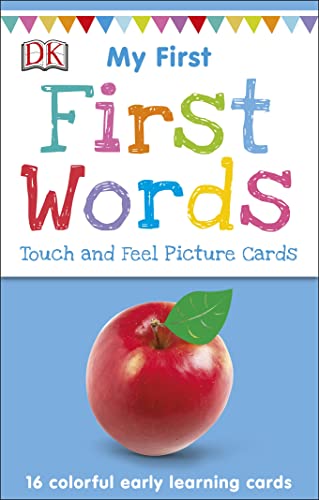
DK’s My First Touch and Feel Language Picture Cards provide a multisensory approach to early language. In addition to clear word-image associations, the tactile components engage toddlers through touch, encouraging exploration and word-connection through sensory play. This format is particularly beneficial for language learners who benefit from a hands-on approach and can complement screen-free learning routines.
The cards emphasize first words and basic language structures, making them appropriate for single-word labeling activities and short phrases. The tactile elements can help sustain attention and improve memory retention as children touch and say the corresponding terms.
LearnWorx 101 Baby Flash Cards

LearnWorx offers 101 flashcards covering animals, food, household items, and outdoor objects, designed for toddlers and early preschoolers. The set emphasizes practical word-building and includes interactive elements on the reverse side, such as color challenges and spotting differences. The large card size and bright illustrations support visual learning and curiosity, while the content supports speech development and vocabulary expansion during play and guided activities.
Auditory and verbal engagement is encouraged through prompts that invite children to name objects, describe features, and form simple sentences. The design aims to balance entertainment with educational value, providing a structured yet flexible tool for speech and language practice.
ALSOLIFE 50 First Words Flash Cards

ALSOLIFE’s 50 high-frequency first words focus on everyday vocabulary to encourage early communication and language development. The kit pairs picture cards with interactive video prompts to supplement the learning experience, turning passive recognition into expressive language practice. The back-of-card cues help children connect word forms with real objects, supporting memory and recall during interactive sessions.
These cards are designed for quick sessions that fit into busy days, offering a practical approach for speech therapy prep, ABA therapy, or homeschooling. The combination of visuals and multimedia prompts aims to support early talking, imitation, and independent naming activities.
Buying Guide: Key Purchase Considerations
- Image quality and realism: Realistic photographs help toddlers connect words to everyday objects, improving quick recognition and retention.
- Durability and safety: Look for thick, sturdy cards with rounded corners and BPA-free materials to withstand rough handling and occasional spills.
- Card format and size: Double-sided cards offer more content per card, while larger cards support easier viewing during group activities.
- Age appropriateness: Choose sets aligned to toddlers’ developmental levels and language goals, with scalable content for older preschoolers.
- Multisensory options: Touch-and-feel or video-enhanced cards can boost engagement and word formation, especially for children who benefit from sensory input.
- Curriculum alignment: Sets that cover foundational vocabulary (colors, shapes, animals, household objects) pair well with early literacy and speech therapy goals.
- Interactive potential: Cards that prompt questions, games, or simple sentence construction encourage conversation and expressive language practice.
- Storage and organization: Consider sets that come with a practical storage solution or a color-coded system to facilitate routine-based learning.
- Maintenance: Waterproof coatings or wipe-clean surfaces simplify cleanup after messy play or spills.
In selecting picture cards for toddlers, balance content variety, durability, and the child’s current language stage. A mix of sets that emphasize real images, interactive prompts, and multisensory elements tends to yield the most robust early learning outcomes when used consistently in short, frequent sessions.