Best Science Kits for Elementary Students That Make Learning Fun
Parents and teachers seeking engaging, age-appropriate science kits can boost curiosity and foundational skills with hands-on projects. This guide highlights five top picks perfect for elementary learners, covering earth science, physics, engineering, and environmental topics. Each kit is designed to be safe, teacher-friendly, and easy to store, helping kids explore core concepts through playful experimentation.
style=”display:none;”>Summary Table of Chosen Products
| Product | Brand | Focus | Ideal For |
|---|---|---|---|
| 4M Clean Water Science | 4M | Water filtration and desalination basics | Young science enthusiasts, environment-minded |
| Carson Dellosa STEM Challenges | Carson Dellosa Education | Physical, life, earth and space science challenges | Classrooms and groups, 3rd grade+ |
| 5 Set Individual STEM Kit (Wind Powered Cars) | BeAndge | Engineering, robotics, wind energy | Budding engineers, STEM holidays |
| STEM Toy Rock Science Kit | Toysmith | Geology and rock identification | Young geologists, curiosity about rocks |
| 11 Set STEM Science Kit (Physics & Engineering) | BeAndge | Physics, robotics, experiments | Older elementary, science fairs |
4M Clean Water Science Kit

The 4M Clean Water Science kit demonstrates the scientific approach to extracting salt from sea water and explores desalination concepts. With a plastic filter system, active carbon, sand, rock, and filter paper, the set supports hands-on investigations into filtration, purification, and environmental science. It’s well-suited for curious kids interested in chemistry and environmental topics, providing a straightforward entry into lab-style experiments at home or in the classroom.
Carson Dellosa STEM Challenges

Carson Dellosa’s STEM Challenges provide 30 learning cards covering physical, life, earth, and space science. Each card includes directions, required materials, and hints to guide students through engaging experiments. The set is designed for 3rd grade and up, with a compact size (about 7 ¾ by 5 ½ inches per card) that makes it easy to use in small groups or as a quick in-class activity. A sturdy divider and storage box help keep projects organized for ongoing learning.
5 Set Individual STEM Kit for Kids

This collection includes five wind-powered cars and related accessories, packaged with complete instructions and a dedicated screwdriver. The kit supports hands-on exploration of science, engineering, and mathematics concepts through assembly and experimentation. It is suitable for children ages 6-12, encouraging problem-solving, creativity, and understanding of renewable energy concepts in a safe, eco-friendly format.
STEM Toy Rock Science Kit
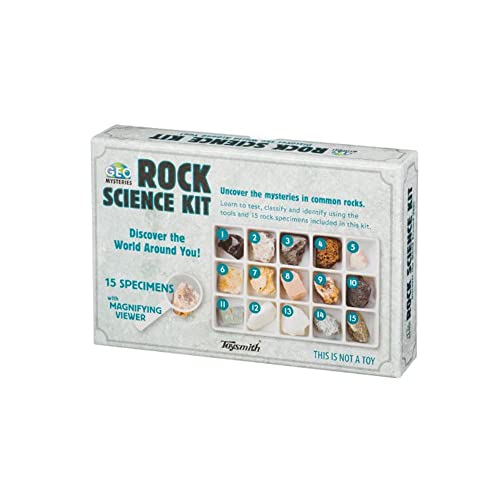
The Rock Science Kit teaches how to test, classify, and identify different rock types. Included are fifteen rock specimens, a magnifying viewer, and an identification guide. This kit is ideal for young geology enthusiasts and provides a tangible way to explore physical science and earth processes, helping students understand mineral properties, rock cycles, and field identification techniques.
11 Set STEM Science Kit for Kids

Designed to span ages 8-12, this BeAndge kit offers 11 hands-on projects focused on physics and engineering. It scales in difficulty to match growing skills and is well-suited for science fairs and classroom demonstrations. The projects emphasize problem solving, systems thinking, and the scientific method, providing a structured yet flexible experience for elementary students ready to tackle more challenging experiments.
Buying Guide: Key Purchase Considerations
- Age appropriateness: Check recommended ages and difficulty levels to ensure the kit matches your child’s current skill and curiosity.
- Hands-on focus: Look for kits with tangible materials and clear, step-by-step instructions that encourage experimentation and inquiry.
- Educational scope: Consider whether the kit covers earth science, physics, chemistry, biology, or engineering to align with curricula or interests.
- Safety and materials: Favor non-toxic components and age-appropriate tools; verify that small parts are suitable for the child’s age and supervision level.
- Storage and organization: Kits with storage boxes or card dividers help keep materials accessible and reduce clutter.
- Teacher and home use: Some kits include activity cards or teacher guides—useful for classroom planning or structured home learning.
- Project variety: A mix of experiments and build projects broadens exposure to the scientific method and multiple disciplines.
- Future growth: Choose kits that scale with increasing complexity to extend learning over months or a school term.
In selecting science kits for elementary students, prioritize materials that promote inquiry, observation, and critical thinking while staying safe and engaging. Pairing a hands-on kit with a simple explanation of the underlying concepts can help children retain information longer and apply it to real-world scenarios. Consider combining kits that cover different domains—earth science, engineering, and life science—to cultivate a well-rounded curiosity about the natural world.