Best Speech Toys for Toddlers: Boost Language Skills With Interactive Flash Cards
Parents and caregivers increasingly turn to interactive devices that promote early language development. The following handpicked speech toys for toddlers focus on vocabulary expansion, pronunciation, and engaging play. Each product features audio prompts, real-world sounds, and Montessori-inspired learning to support speech therapy goals and everyday communication. Below you’ll find a concise buying guide and five highly relevant options with their key features.
| Product | Brand | Key Benefit |
|---|---|---|
| Airbition Talking Flash Cards | Airbition | 224 words, autism-friendly, editable sounds |
| LeapFrog Learning Friends 100 Words Book | LeapFrog | 100+ words, engaging characters, light-up features |
| Imitation Book: Interactive & Fun Learn to Talk | Twin Cities Speech Therapy Publishing | Therapist-approved language activities |
| Speech Therapy Toys & Materials for Toddlers | WELL BALANCED | 62 sounds, daily-life words, early speech focus |
| Talking Flash Cards: 240 Sight Words | Kuovei | No screen design, broad vocabulary list |
Airbition Talking Flash Cards For Toddlers

Airbition’s Montessori-inspired talking flash cards offer 224 colorful illustrations paired with sounds. The cards cover animals, vehicles, food, fruits, and vegetables, providing a broad vocabulary base while supporting cognitive development. Designed with autism and speech therapy in mind, the device uses a sound-image combo to facilitate interaction in a familiar Montessori format. Operation is straightforward: switch on, insert a card, and listen to content in a clear American accent. Real animal sounds accompany responses, and a repeat button plus a five-level volume control are included for flexible learning. It’s user-friendly for toddlers and can support both independent play and guided sessions.
LeapFrog Learning Friends 100 Words Book
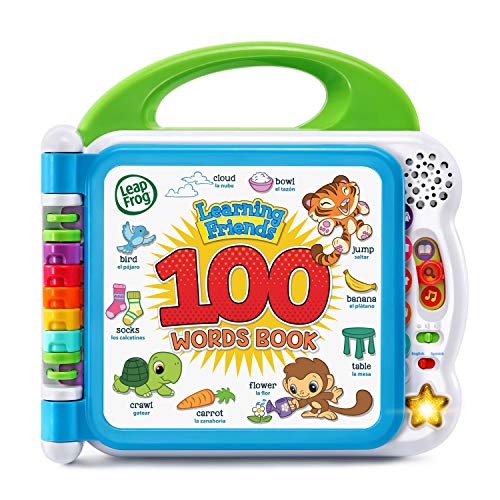
LeapFrog’s Learning Friends 100 Words Book guides toddlers through alphabetic connections using friendly characters Turtle, Tiger, and Monkey. With over 100 age-appropriate words curated by learning experts, the book features diverse categories such as pets, foods, colors, and activities. Children can touch words on the pages to hear pronunciation, sound effects, and fun facts, while a light-up star button plays two theme songs. This interactive format supports vocabulary acquisition, listening skills, and early reading readiness, making it a versatile option for home and classroom use.
Imitation Book: Learn To Talk Board Book

This interactive board book from Twin Cities Speech Therapy Publishing emphasizes practical language development for toddlers aged 0-4. Written by a speech therapist, the book focuses on learning to talk and addressing late-talker concerns through guided activities and accessible prompts. Its structure supports repeated exposure to common words and phrases, aiding memory and pronunciation. It’s particularly suitable for caregivers seeking a therapist-informed resource for structured language practice and daily routines in a compact, durable format.
Speech Therapy Toys & Materials For Toddlers

WELL BALANCED presents a focused set for early speech development, tailored to toddlers from 12 months to 4 years. This kit features 62 lively sounds and simple words across daily-life categories, encouraging interactive learning. The flash-card style approach supports practical speech initiation, imitation, and social communication in an engaging format. By emphasizing phonetic repetition and real-world references, it provides a structured pathway for toddlers to build phonemic awareness and expressive vocabulary through play.
Talking Flash Cards 240 Sight Words

Kuovei’s Talking Flash Cards cover a broad range of 240 sight words with an emphasis on hands-free, no-screen learning. The set highlights subjects like animals, transports, food, fruits, vegetables, and daily essentials to expand a child’s vocabulary in everyday contexts. A key feature is the card reader’s ability to articulate words using a standard American accent, with a repeat function and adjustable volume across five levels. The no-screen design helps reduce screen time while supporting speech development and auditory recognition, making it a practical option for home learning and therapy sessions.
Buying Guide
- Age appropriateness: Look for devices designed for toddlers (12 months to 4 years) to ensure content is developmentally suitable and engaging.
- Language output: Consider products that provide clear pronunciation, American English accents, and opportunities for imitation and practice.
- Learning style: Choose a mix of flash cards, interactive books, and toy tablets to suit different preferences—visual, auditory, and kinesthetic.
- Autism and speech therapy support: For children with autism or speech delays, opt for tools with multimodal cues (sound plus image) and therapist-endorsed approaches.
- Content variety: A broader range of categories (animals, foods, colors, daily activities) supports generalization of vocabulary across contexts.
- Ease of use: Simple on/off switches, easy card insertion, and adjustable volume help ensure independent use and reduce caregiver setup time.
- Durability and safety: Look for sturdy construction, non-toxic materials, and appropriate age labeling to withstand toddler use.
- Screen time considerations: No-screen or low-screen options may support reduced screen exposure and better eye health for toddlers.
- Therapy integration: If using for formal therapy, prefer products with clear pronunciation cues, printable activities, or therapist-approved content.
Overall, these products provide structured opportunities to practice vocabulary, pronunciation, and listening skills through play. When selecting, consider the child’s current language level, attention span, and the family’s daily routines to choose the most effective combination of tools.